ADAD

Updating your news feed...
NEWS EXPRESS is Nigeria’s leading online newspaper. Published by Africa’s international award-winning journalist, Mr. Isaac Umunna, NEWS EXPRESS is Nigeria’s first truly professional online daily newspaper. It is published from Lagos, Nigeria’s economic and media hub, and has a provision for occasional special print editions. Thanks to our vast network of sources and dedicated team of professional journalists and contributors spread across Nigeria and overseas, NEWS EXPRESS has become synonymous with newsbreaks and exclusive stories from around the world.




















Loading banners
Loading banners...

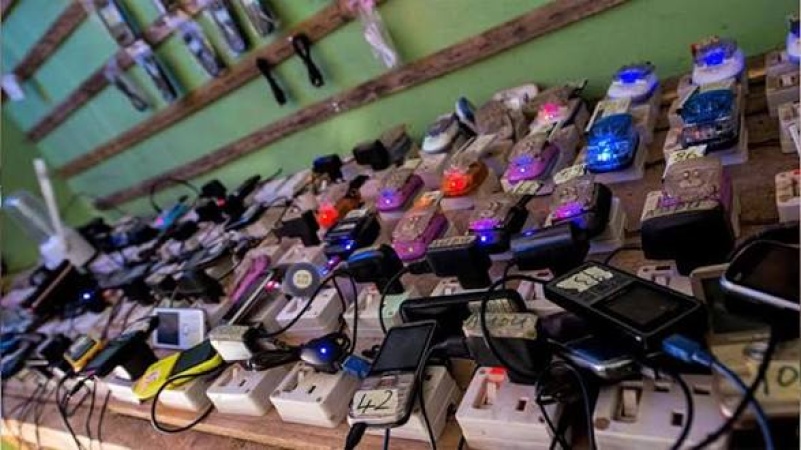
Residents of several Lagos communities are increasingly turning to commercial phone and power bank charging centres as worsening electricity supply disrupts daily activities, creates additional household expenses and opens up new business opportunities for traders.
In some neighbourhoods, the centres are witnessing a surge in patronage, with residents sometimes waiting in queues for others to retrieve their devices before they can charge their phones and power banks.
For Fikayo James, a resident of Ejigbo, the growing demand for charging services reflects the severity of the electricity crisis in her neighbourhood, where supply has become increasingly unreliable.
She said residents around Omiyale and Abuna streets sometimes received electricity for barely 30 minutes every two to three days.
According to her, electricity supply had never been particularly stable in the area, but residents previously managed because power, whenever restored, usually lasted between five and six hours. At some point, supply alternated between days, giving households some opportunity to plan their activities.
However, she said the situation had deteriorated in recent weeks, leaving residents uncertain about when electricity would be restored.
The development, she added, had forced more households to depend on generators and commercial charging centres to keep their mobile phones and power banks functional.
James said charging a mobile phone costs N200, while power banks attract between N400 and N500, depending on their capacity.
Power banks with capacities of 200mAh and above, she said, are charged N500.
She added that the charging centres were often crowded, forcing customers to wait until those who arrived earlier retrieved their devices.
Beyond the inconvenience and additional expenses, James said the poor electricity supply had worsened water scarcity and made it difficult for households to preserve food.
The increasing heat has further compounded residents’ discomfort, particularly for families struggling to cope with prolonged outages.
A similar experience is unfolding in Ojodu Berger, where Faith Innocent, a resident of Mike Ajari Street, said electricity supply had fallen sharply from the 15 to 18 hours residents previously enjoyed daily.
She said supply had become unpredictable, leaving households unsure when power would be available or restored.
For Innocent, the situation is particularly frustrating after work, as she often returns home to find no electricity, making it difficult to charge her phones and attend to other domestic needs.
She said she had been forced to buy an additional power bank to ensure that her mobile phones remained functional and accessible.
Recalling one particularly frustrating experience, Innocent said she returned from work to discover that electricity had been disconnected and was not restored until the following morning, by which time she had already left for work.
“This inconsistent power supply is becoming increasingly inconvenient and is affecting our ability to plan and manage our daily activities effectively,” she said.
She appealed to the electricity distribution company to improve the stability and consistency of supply in the area.
For traders, the consequences extend beyond household inconvenience to the survival of their businesses.
Christiana Effiong, a shop owner on Olorunfunmi Street, Ojota-Ikeja, said the unreliable electricity supply had affected her ability to preserve goods and meet customers’ demands.
Effiong, who sells cold drinks, bottled water and other food items, said electricity supply was previously relatively stable, with outages usually lasting about an hour or, occasionally, two to three hours before power was restored.
However, she said the situation had changed in recent weeks, with electricity sometimes unavailable for an entire day and supply totaling only about three hours, spread across different periods.
On some days, she added, electricity was supplied for just 30 minutes at different intervals.
Although she acknowledged some improvement compared with the period between last month and early November, when supply dropped considerably, she said residents were still far from enjoying reliable electricity.
According to her, households could now at least expect power daily, but the duration remained too short to meet their needs.
Effiong said the erratic supply had made running her business increasingly difficult, particularly as some food items stored in refrigerators had spoiled during prolonged outages.
She also lamented that the situation had affected her ability to provide chilled drinks and water to customers, despite the increased demand for such products during the hot weather.
She described the situation as particularly challenging for small-scale traders who depend on electricity to preserve perishable goods and sustain their businesses.
Efforts to obtain a response from Ikeja Electric’s corporate communications department on the worsening electricity supply were unsuccessful.
Calls to the company were unanswered, while messages sent were acknowledged. The company, however, indicated that the complaint had been forwarded to management and that a response would be provided after the necessary processes had been completed (The Guardian)