ADAD

Updating your news feed...
NEWS EXPRESS is Nigeria’s leading online newspaper. Published by Africa’s international award-winning journalist, Mr. Isaac Umunna, NEWS EXPRESS is Nigeria’s first truly professional online daily newspaper. It is published from Lagos, Nigeria’s economic and media hub, and has a provision for occasional special print editions. Thanks to our vast network of sources and dedicated team of professional journalists and contributors spread across Nigeria and overseas, NEWS EXPRESS has become synonymous with newsbreaks and exclusive stories from around the world.




















Loading banners
Loading banners...

CBN Gov Yemi Cardoso
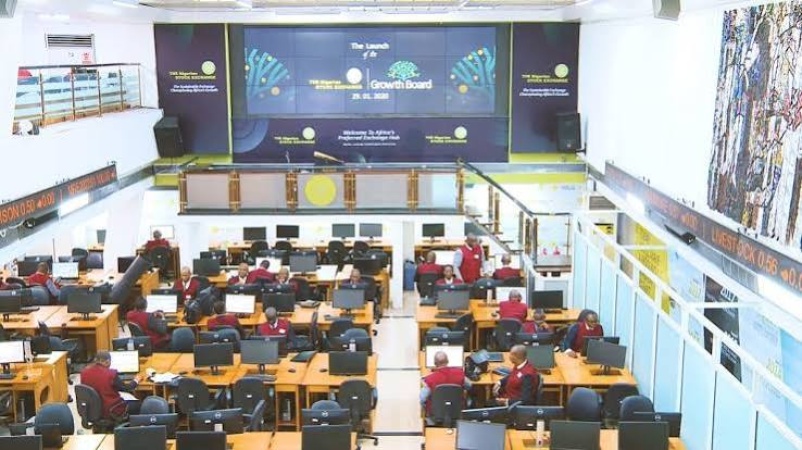
The Central Bank of Nigeria (CBN) appears to be losing its grip on the naira, given the rapid movement in the currency’s rate in the last few days, with speculative trading, rising market arbitrage and a growing spike in foreign exchange (FX) demand throwing a spanner in the works.
The familiar trio – speculative trading, high market arbitrage and demand shocks – threatens to reverse the gains of the past year, raising concerns about market uncertainty and the short-term direction of the local currency.
The renewed bets against the naira have raised questions about market liquidity, the adequacy of recent reforms, the appropriateness of the recent interest rate cut and rising election-related risks.
The CBN’s Monetary Policy Committee (MPC), in September, slashed the benchmark interest rate by 3.5 percentage points in one fell swoop, defying the global trend. CBN Governor Yemi Cardoso, said the decision was intended to recalibrate monetary policy transmission.
Even though the market had remained relatively stable, some experts warned that the policy option could come with costly trade-offs, including capital outflows and increased pressure on inflation and the exchange rate.
For the first time since March 10, the dollar touched N1,400 at the Nigerian Foreign Exchange Market (NFEM) on Friday, suggesting that the late-October upturn could not be dismissed as white noise.
The local currency closed last week at a weighted average rate of N1,389.73/$, a metric the CBN has adopted as the official exchange rate. Over the five working days of the week, the naira shed 2.6 per cent of its value, while its month-to-date loss stood at three per cent.
Of course, the year-to-date (YTD) value gain remains comfortably in positive territory at approximately three per cent. The currency started trading in January at N1,430.90/$. At about N1,390/$, however, it currently trades at the upper end of the best-case forecasts for the year.
Yet, forward-looking indicators are more important in financial markets than historical figures. In the outlook, the 2027 presidential election represents a significant downside risk. There are already reports that election spending is contributing to the naira’s lacklustre performance.
In the meantime, there is insufficient data to establish how election spending has impacted the currency’s poor performance. Previously, FX market swings were more pronounced during political party primaries than shortly before general elections.
Understandably, the 2027 general elections are different from previous ones. For instance, the primaries, especially those of the ruling All Progressives Congress (APC), were less competitive and relied more on President Bola Tinubu’s endorsement. This may explain why there was no significant spike in backdoor dollar trading during the nomination process.
The Nigerian FX market witnessed its most turbulent trading during the primaries that produced Tinubu. As increasing numbers of politicians visited currency exchange kiosks in Abuja and Lagos with their briefcases, the spread between the official and parallel markets widened from about 50 per cent to 80 per cent, deepening market distortions and speculation.
That the 2022 election-related FX liquidity crisis may change its location is, for now, mere speculation. On the demand side, aggregate money balances grew by 25.3 per cent year-on-year (Y/Y) as of September, from N117.79 trillion to N147.6 trillion. That is a significant uptick, especially when weighed against the moderate expansion in economic activity.
However, narrow and quasi-money supply, which largely drive FX demand, recorded slower growth of 12.7 and 23.3 per cent, respectively. These are not necessarily troubling increases, considering that the country is on the eve of an election year.
Interestingly, political expenditure in Nigeria is largely covert and often difficult to aggregate in official monetary statistics. In many cases, transactions are not conducted through formal financial channels, making their impact on macroeconomic data difficult to measure. The absence of reliable data on such dealings also makes many macroeconomic estimates largely speculative.
More importantly, there are clear signs that the FX market is experiencing significant demand pressure. Whether driven by election spending, year-end activities or other sources of demand, interbank turnover has spiked since the beginning of November. Last Friday, the figure hit $815.57 million, nearly 3,800 per cent higher than the trading volume recorded on the first day of the month.
This month, the daily volume has averaged $114.45 million, the highest since the beginning of the year and more than 18 times the figure recorded in October ($6,236,637.72). In September, daily volumes stood at $12,419,687.25, a small fraction of the current average, while the figure was $11,076,888.64 in August.
Market arbitrage, measured by the spread between the official and parallel exchange rates, also rose to N70/$, or five per cent, at the weekend. In mid-October, the spread was about N30/$, or below three per cent. Many advisory bodies consider a five per cent premium the threshold for an unhealthy parallel-market differential.
Following the June 2023 pro-market reforms, the spread narrowed to almost zero and has remained reasonably below five per cent. A wider differential between the official and parallel markets is associated with unbridled speculation, round-tripping and other forms of market manipulation.
In the dark days of naira debauchery under Godwin Emefiele’s management, when both the elite and ordinary Nigerians took positions against the local currency, the spread widened to as much as 60 per cent. Personal and business travel allowances (P/BTA) became a common racket, with individuals falsifying overseas travel arrangements to access dollars from banks and resell them on the black market.
Bank chiefs and officials at FX desks also joined the scam that the CBN spent billions of dollars annually to finance. In 2022, the apex bank reportedly spent N6.2 trillion on FX subsidies. The amount was more than 35 per cent of the estimated fuel subsidy cost. Various policies have since been developed as follow-up measures to the 2023 market reforms, which created the template for ending the opaque regime.
For instance, the CBN imposed net open position (NOP) limits on banks, directed the recapitalisation of bureaux de change (BDCs), introduced the FX Code and created an electronic trading platform. Consolidated BDCs were subsequently granted access to the NFEM, while the FX manual implementation followed earlier this year.
There have also been aggressive campaigns to increase official diaspora remittance inflows, which have paid off. In July, the CBN reported monthly proceeds of $947 million, slightly below its $1 billion target for the end of the year. August and September figures were estimated at around $950 million.
Monthly inflows stood at about $200 million three years ago when Cardoso assumed office. There are concerns that a significantly wider gap between the official and parallel markets could reverse the trend, translating into slower external reserve growth.
Already, the external reserves are on a downward trajectory. For instance, liquid reserves, which are unencumbered, had dropped to $54.15 billion as of last week, losing $500 million in the past month. The gross figure also fell from $55.18 billion to $54.65 billion.
The prospect of continuously rising oil prices is losing traction by the day. A less bullish crude oil market means lower FX earnings for Nigeria, whose economy is still considerably sustained by petrodollar revenues. This places the CBN in a tight spot and threatens its grip on the market.
But a professor of applied economics and Executive Chairman of the Society for Analytical Economics, Nigeria (SAEN), Godwin Owoh, said there had never been a tighter grip on the market, arguing that the past three years had witnessed only cosmetic policies that failed to address the root causes of the FX market crisis.
A genuinely stronger naira, he argued, would have had a more significant impact on other macroeconomic prices, including interest rates and inflation. He noted that Nigerians had continued to pay heavily for the spiralling effects of uncontrolled increases in the prices of essential goods.
A stronger naira, indeed, came at a damning opportunity cost: what many considered a bonanza interest rate regime. Even after the recent steep cut, Nigeria’s benchmark interest rate remains the third highest in Africa, behind Zimbabwe and Malawi. At some point between 2024 and last year, Nigerian bond yields were trending in the 20 per cent range, making the country a haven for global fund managers.
The ultra-high interest rates left the broader economy with severe knock-on effects. Bank treasuries gobbled up government securities as the appetite for easy earnings grew, while the real sector continued to bleed from a lack of funding.
Apparently, falling fixed-income yields will test the policy choices of which the CBN is so proud. But politics, and all it represents, is a major distortion for which the apex bank is not responsible and from whose effects it cannot, unfortunately, insulate its policy outcomes. (The Guardian)