ADAD

Updating your news feed...
NEWS EXPRESS is Nigeria’s leading online newspaper. Published by Africa’s international award-winning journalist, Mr. Isaac Umunna, NEWS EXPRESS is Nigeria’s first truly professional online daily newspaper. It is published from Lagos, Nigeria’s economic and media hub, and has a provision for occasional special print editions. Thanks to our vast network of sources and dedicated team of professional journalists and contributors spread across Nigeria and overseas, NEWS EXPRESS has become synonymous with newsbreaks and exclusive stories from around the world.










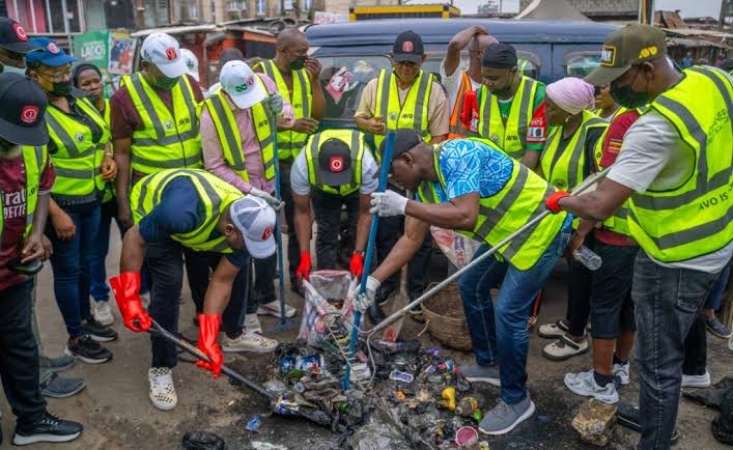








File photo: Sanitary inspectors
Sokoto, Kebbi and Zamfara state governments have planned to recruit more sanitary inspectors as part of intensified efforts to improve environmental sanitation and ensure the hygienic wellbeing of the people.
A survey conducted by the News Agency of Nigeria (NAN) indicates that the states are faced with inadequate personnel and operational equipment, which remain major challenges.
The Zonal Environmental Officer, Birnin Kebbi Zone of the Kebbi Environmental Regulation Agency (KERA), Alhaji Abdulrahman Muhammad, said the agency had about 22 sanitary inspectors.
Muhammad said the inspectors were responsible for monitoring public compliance with environmental health regulations in residential areas, bakeries, sachet water factories, markets, abattoirs, food vendors and eateries.
He said the inspectors regularly visited the facilities to ensure compliance with prescribed hygiene standards and prevent practices that could endanger public health.
According to him, the agency also supervises monthly environmental sanitation exercises to promote cleanliness and discourage indiscriminate waste disposal.
“Despite the limited number of personnel, we are doing our best to ensure that residents and business operators comply with environmental sanitation rules and regulations.
“We need more staff because the available personnel are not sufficient to effectively cover the growing needs of the state.
“Most of the staff we currently have are on Grade Level 08 and above, which further underscores the need to strengthen our workforce,” he said.
Muhammad further explained that inadequate transportation affected the agency’s ability to reach different locations and carry out effective inspections.
He added that the agency occasionally organised training for food vendors to improve their knowledge of food hygiene, safe handling and sanitation practices.
He urged residents, food vendors and other business operators to strictly comply with environmental health regulations, stressing that maintaining a clean environment remained a collective responsibility.
Speaking also, the Kebbi Commissioner for Physical Planning and Urban Development, Alhaji Hayatuddeen Ahmad-Bawa, said the state government had approved monthly refuse evacuation across the state and repaired the trucks and payloaders of the Kebbi Urban Development Authority (KUDA) to strengthen waste management operations.
Ahmad-Bawa said KUDA receives monthly cash allocations, in addition to the repaired equipment, to ensure regular evacuation of refuse across the state.
He said the repairs had already been completed, adding that the intervention was aimed at improving the agency’s capacity to maintain environmental cleanliness.
The commissioner also said the government had secured approval for the evacuation of refuse and clearing of drainages in Birnin Kebbi to improve water flow and reduce the risk of flooding during the rainy season.
He cited the extension of excavation work at the Adamu Aliero main drainage outlet in Bayan Kara as part of efforts to facilitate the free flow of water.
Ahmad-Bawa further said approval had been granted for regular sanitation of major roads in the state capital, adding that the exercise was being conducted daily.
The Public Relations Officer of Sokoto State Ministry of Environment, Malam Abubakar Gani, said the state government had recruited more than 500 township cleaners in addition to sanitary inspectors deployed at various areas across the state.
According to Gani, the engaged youths undertake clearing of drainages, evacuation of public refuse, street sweeping and other sanitation works, while trucks and environmental vehicles dispose of the waste.
He added that the state government had also engaged private firms on environmental sanitation and allocated different areas of coverage for township sanitation and evacuation of accumulated refuse dumps, especially at public places.
The PRO explained that the present administration of Gov. Ahmad Aliyu had procured modern waste disposal equipment to improve sanitation services and promote a cleaner environment across the state.
Gani said the approval was granted during the fifth State Executive Council meeting, adding that it included the purchase of nine waste disposal trucks, waste bins, safety kits, and other sanitation tools aimed at enhancing operational efficiency in refuse collection and environmental management.
He noted that the initiative was part of the government’s broader urban renewal agenda and its commitment to safeguarding public health through sustainable environmental practices.
According to him, the equipment supports the daily activities of sanitation workers and ensures timely evacuation of waste, particularly in high-density areas and major towns.
Gani said sanitary inspectors, properly kitted in uniforms, go on routine inspection to food outlets, water production outlets, abattoirs, alongside other places, adding that the exercise recorded huge success in collaboration with other regulatory and law enforcement agencies.
Alhaji Dahiru Kamaru-Gada, the Director of Advocacy and Mobilisation in the Sokoto State Primary Healthcare Development Agency (SSPHDA), said the agency trained Ward Development Committee members, Health Promotion Officers, Sanitary Inspectors and Community Women Leaders on community engagement and public healthcare interventions.
Kamaru-Gada said governments had intensified enforcement of environmental sanitation and hygiene regulations to prevent disease outbreaks and promote public health through adopted proactive monitoring mechanisms to ensure compliance with good hygiene and sanitary practices.
The Special Adviser to Sokoto state governor on SSPHCDA, Dr Bello Marnona, underscored the importance of traditional and community groups’ engagement in achieving maximum success of healthcare and sanitary policies in the country.
Marnona urged Community Based Organisations (CBOs) to link up on mobilisation to identify and connect every incident to the nearest facility as part of synergy toward complementing government efforts.
He emphasised the need to identify links with appropriate channels of services to follow up to ensure they receive the required attention.
The special adviser further described religious leaders as special guides and advocates, as well as important partners for promoting positive change in their communities.
A high-ranking traditional ruler from the Sultanate Council and Galadiman Garin Sokoto, Alhaji Aliyu Attahiru, described effective community mobilisation and accurate reporting of surveillance outcomes as essential to improving public health and prevention of disease outbreaks.
Attahiru, who is the Sultanate Councilor on Healthcare and Environment, supported the reactivation of sanitary inspectors’ activities and reaffirmed the commitment of traditional rulers towards ensuring maximum success of environmental sanitation and healthcare programmes across the state.
He admonished officials and engaged collaborators to diligently carry out the task with commitment, saying their efforts were critical to improving healthcare coverage to function appropriately.
In Zamfara, the situation is the same as the Director in the State Ministry of Environment, Dr Nasir Muhammad, said recruitment of sanitary inspectors and other healthcare providers was among the priorities of the present administration.
Muhammad emphasised that officials were deployed to township roads, markets, abattoirs, eateries and other places to ensure sanitary and hygienic condition of places and consumables across the state.
He said the deployment was to strengthen enforcement through routine inspection of regulated and non-regulated premises, to ensure compliance with environmental health standards.
Some food vendors, Abdullahi Maikanti, Bello Shehu, A’isha Musa and Karimatu Sahabi, described sanitary inspectors’ activities as vital to safeguarding public health because they regulate some careless behaviours, especially among rural communities.
A cross-section of residents interviewed supported the recruitment of more sanitary inspectors and reviving the old system, including house-to-house sanitation inspections, to curtail the spread of diseases and prevent outbreaks. (NAN)