ADAD

Updating your news feed...
NEWS EXPRESS is Nigeria’s leading online newspaper. Published by Africa’s international award-winning journalist, Mr. Isaac Umunna, NEWS EXPRESS is Nigeria’s first truly professional online daily newspaper. It is published from Lagos, Nigeria’s economic and media hub, and has a provision for occasional special print editions. Thanks to our vast network of sources and dedicated team of professional journalists and contributors spread across Nigeria and overseas, NEWS EXPRESS has become synonymous with newsbreaks and exclusive stories from around the world.


















Loading banners
Loading banners...

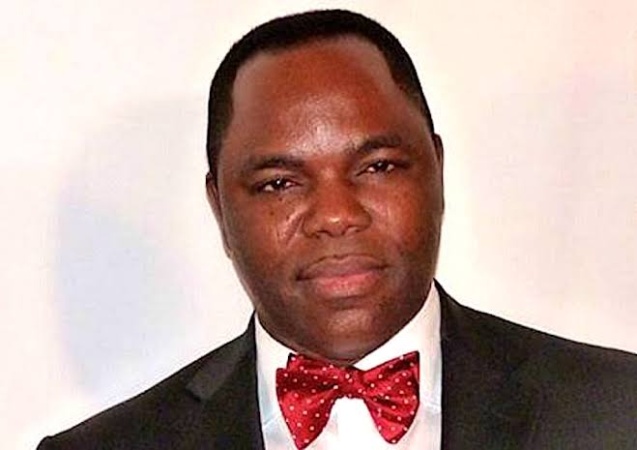
Executive Director of FixPolitics Africa, Anthony Ubani
The Executive Director of #FixPolitics Africa, Anthony Ubani, has described the emerging evidence of fabricated voter records as a direct challenge to the credibility of Nigeria’s 2027 elections.
In a statement entitled ‘Who put the ghosts in INEC’s voter register?’ the leadership and governance expert charged INEC to submit its register for independent scrutiny before Nigerians were asked to trust it with their votes.
According to Ubani, an election can be compromised long before the first ballot is cast. “It can begin with something as simple as a name that does not belong to a real person, a photograph of someone who has never existed, or an electoral official quietly manipulating the database entrusted to his care.
“That is why the revelations concerning artificial intelligence (AI)-generated photographs and other suspicious entries in the Independent National Electoral Commission’s voter register should alarm every Nigerian who values democracy and cares about the credibility of the 2027 elections.”
On October 27, 2026, INEC acknowledged public concerns about suspected AI-generated photographs in its preliminary voter register, which had been published online the previous day. The commission explained that some questionable records had already been flagged and that a verification and clean-up exercise was underway.
That explanation, Ubani pointed out, might have been reassuring, had subsequent disclosures not raised even more troubling concerns.
On October 30, INEC’s Director of Information and Communication Technology, Dr Lawrence Bayode, told Arise News that some registration officers had used their authorised access to introduce irregularities into the registration database. He explained that the problem was not confined to the locations already identified on social media.
Ubani added: “In another interview broadcast on November 1, Bayode described an even wider problem involving suspicious registrations, manipulated photographs and alleged misuse of a special registration procedure intended for persons with disabilities.
“According to figures attributed to him in subsequent media reports, INEC’s Automated Biometric Identification System examined 11,088,238 registrations from the 2026 exercise and flagged 1,545,052 records for various irregularities. Of these, 1,277,252 were reportedly adjudicated as invalid and removed before publication of the preliminary register, leaving approximately 267,800 requiring further verification.”
These figures, according to him, require careful interpretation. “They do not mean that 1.5m AI-generated voters have been discovered. Biometric screening can flag duplicate registrations, poor-quality records and other anomalies that do not necessarily establish deliberate fraud. Indeed, identifying and removing invalid records is part of what the system is supposed to do. Nevertheless, the scale of the records requiring investigation is substantial. It demands a full public accounting.”
A fictitious entry in the voter register, the leadership expert said, does not automatically become a fraudulent vote.
“The Electoral Act requires personal attendance, voter identification and accreditation through the Bimodal Voter Accreditation System or another prescribed device. Those safeguards matter. They are among the reasons Nigerians invested in electoral technology. However, they do not make a corrupted register harmless.
“Where false identities are deliberately inserted into a registration system, investigators must establish whether corresponding voter credentials were produced, whether accreditation safeguards could be circumvented, whether special-registration exemptions could be abused at polling units, and whether compromised records could facilitate impersonation or other irregularities,” he pointed out.
On the way out of the quagmire, Ubani raised six points which INEC must consider, including preservation of the complete preliminary register; publication of a comprehensive breakdown of the irregularities; a technical examination of the registration platform by an independent auditor; and real accountability.
He also urged the National Assembly to urgently conduct public oversight hearings and allow Nigerians access to the register.
“The National Assembly should urgently conduct public oversight hearings. It must require INEC to explain the failures, establish clear reporting deadlines, and ensure that any additional legal authority needed for independent verification is provided without undermining the commission’s constitutional mandate.
“Nigerians must be given an accessible and effective opportunity to verify their registration details, challenge fraudulent entries and correct genuine errors before certification. This includes adequate safeguards for voters living with disabilities, whose legitimate accommodation procedures must not become casualties of the scandal,” he said.
He charged INEC to commit to publishing an independently reviewed account of the clean-up before certifying the final register on December 15. “If material concerns remain unresolved, the commission must explain them openly and pursue a lawful remedy. A deadline must never become an excuse for certifying a register whose integrity has not been adequately established.”