ADAD

Updating your news feed...
NEWS EXPRESS is Nigeria’s leading online newspaper. Published by Africa’s international award-winning journalist, Mr. Isaac Umunna, NEWS EXPRESS is Nigeria’s first truly professional online daily newspaper. It is published from Lagos, Nigeria’s economic and media hub, and has a provision for occasional special print editions. Thanks to our vast network of sources and dedicated team of professional journalists and contributors spread across Nigeria and overseas, NEWS EXPRESS has become synonymous with newsbreaks and exclusive stories from around the world.







.webp)













Loading banners
Loading banners...
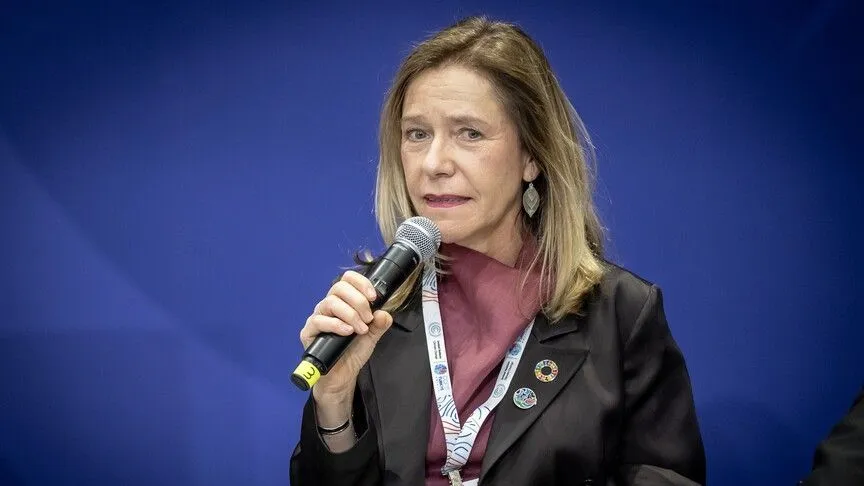
El Nino could intensify heat-related illnesses, disease outbreaks and air pollution into 2027, World Meteorological Organization (WMO) Secretary-General Celeste Saulo warned Monday.
Speaking at a COP31 news briefing in Antalya, Saulo said above-average temperatures could trigger health threats extending beyond direct exposure to extreme heat.
"We are speaking also about dengue outbreaks, malaria outbreaks," she said, explaining that the risks would vary depending on regional rainfall patterns.
"If we expect a hot and dry season, you will have wildfires. With wildfires, you will have poor air quality," she said.
Saulo said the WMO was working with the World Health Organization to improve communication about weather-related health risks.
"We are working with the World Health Organization to translate the messaging from weather patterns to health impacts," she said.
According to the WMO's State of the Climate Update 2026, El Nino is expected to become the strongest on record by December and persist into early 2027.
The report said global temperatures averaged approximately 1.47 degrees Celsius above pre-industrial levels between January and September.
El Nino typically has its greatest impact on global temperatures in the year following its development, the report added.
"We are supercharging our weather and El Nino will be a risk multiplier," Saulo said in a statement accompanying the report.
"Heatwaves, tropical cyclones, and rainstorms are intensifying faster than our historical baselines prepared us for," she warned.
The WMO report warned that extreme heat, drought and heavy rainfall could worsen food insecurity and alter the risks of infectious diseases, including cholera, malaria and dengue.
It cited preliminary estimates indicating more than 30,000 excess deaths linked to heat waves, drought and wildfires in Europe.
Saulo highlighted preparations underway in South America, including measures to establish emergency shelters ahead of potential flooding.
She also pointed to the use of weather forecasts to guide agricultural decisions and reduce the impact of extreme conditions.
"In some cases, it's about preparing shelters in advance to make sure that if there are floods, they have places for people," she said.
The report also highlighted progress in the expansion of early warning systems worldwide.
The number of countries reporting multi-hazard early warning systems rose from 56 in 2015 to 136 in 2025, according to the WMO. (AA)