 ADAD
Updating your news feed...

NEWS EXPRESS is Nigeria’s leading online newspaper. Published by Africa’s international award-winning journalist, Mr. Isaac Umunna, NEWS EXPRESS is Nigeria’s first truly professional online daily newspaper. It is published from Lagos, Nigeria’s economic and media hub, and has a provision for occasional special print editions. Thanks to our vast network of sources and dedicated team of professional journalists and contributors spread across Nigeria and overseas, NEWS EXPRESS has become synonymous with newsbreaks and exclusive stories from around the world.




Loading banners
Loading banners...

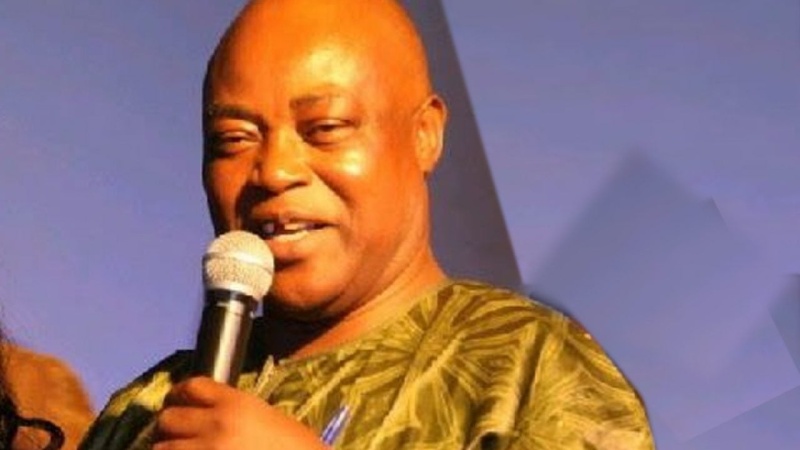
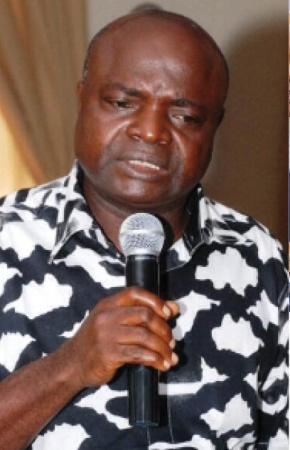
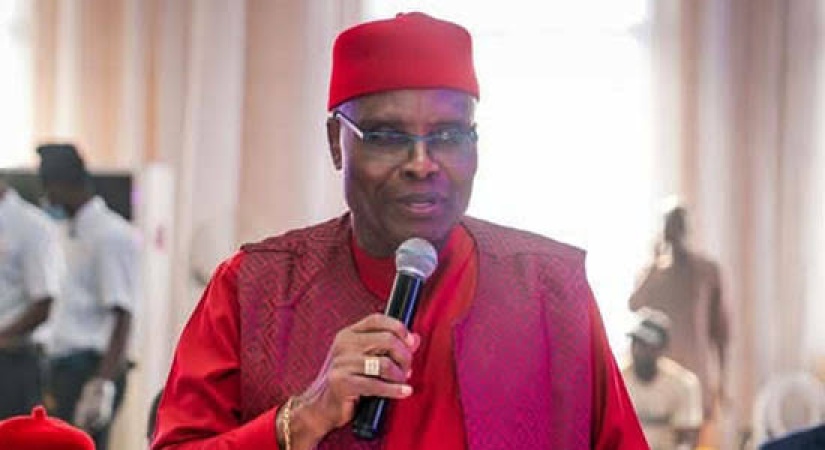
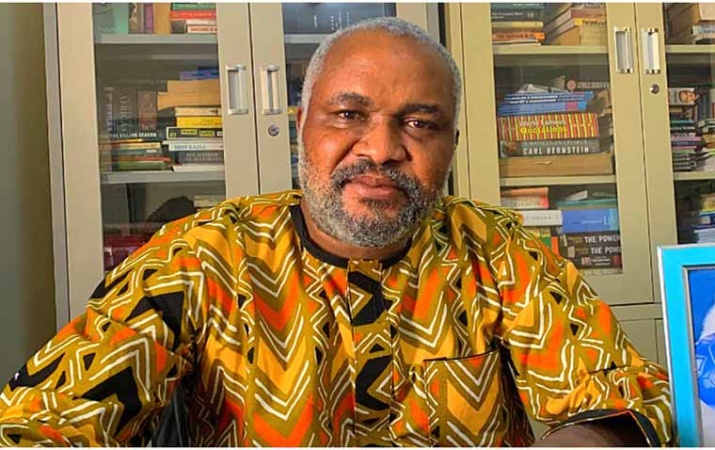
Executive Director of FixPolitics Africa, Anthony Ubani
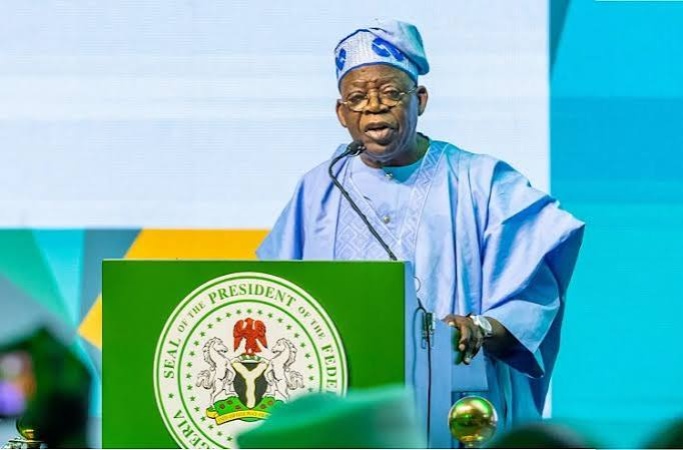
The pioneer Executive Director of #FixPolitics Africa, Anthony Ubani, has again raised concerns about the health of Nigeria’s President, Bola Tinubu, noting that Nigerians deserve to know exactly what is wrong with their leader, rather than be given assurances that all is well.
The leadership and governance expert, in a statement, asserted that there were some questions a democracy could not afford to leave permanently unanswered, adding that “the health and physical capacity of the person who exercises the enormous powers of the Nigerian presidency is one of them”.
President Tinubu’s health has once again become a subject of public discussion following the October 24 flag-off of the All Progressives Congress presidential campaign in Kaduna. The conversation, he added, had been fuelled not by any official medical disclosure, but by what Nigerians saw, what they did not know and what had remained unexplained. That distinction matters.
“The Kaduna rally itself was not the electoral disaster some critics have portrayed it as. Reuters reported that thousands of supporters filled much of the stadium as the President launched his re-election campaign. Photographs from the event also show a significant gathering. Any fair assessment must acknowledge that. Facts should not be manufactured simply because it suits a political argument. But crowd size is not the important question arising from Kaduna. The important question is the President himself.
“During the rally, television cameras captured First Lady Oluremi Tinubu placing an unidentified object into her husband’s mouth. News Central reported that it appeared to be a piece of candy. Other reports described it simply as ‘an unidentified substance’. Nobody outside the President’s immediate circle can responsibly say what it was. There is no verified evidence that it was medication. Therefore, that moment cannot honestly be presented as proof that President Tinubu suffers from a serious illness. But neither should the Presidency pretend that the questions generated by that moment are irrational,” he stated.
According to Ubani, political leadership depends partly on public confidence. “When questions concerning a President’s health have followed him for years, when he has recently returned from an unusually extended period abroad, when he has chosen not to attend most campaign rallies personally, and when fresh images once again cause citizens to question his physical condition, the responsible response is not ridicule, insults or propaganda; it is transparency.”
Tinubu left Nigeria on August 30 for what the Presidency originally announced as a three-week working vacation in Europe. He spent time in London before proceeding to Paris. The vacation was subsequently extended, and he eventually returned on September 29, roughly four weeks after his departure. The Presidency said throughout that period that he remained engaged with government business. On his return, he directly rejected speculation about his health, declaring himself “healthy, sound and ready to go”.
Those are important facts and must be acknowledged, Ubani argued.
There was, nevertheless, widespread speculation during the extended stay that health considerations might have been involved. No credible evidence has emerged to prove that allegation. It would therefore be irresponsible, Ubani said, to present a supposed European medical treatment as fact.
“Yet this is precisely why presidential transparency matters. Where information is withheld, rumours occupy the vacuum,” he noted.
There was another constitutional controversy surrounding the vacation. Section 145 of the Constitution provides that whenever the President proceeds on vacation, he should transmit a written declaration to the President of the Senate and the Speaker of the House, enabling the Vice-President to perform presidential functions as Acting President.
However, contemporary reporting could not establish publicly whether such a declaration had been transmitted. The African Action Congress subsequently went to court over the matter. The Presidency maintained that Tinubu continued directing affairs of state while abroad.
Again, the central issue is transparency, Ubani noted.
Then, barely two weeks after his return, President Tinubu announced that he would not personally attend every APC campaign rally. His publicly stated explanation was straightforward: Nigeria required his attention; governance could not stop; there were financial obligations to meet and investors to attract.
The APC timetable subsequently scheduled the President to personally attend rallies in only a selection of states.
The governance expert described the explanation as entirely plausible.
Even as an incumbent President should govern rather than spend months travelling from rally to rally, Ubani said, “Nigerians are equally entitled to ask whether stamina or health considerations influenced the decision. Asking that question is not hatred; it is citizenship. The mistake would be to convert the question into a diagnosis.
“No television clip can diagnose a President. No photograph can establish permanent incapacity. Political opponents are not physicians, and social media speculation is not a medical examination. Illness itself should never be treated as a moral failing. Every human being can become ill. There is nothing shameful about receiving treatment, taking medication or managing a chronic condition. The constitutional question is different: Can the President fully discharge the demanding functions of his office? That is where private health becomes a legitimate matter of public interest.”
Nigeria’s President is Head of State, Chief Executive of the Federation and Commander-in-Chief of the Armed Forces.
Against this background, Ubani asserted that decisions affecting more than 200 million people could arise at any hour. “Economic emergencies, terrorist attacks, military decisions, diplomatic crises and national security threats do not wait until a President is rested. A President does not need to be an athlete. He does, however, need the cognitive and physical capacity required to exercise the powers entrusted to him.”
Citing President Umaru Yar’Adua, who travelled to Saudi Arabia in November 2009 for medical treatment, and the events surrounding his prolonged absence, Ubani said Nigeria should have learnt something permanent from that episode: the health of a President cannot be managed as a family secret or party communications problem when it materially affects his ability to govern.
Yar’Adua’s prolonged absence, combined with uncertainty surrounding his condition and the failure to transfer authority clearly to Vice-President Goodluck Jonathan, plunged Nigeria into a constitutional crisis. Eventually, on February 9, 2010, the National Assembly resorted to the extraordinary “Doctrine of Necessity” to make Jonathan Acting President. President Yar’Adua later died on May 5, 2010.
“Neither the President nor any candidate for public office owes Nigerians every intimate detail of his medical history. Privacy remains a human right. But someone asking more than 200 million people to entrust him with enormous constitutional powers owes those citizens reasonable assurance that he can exercise those powers. The distinction is simple: Nigerians are not entitled to medical gossip; they are entitled to confidence in presidential capacity.
“The same standard should apply to every serious candidate seeking the presidency in 2027. This should not become an anti-Tinubu campaign. Nigeria would benefit from a culture in which major presidential candidates voluntarily publish credible medical fitness assessments, just as citizens routinely submit medical certifications before assuming far less consequential responsibilities.
“President Tinubu says he is healthy. That statement deserves to be placed on the record and treated fairly. But because the question has persisted, and because he is asking Nigerians for another four years in perhaps the most demanding office in the country, reassurance from political aides and campaign officials will inevitably have limits. An independent medical assessment would carry considerably more weight,” he said.




