 ADAD
Updating your news feed...

NEWS EXPRESS is Nigeria’s leading online newspaper. Published by Africa’s international award-winning journalist, Mr. Isaac Umunna, NEWS EXPRESS is Nigeria’s first truly professional online daily newspaper. It is published from Lagos, Nigeria’s economic and media hub, and has a provision for occasional special print editions. Thanks to our vast network of sources and dedicated team of professional journalists and contributors spread across Nigeria and overseas, NEWS EXPRESS has become synonymous with newsbreaks and exclusive stories from around the world.






.webp)




Loading banners
Loading banners...

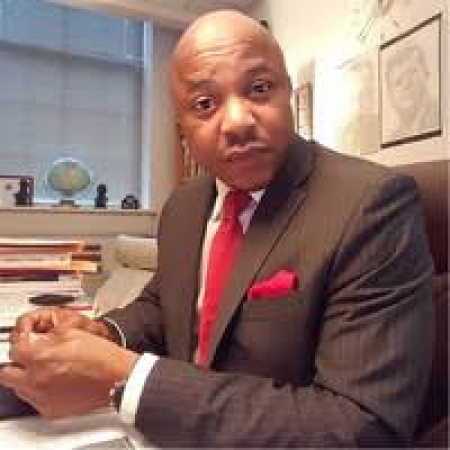
VITUS OZOKE, PhD
By VITUS OZOKE, PhD
Violence does not erupt spontaneously; words seed it by legitimizing coercion. When political opposition is equated with disloyalty, when public office is mistaken for personal dominion, and when livelihoods become tools of intimidation, the groundwork for violence is laid. Armed operatives shielded by state authority act with impunity, emboldened by rhetoric that frames dissent as a threat to be crushed. This is how societies descend into violence—through language that authorizes oppression
On September 1, 2026, Channels Television reported Governor Francis Nwifuru's chilling response to opposition allegations of harassment in Ebonyi: "They will see real threat at the right time." At the council chairmen's inauguration, he directed them to ensure no opposition victory in 2027. Such pronouncements warrant rigorous scrutiny, as they foreshadow consequences that too often go unexamined until it is too late.
A governor may urge his party to campaign vigorously, but he cannot command the electorate to surrender its right to choose. When victory is pursued through threats, citizens must scrutinize the means that subordinates may feel empowered to use. This dilemma transcends Ebonyi: What happens when coercion becomes embedded in political culture and the demand to "deliver" elections overrides democratic norms? This is the pressing question before Igboland in 2027.
This is no mere alarmism; it is an urgent warning meant to prevent violence. Governors Soludo (Anambra), Mbah (Enugu), Nwifuru (Ebonyi), and Uzodimma (Imo) must remember: their duty to protect their people endures, even—especially—when the electorate rejects their preferred candidates or Abuja's directives.
Support for Bola Tinubu or the APC is a constitutional right, as is the attempt to persuade voters. But public office does not confer ownership of the Igbo electorate. If political ambition leads to unlawful violence, accountability must extend beyond the direct perpetrators to those whose decisions and rhetoric enabled it.
Ndi Igbo are intimately acquainted with violence and the scars of war. Collective memory preserves the lessons of past conflicts, in which the consequences of political recklessness extend far beyond the architects. Wars rarely begin with gunfire; they originate in unchecked assumptions, political arrogance, and promises leaders cannot lawfully fulfill yet feel compelled to honor.
Every war is preceded by unmistakable warning signs, too often recognized only in hindsight. History's most devastating conflicts did not erupt without cause; escalating tensions, hardened divisions, deepening distrust, and perilous political calculations paved the way.
The Nigerian Civil War followed constitutional crises, coups and counter-coups, massacres, mass displacement, and a total collapse of trust in the political order. By July 1967, when violence erupted, faith in peaceful coexistence was already irreparably lost.
The Rwandan genocide did not erupt overnight. Years of ethnic polarization, propaganda, discrimination, and extremist mobilization—accompanied by ignored warnings—paved the way to catastrophe. The signs were evident long before the slaughter began.
Kenya's 2007 post-election violence was preceded by the calculated manipulation of ethnic tensions, incendiary rhetoric, impunity, and orchestrated political mobilization. By the time the disputed election took place, conditions for violence were firmly entrenched.
Sudan's ongoing war did not erupt suddenly in April 2023. Months of escalating tensions between the Sudanese Armed Forces and the Rapid Support Forces, fueled by disputes over power and the political transition, intensified until violence became inevitable.
Though these catastrophes differ, each reveals the peril of normalizing destructive political practices. None suggest that war in Igboland is inevitable; rather, they illustrate the imperative to confront dangerous precedents before they become accepted as governance. Prevention must begin before a campaign launch degenerates into another funeral in Enugu.
Again, violence seldom arrives unheralded. The challenge before Igboland is to recognize warning signs before escalation becomes inevitable. The central threat is not violence itself, but the presumption that Igbo governors can pledge the people's votes as if electoral support were a commodity under their control.
In July 2026, Gov. Hope Uzodimma claimed that all five Southeast Igbo governors had pledged support for Bola Tinubu's reelection. Abia's Gov. Alex Otti swiftly repudiated Uzodimma's claim, insisting that only the Igbo electorate can decide. This dispute exposes the core democratic issue: if a governor cannot commit his peers, how can any Igbo governor presume to bind millions of Ndi Igbo to a party and candidate they reject?
The issue is not any Igbo governor's support for Tinubu—every politician is entitled to their preference. The problem arises when an endorsement becomes a pledge to "deliver" votes. Any Igbo governor may offer an endorsement and campaign resources, but none, including Soludo, Mbah, Nwifuru, or Uzodimma, can legitimately guarantee the votes of millions of free Igbo citizens.
The legal maxim nemo dat quod non habet—no one gives what they do not possess—applies as much to politics as to property. Igbo governors do not own their people; they cannot commit Igbo votes to Tinubu or the APC. Such pretensions are both illegitimate and dangerous.
The danger sharpens at the intersection of promise and reality. When governors pledge electoral outcomes but the electorate rejects their chosen candidate, a contradiction emerges: the promise endures, but the votes do not. In this gap, the risk of coercion and violence intensifies.
History shows that violence often erupts at the intersection of political commitment and reality. The peril lies less in candidate support than in the relentless pressure to manufacture outcomes. In a democracy, leaders accept the verdict and return to persuasion; danger arises when they treat dissent as an obstacle to be eliminated.
If those four Igbo governors who pledged victory to Tinubu and Abuja begin to fear defeat among their own people, the danger becomes acute. When those governors prioritize promised outcomes over the democratic process, they undermine electoral and governance institutions and render Igbo lives expendable.
Public boasts create expectations that breed pressure, manipulation, and, ultimately, unrest. Repression and retaliation can quickly spiral beyond the architects' control. This sequence is both preventable and perilous.
Conflict scholars identify early indicators of impending political violence: escalating hostile rhetoric, demonization of opponents, suppression of dissent, partisan abuse of state mechanisms, intimidation, misinformation, the emergence of coercive enforcers, and erosion of faith in democratic safeguards.
The Southeast Igboland already faces conditions that demand utmost restraint. Amnesty International's August 2025 report documented grave abuses by state and non-state actors, including extrajudicial killings, torture, disappearances, and arbitrary detention. In particular, the state-backed Ebube Agu force has been implicated in intimidation and repression. Notably, Igbo governors and security agencies failed to respond to these findings.
Although these are documented findings, not convictions, they warrant thorough investigation and urgent preventive action. The threat is not theoretical: Igboland already harbors armed actors, traumatized communities, contested security, and pervasive distrust. Adding electoral pressure is dangerously reckless.
The intersection of determination and desperation is perilous. While many Igbo voters remain deeply dissatisfied with the APC and Tinubu's administration, the four allied governors face intense pressure to prove their political worth to Abuja and to external interests. If not managed with restraint and respect for the Igbo electorate, this combustible tension could ignite violence in Igboland in January and in the weeks and months after the election.
If Ndi Igbo become convinced their votes will not count, faith in the governors and institutions will erode. If the four governors and their operatives believe they must manufacture results at all costs, they risk further eroding public trust. Both outcomes imperil democracy and peace in AlaIgbo.
These four Igbo governors evoke the biblical Four Horsemen of the Apocalypse—conquest, war, famine, and death. As a political metaphor, they symbolize ambition turning violent, the destruction of livelihoods, and ultimately, needless death. Soludo. Mbah. Nwifuru. Uzodimma.
Four governors now stand at a crossroads: to defend the political freedom of Ndi Igbo or risk becoming harbingers of an electoral apocalypse. Their actions are similar: if they seek to subdue an unwilling Igbo electorate through coercion, subordinating public safety to political promises, they may unleash a devastating chain reaction—electoral conquest, violence, economic collapse, and the displacement and deaths of innocent Igbo citizens whose only crime was demanding that their votes count.
For Ndi Igbo, such images are not abstractions but lived experience and history. We know the cost when political catastrophe invades daily life and how swiftly elite ambition turns into collective suffering. We must not repeat this journey because of reckless promises the four horsemen made to Bola Tinubu.
The risk of electoral violence in Igboland in 2027 is too grave to be minimized. The difference now is that the four Igbo horsemen might prioritize loyalty to Tinubu over their people's very lives—even enabling lethal violence against dissenters. No ambition can justify shedding Igbo blood. Soludo, Mbah, Nwifuru, and Uzodimma must never become instruments of their people's destruction.
In 2023, Bola Tinubu lost to Peter Obi in all five Southeast Igbo states—when petrol averaged ₦264 per liter, rice ₦521 per kilogram, and the exchange rate hovered around ₦461 to the dollar. Life was difficult, and these figures reflected hardship. Now, as of October, petrol at NNPC outlets has soared to ₦1,405 per liter, rice to ₦54,000–₦55,000 per 50kg bag, and the exchange rate to ₦1,362 to the dollar.
What, then, convinces these four horsemen that rejection has turned to enthusiasm? Which household bill or market stall reveals this transformation? If voters rejected Tinubu before experiencing his leadership, what compelling change justifies the four horsemen governors' newfound embrace?
Political preferences can shift, but Igbo governors must earn and explain those shifts. Their endorsements do not automatically transform public sentiment. Have the four horsemen truly discovered a changed electorate, or are they mistaking their own conversion for popular consent? More likely, they are preparing to enforce their will through repression.
To Govs. Mbah, Soludo, Uzodimma, and Nwifuru: you still hold the reins. Restrain your supporters, limit security operations, and protect opposition activity. Make it clear that no one may intimidate citizens in your name. Your duty to shield Igbo communities from Abuja-induced violence is nonnegotiable. No promise to Bola Tinubu or Abuja justifies unleashing disaster in Igboland.
Let there be no mistake: this warning is about prevention, not prediction. The real danger is complacency—the belief that violence is impossible. History shows that no society is immune and no community is permanently protected from political folly. This is why Soludo, Mbah, Uzodimma, Nwifuru, and all Southeast leaders must publicly commit to four principles: Prohibit voter intimidation. Reject all forms of electoral coercion. Forbid partisan abuse of state institutions. Uphold the freely expressed will of the Igbo electorate.
These commitments require concrete action, oversight, and real consequences. Anything less fuels suspicion, heightens tension, and propels Ndi Igbo toward disaster. Declarations of peace ring hollow if operatives can attack opponents with impunity.
Responsibility extends to language itself. Governors must not use menacing rhetoric under the pretense that it is harmless. Public authority amplifies words, endowing them with the power to intimidate in ways ordinary speech cannot.
This warning must be unequivocal. If evidence shows that any governor orchestrated or enabled violence against Ndi Igbo in pursuit of electoral promises, accountability must extend to both the architects and the executors. Political rights must be protected, and electoral victory or celebration cannot erase criminal responsibility.
Ndi Igbo must also reject retaliation. No one—official, aide, party member, or relative—should be a legitimate target because of political affiliation. Young people must be able to exercise their rights without risking their lives; their commitment to democracy should never be measured in blood.
The risk of violence is grave and cannot be minimized. What is new—and chilling—is the prospect that these four Igbo governors might enable violence against their own people to advance a Yoruba man's political ambition. This possibility should alarm us all. Tufiakwa to Efulefu!
Instead of violence, we must preserve evidence and submit it to international authorities as warranted. Justice must follow the evidence through lawful channels, wherever it leads. Document threats accurately. Preserve the original evidence. Protect witnesses. Reject fabrications as strongly as official cover-ups.
Wars begin long before the first shot is fired. They start when leaders believe they can control what they cannot, when ambition overrides democratic restraint, and when power eclipses consent and institutional trust erodes.
The most urgent question for 2027 is not who will win, but whether the people of Igboland will be allowed to choose. If they are, peace remains possible. If not, history warns of consequences that no one can control once unleashed.
Let this warning be unmistakable: If evidence establishes that any governor ordered, enabled, or is responsible for attacks on Ndi Igbo in pursuit of electoral victory, accountability must extend to all responsible parties. No election result or celebration can absolve violence or unlawful killing. Ndi Igbo are entitled to safety and political freedom.
Enough of the nonsense already!
• Dr. Vitus Ozoke is a lawyer, human rights activist, and public affairs analyst based in the United States. He writes on politics, governance, and the moral costs of leadership failure in Africa.




