 ADAD
Updating your news feed...

NEWS EXPRESS is Nigeria’s leading online newspaper. Published by Africa’s international award-winning journalist, Mr. Isaac Umunna, NEWS EXPRESS is Nigeria’s first truly professional online daily newspaper. It is published from Lagos, Nigeria’s economic and media hub, and has a provision for occasional special print editions. Thanks to our vast network of sources and dedicated team of professional journalists and contributors spread across Nigeria and overseas, NEWS EXPRESS has become synonymous with newsbreaks and exclusive stories from around the world.





















Loading banners
Loading banners...

Imo State Gov Hope Uzodimma Inset: Imo Robotic Centre
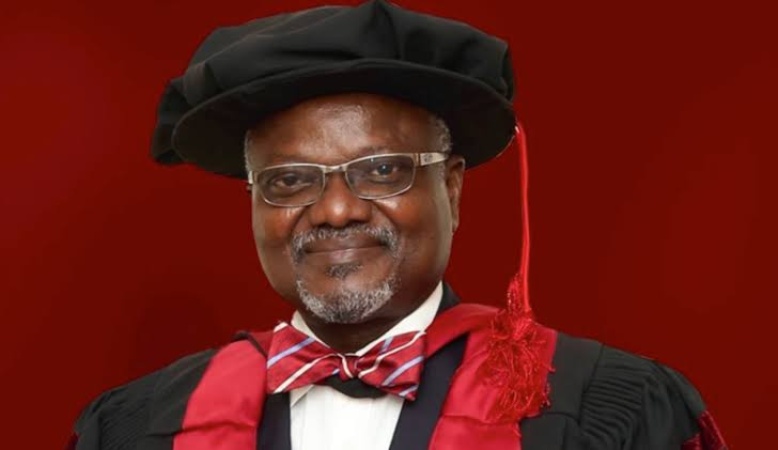
Imo State University has partnered with the Imo Robotic Centre to establish a robotic surgery academy aimed at training 500 surgeons and other surgical professionals within two years, in a move to expand access to advanced healthcare services and reduce Nigeria’s dependence on medical tourism. The initiative, described by Consultant Urologist and Robotic Surgeon, Prof Kingsley Ekwueme, as Africa’s first dedicated university-based robotic surgery academy, is expected to provide specialised training for more than 250 Nigerian surgeons alongside other medical professionals from across Africa.
Ekwueme, who was recently appointed Professor of Robotic Surgery at Imo State University, disclosed that the partnership followed a meeting with the university’s management on August 18, with an official university publication issued the following day. He said a memorandum of understanding was subsequently signed, while a departmental building was allocated for the academy’s establishment. “We have successfully performed the first surgery in the region in August. We followed up with multiple robotic surgeries at the Imo Robotic Centre, where many patients are already benefiting from this state-of-the-art technology, now available for the first time in southeast Nigeria,” he said. “We have also partnered with Imo State University, following a successful meeting on the 18th of August, 2026, and launched the robotic surgery academy at the university.”
The professor said the academy would strengthen Nigeria’s capacity to deliver sophisticated surgical procedures locally, while equipping healthcare professionals with the expertise required to operate robotic systems safely and effectively. According to him, the programme will cover several surgical specialties, including urology, gynaecology and general surgery, rather than concentrating solely on prostate-related conditions. “We are not only training surgeons, but we are also training the whole surgical team. And this is very important because we want to train a team to be able to deliver safe and effective robotic surgery at their own local centre,” Ekwueme explained.
He added that the academy would support participating hospitals in acquiring and installing robotic equipment, while providing technical training and assistance to ensure sustainable operations. Ekwueme said the Imo Robotic Centre, developed in partnership with the Imo State Government under Governor Hope Uzodimma, had commenced operations and successfully performed several robotic-assisted procedures. The development, he noted, would make advanced surgical treatment increasingly accessible to patients in the South-East, many of whom previously had to travel long distances or seek specialised medical care overseas. “We have bridged the gap. So, nobody needs to travel beyond leaving your house and driving a few minutes down the road to have your surgery,” he stated.
Explaining the benefits of robotic surgery, Ekwueme said the technology provides surgeons with magnified, three-dimensional views of the operating area and sophisticated instruments that enable greater precision during complex procedures. He identified prostate and kidney operations, fibroid removal, hysterectomy, ovarian procedures, bowel cancer surgery and selected gallbladder operations among treatments that could be performed using robotic assistance. According to him, the technology can reduce surgical trauma, blood loss and recovery time in appropriately selected patients when compared with conventional open surgery.
He stressed, however, that successful outcomes depend not merely on acquiring sophisticated equipment but also on the competence of the surgeons and supporting medical teams. “The surgeon has to also be proficient in the use of the robotic machine. And that is where this training, that we are creating, becomes important,” he said. The professor further disclosed plans to establish an oncology centre adjacent to the robotic surgery facility to provide advanced cancer diagnosis and treatment services. He said a medical institute was also being developed through collaboration between the state government and the Imo Robotic Centre to strengthen specialised medical services and professional training.
Ekwueme, who also serves as Clinical Lead for Urology in North Wales at Glan Clwyd Hospital, United Kingdom, said his experience in developing robotic surgery programmes overseas had strengthened his determination to introduce similar capabilities in Nigeria. He said his team had performed more than 145 robotic procedures through a programme he developed, and he had been involved in specialist training and the introduction of robotic technologies. He also said his team performed what he described as West Africa’s first robotic-assisted gynaecological operation through its programme, with the patient discharged on the same day.
On the economic implications, Ekwueme maintained that expanding robotic surgery services across Nigeria could reduce expenditure on overseas medical treatment and create opportunities for Nigerian healthcare professionals working abroad. He urged the Federal Government to review import duties and other charges on sophisticated medical equipment to encourage investment and improve access to advanced treatment. “We know how to acquire affordable robotic systems. I will advise any public institution to come to train with us. We will help them to acquire robots, without a doubt,” he said.
The professor also called on chief medical directors of public hospitals to explore partnerships with the academy for training, equipment procurement and the establishment of robotic surgery units. He expressed optimism that the initiative would help reverse the migration of skilled medical professionals and position Nigeria as an emerging destination for specialised surgical care. “In ten years, I see every Nigerian having access to robotic surgery anywhere in Nigeria. I see a Nigeria where brain drain would be significantly less,” he said. “I dare to predict there is going to be a reversal of brain drain. A reversal back to Nigeria.”
Explaining the clinical benefits of robotic surgery, Ekwueme said the technology could be deployed across several medical specialties, including urology, gynaecology, general surgery and selected cardiac procedures. He identified prostate and kidney operations, fibroid removal, hysterectomy, ovarian procedures, bowel cancer surgery and certain gallbladder procedures among treatments that could be performed using robotic assistance. According to him, robotic systems provide surgeons with highly magnified, three-dimensional views of the operating field and sophisticated instruments that allow greater precision during complex procedures, potentially reducing surgical trauma, blood loss and recovery time in appropriately selected patients. “The advantages of robotic surgery cannot be overstated,” he said.
Beyond expanding treatment options, Ekwueme expressed optimism that the initiative would help establish a sustainable network of technologically equipped hospitals across Nigeria, enabling patients to access advanced surgical care locally while creating opportunities for highly skilled Nigerian medical professionals working abroad to return home. “In ten years, I see every Nigerian having access to robotic surgery anywhere in Nigeria. I see a Nigeria where brain drain would be significantly less,” he said. “I dare to predict there is going to be a reversal of brain drain. A reversal back to Nigeria.”
Describing the development as a potential turning point in the country’s healthcare delivery system, Ekwueme expressed confidence that sustained investment in medical technology, specialist training and institutional partnerships could transform access to advanced surgical services. “I seriously believe that a medical revolution is happening in Nigeria at the moment,” he declared. (The Nation)




