 ADAD
Updating your news feed...

NEWS EXPRESS is Nigeria’s leading online newspaper. Published by Africa’s international award-winning journalist, Mr. Isaac Umunna, NEWS EXPRESS is Nigeria’s first truly professional online daily newspaper. It is published from Lagos, Nigeria’s economic and media hub, and has a provision for occasional special print editions. Thanks to our vast network of sources and dedicated team of professional journalists and contributors spread across Nigeria and overseas, NEWS EXPRESS has become synonymous with newsbreaks and exclusive stories from around the world.










Loading banners
Loading banners...


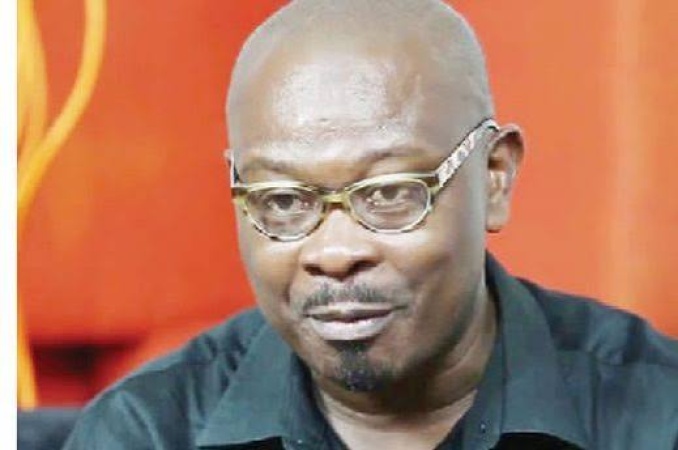
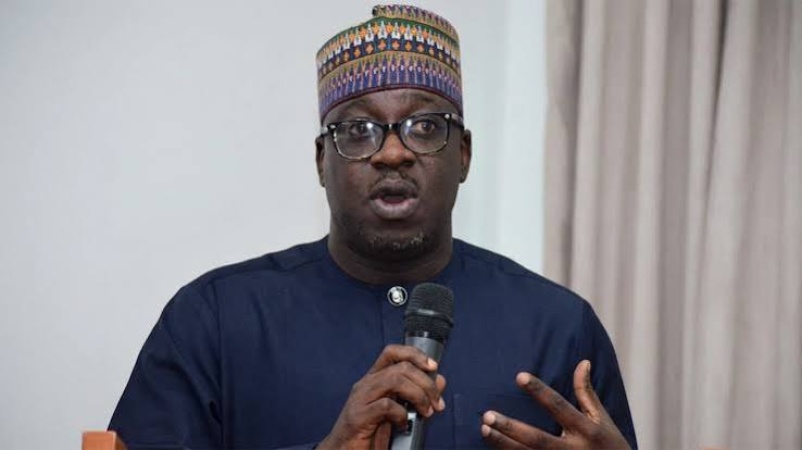
Energy Expert, Kelvin Emmanuel
An energy expert, Kelvin Emmanuel, has stated that pledging Nigeria’s future production in exchange for loan at a time when crude oil price is high shows Nigeria’s financing is in trouble.
Speaking in an interview on Channels TV, he said the government should be comfortable with revenue generated from crude oil with the delivery price of crude today at $145 per barrel.
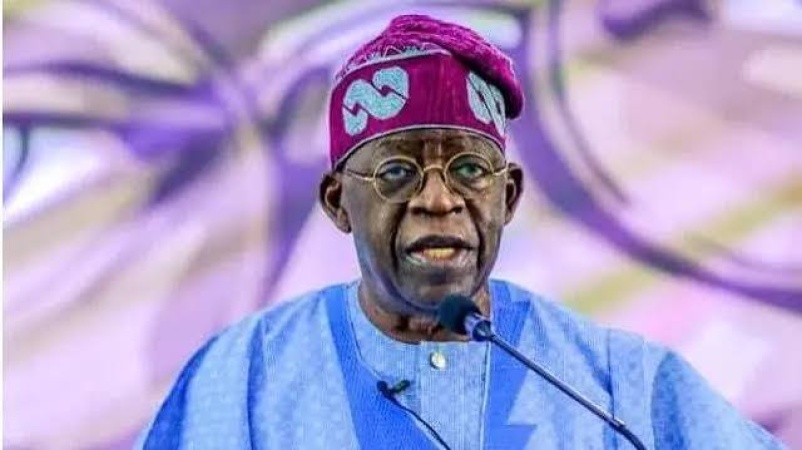
He spoke just as an expert in credit administration and financial management, Asiwaju Busari Shaamsuddeen Akande, urged President Bola Tinubu to ensure that Nigeria’s proposed $20.52bn and €1.045bn external borrowing plan is tied to projects capable of generating revenue and delivering measurable economic benefits.
In the same vein, amidst the concerns raised over the fresh loans, the federal government defended move, saying the proposed $21.7 billion external borrowing plan should be seen as investment instead of loan.
But Emmanuel, who is the Managing Partner, The Energy Consulting Practice said with the higher prices of crude oil with November future cargoes priced at $145, there was no need for the federal government to embark on fresh borrowing.
He said, “The delivery price for November cargoes, port cargoes, is $145 to Dangote in Lekki. The delivery price today. So if crude oil prices are this high and you’re supposed to get revenue accretion from higher crude oil prices, why are you going to borrow $20 billion for infrastructure and agriculture and education? It’s something that’s not added up.
“The subsidy savings from the 300,000 barrels of crude oil that was used for recovery on subsidy, it is still not being properly accounted for. I can give you five areas of leaks, major leaks, not minor leaks, of maybe $100 million or $50 million that the government is not paying attention to.
“So which beggars believe? Why are you going for more concessionary loans? And why are the interests on the forward sale loans so high? For Project Leopard, it was 7%, 6.5% interest margin, 0.5% liquidity premium, and then another 4% for your Secured Overnight Finance or your London Interbank Offered Rate for three months’ liability. The total interest on a US dollar loan for forward sale agreement for Leopard was $11.5 billion.
“I know the Ministry of Finance came and said, oh, interest to revenue ratio is not 124% of revenues. But guess what? The total debt stock today, cumulatively, is about N166trn, not N144trn.”
He also accused the government of fiscal recklessness, saying the Minister of Finance and Coordinating Economy, Taiwo Oyedele, was not truthful with the interest-to-revenue ratio of the country.
“So the minister’s saying that the interest-to-revenue ratio is not 124%, it’s less than 70%, it is not true. And the reason it’s not true is because the federal government’s share of the total debt stock, federal, state, and local government, municipal government, is actually 91.6%. The share of states is actually 8.4% of the total debt stock.
“The federal government’s share of that is 91.6%, right? Your debt to GDP ratio, because there’s a fiscal ceiling of 40%, your debt to GDP ratio currently is 38.1%, when you factor in ways and means, securities, AMCON liabilities, FCT guarantees, and NBET arrears. It’s 38.1%, which is a red line. Four years ago, we were apprehensive when our debt to GDP ratio crossed 30%. Today, it is 38.1%, and nobody is batting an eyelid.
“So, it’s against the Fiscal Responsibility Act. The federal government and the National Assembly have stalled and refused to pass the amendment to the act that establishes the Fiscal Responsibility Commission, because they know when passed and the FRC does its job, it will prevent the federal government from fiscal recklessness.”
“In the last 24 months, for example, the government has done two forward sale loans. Project Leopard was done last year. $2 billion for 35,000 barrels a day when the grace period and moratorium period expires.”
Tinubu should tie fresh loans to revenue-yielding projects
An expert in credit administration and financial management, Asiwaju Busari Shaamsuddeen Akande, has urged President Bola Tinubu to ensure that Nigeria’s proposed $20.52bn and €1.045bn external borrowing plan is tied to projects capable of generating revenue and delivering measurable economic benefits.
Akande, in an analysis of the proposed borrowing in Calabar, said the government should prioritise revenue generation and foreign exchange savings rather than rely mainly on the country’s debt-to-GDP ratio to assess its capacity to repay loans.
He argued that Nigeria’s ability to service its debts depended largely on government revenue, warning that rising interest payments could leave the government with fewer resources for infrastructure and essential public services.
The financial management expert called for strict project-level accounting and monitoring to ensure that borrowed funds were used for their designated purposes.
He said the government should ring-fence the proposed loans for specific infrastructure projects, including port modernisation and power transmission, and subject each project to cost-benefit analysis before approving funding.
Akande also recommended greater use of non-interest financing instruments, particularly sovereign Sukuk, as an alternative to conventional borrowing.
He said asset-backed Sukuk structures, including those based on leasing and construction financing, could attract institutional investors and provide funding for viable infrastructure projects.
According to him, such arrangements could link investors’ returns to underlying assets or project-related income while encouraging transparency and accountability in the use of public funds.
Akande, who is a Fellow of the National Institute of Credit Administration and a Certified Management Accountant, said borrowing was not inherently harmful but warned that it could become a fiscal burden if the returns from funded projects failed to justify the cost of financing.
However, the Minister of Finance and Coordinating Minister of the Economy, Taiwo Oyedele said the funds are intended to finance productive investments that will drive economic growth and improve the lives of Nigerians.
Addressing State House correspondents after the Federal Executive Council, FEC meeting on Wednesday, presided over by President Bola Ahmed Tinubu, Oyedele said the facilities were necessary to allow the government plan ahead.
He said the government cannot act on spontaneity, but needed to plan ahead to enhance the living standards of the people.
Oyedele said the government was looking at the loan to finance projects that would strengthen national productivity and generate long-term economic value, adding “This is investment, not borrowing.”
The proposed loan plan comprises $20.52 billion and €1.045 billion for projects and programmes across transportation, security, healthcare, agriculture, energy, digital infrastructure, education and social protection.
Oyedele noted that Transportation infrastructure accounts for about $10.6 billion, covering major projects such as the Sokoto-Badagry and Lagos-Calabar highways and the Kano-Kaduna rail project.
The Minister disclosed that approximately $7.9 billion was expected from multilateral and bilateral partners, with the World Bank among the major institutions providing support.
He further explained that a $5 billion World Bank component would attract concessional financing at an average interest rate of about 2.1 per cent, while some social-sector loans would carry rates of around two per cent.
The minister said the government was prioritising favourable financing terms to reduce borrowing costs and ensure that the projects delivered lasting economic benefits.
He argued that borrowing was a norm worldwide and that there was no country that did not borrow to build its economy. (Weekend Trust)




