 ADAD
Updating your news feed...

NEWS EXPRESS is Nigeria’s leading online newspaper. Published by Africa’s international award-winning journalist, Mr. Isaac Umunna, NEWS EXPRESS is Nigeria’s first truly professional online daily newspaper. It is published from Lagos, Nigeria’s economic and media hub, and has a provision for occasional special print editions. Thanks to our vast network of sources and dedicated team of professional journalists and contributors spread across Nigeria and overseas, NEWS EXPRESS has become synonymous with newsbreaks and exclusive stories from around the world.











Loading banners
Loading banners...

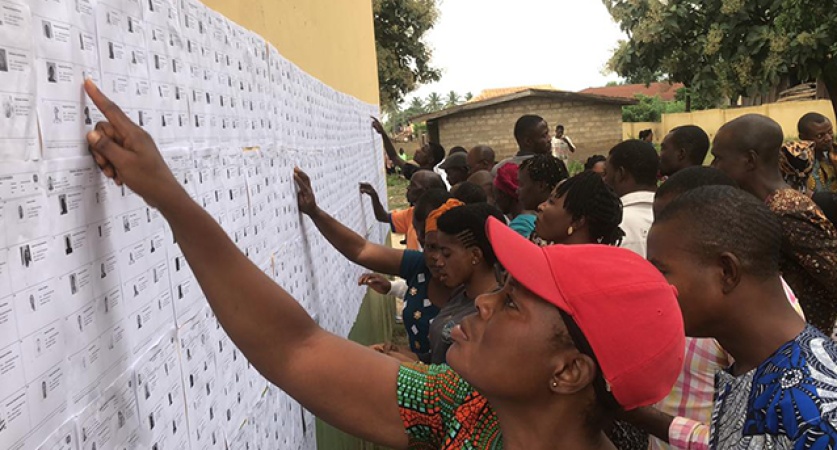
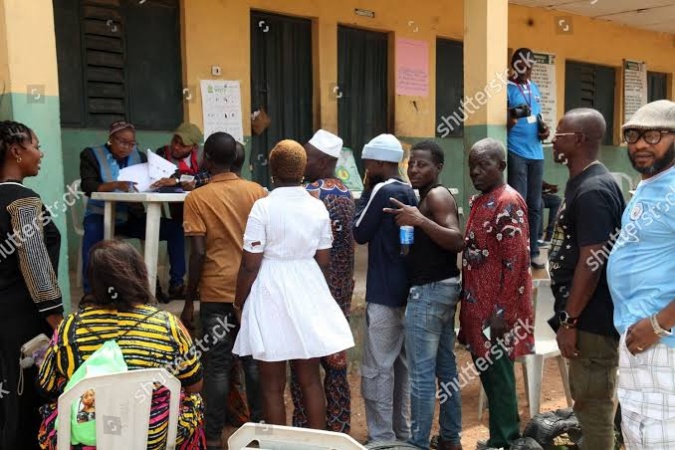
Eligible voters queuing up to vote
By OBIOTIKA WILFRED TOOCHUKWU
Nigeria is a nation in urgent need of significant and essential change. Yet, the change we desperately seek may not begin with a new political party, a different system of government, or the emergence of another charismatic voice promising to rescue the country from its troubles. It must begin with a fundamental transformation in the relationship between citizens and political power. Our world is sleeping in the dark, but we have fallen asleep in the Light. We have access to information, democratic institutions, education, religious teachings, historical experiences, and the painful lessons of our collective existence. But we continue to surrender our judgment to political interests that have repeatedly demonstrated their ability to exploit our hopes, fears, poverty, and desperation. If we do not begin to use our freedom to defend our freedom, we may eventually lose the very liberties we take for granted.
One of the greatest dangers facing a democracy is not merely the dishonesty of its political leaders but the willingness of its citizens to accept political narratives without sufficient scrutiny. When citizens become emotionally attached to politicians, they may begin to defend what they would ordinarily condemn, excuse failures they would never tolerate in their personal lives, and celebrate promises that have no credible foundation. Political deception flourishes where critical thinking is weak and personal dependence on political patrons is strong. A citizen who believes that his future depends entirely on the goodwill of a politician may find it difficult to question that politician honestly. A young person who expects employment through political connections may hesitate to condemn corruption. A struggling family that depends on occasional handouts may feel compelled to defend a political benefactor, even when the wider economic circumstances remain unbearable.
Government should create conditions in which people can flourish; it should not become the sole source of their identity, confidence, ambition, or hope. History offers grave warnings about the consequences of organised deception and unquestioning obedience. Otto Adolf Eichmann, a major organiser of the deportation of European Jews during the Holocaust, became one of the principal defendants in the 1961 Jerusalem trial. His role in the Nazi machinery of persecution demonstrates the terrible consequences of bureaucratic obedience, dehumanisation, and the systematic organisation of wrongdoing. The Nuremberg trials, held after the Second World War, also exposed the machinery of lies used by the Nazi Regime in their crimes.
As the 2027 elections approach, Nigerians must learn to distinguish political communication from political evidence. A politician’s eloquence is not proof of competence. A large crowd at a rally is not evidence of economic transformation. A party’s popularity does not establish the integrity of its candidates nor does a candidate’s reputation as a courageous reformer automatically guarantee the existence of a workable recovery plan. We must learn to ask difficult questions. What measurable outcomes will a candidate pursue? A leader who possesses a credible blueprint for national recovery should be prepared to explain it, defend its assumptions, acknowledge its limitations, and revise it when evidence demonstrates that a different approach would work better.
Such a leader does not need to silence every critic to establish authority. Peaceful protest, responsible journalism, opposition politics, judicial independence, and public scrutiny are essential elements of democratic accountability.
Nigeria has experienced different administrations, political realignments, changes in leadership, and transfers of power between competing political parties. Nevertheless, many citizens continue to struggle with insecurity, inadequate infrastructure, unemployment, rising living costs, unreliable electricity, and declining confidence in public institutions. These persistent challenges demand a more searching national conversation. Citizens must develop the capacity to earn, save, invest, learn, organise, cooperate, and solve problems. Young people should be encouraged to acquire practical and intellectual skills rather than regard political connections as the only route to success. Professionals should defend standards in their fields. Teachers should cultivate independent thought. Religious institutions should encourage moral responsibility and public accountability. Business owners should create value rather than depend exclusively on political patronage.
Communities must also strengthen local cooperation, support credible enterprises, protect public property, and hold elected representatives accountable for the use of public resources. Freedom is not preserved by passive admiration of those who exercise power. It is preserved by citizens who understand their rights and responsibilities and are willing to defend both. Our task is not to manufacture another political saviour. It is to create a country in which leaders are chosen for their competence, restrained by effective institutions, evaluated by their performance, and replaced lawfully when they fail. Nigeria does not need citizens who surrender their judgment to political personalities. It needs citizens who can recognise a good policy, question a bad one, distinguish evidence from propaganda, and insist that public office remains a responsibility rather than a private entitlement.
The real Nigerian revolution must therefore begin in the mind as a movement away from political dependency towards civic responsibility, away from blind allegiance towards informed judgment, and away from the worship of personalities towards the pursuit of accountable leadership. A nation is not rescued by changing the face on its political posters alone. It is renewed when its people refuse to surrender their future to the promises of any single individual or party. Nigeria’s future must be built by responsible citizens, governed by accountable leaders, and protected by institutions strong enough to serve the public interest. That is the change worth fighting for.
•Obiotika Wilfred Toochukwu writes from Awka, Anambra State.




