ADAD
Updating your news feed...

NEWS EXPRESS is Nigeria’s leading online newspaper. Published by Africa’s international award-winning journalist, Mr. Isaac Umunna, NEWS EXPRESS is Nigeria’s first truly professional online daily newspaper. It is published from Lagos, Nigeria’s economic and media hub, and has a provision for occasional special print editions. Thanks to our vast network of sources and dedicated team of professional journalists and contributors spread across Nigeria and overseas, NEWS EXPRESS has become synonymous with newsbreaks and exclusive stories from around the world.









Loading banners
Loading banners...

From Generations of Developmental Neglect to the Threshold of Environmental Restoration, Agricultural Transformation and Sustainable Prosperity
Being an address delivered by Okoro Chinedum Benedict, National Secretary, Obollo Progressive Union (OPU), during the landmark visit of the Federal Ministry of Environment and the Anambra-Imo River Basin Development Authority
Distinguished elders, traditional authorities, community leaders, illustrious sons and daughters, women, youths and the entire people of Obollo Dioka Nzerem:
There are moments in the history of a people when seemingly ordinary events acquire extraordinary significance, not necessarily because they immediately transform their circumstances, but because they awaken the possibility that a different future can be imagined, pursued and ultimately realised.
Wednesday, 21 October 2026, may well be remembered as one of such moments in the history of Obollo Dioka Nzerem.
On that day, our community received delegations from the Imo State Ministry of Environment, following our engagement with the Federal Ministry of Environment, and the Anambra-Imo River Basin Development Authority (AIRBA).
Their mission was to undertake preliminary investigations and technical assessments of the environmental and developmental challenges that have constrained our community for generations.
To an outsider, this may appear to be another routine government assignment. To the people of Obollo, however, it represents something considerably more profound: the possibility that our longstanding cries for development are beginning to receive the institutional attention they deserve.
The leadership of the Obollo Progressive Union (OPU) therefore considers it a solemn responsibility to brief our people on the circumstances surrounding these visits, their developmental significance, the opportunities they present and the collective obligations they impose upon us.
1. OBOLLO DIOKA NZEREM: A COMMUNITY AT THE CROSSROADS OF HISTORY
Obollo Dioka Nzerem, situated in Ehime Mbano Local Government Area of Imo State, is an ancestral community comprising five kindreds:
Umuehie, Umuduru, Umuehineme, Umualum and Umuopara-Ofor.
With an estimated population approaching 50,000 inhabitants, our community is blessed with industrious men and women, a rich agricultural heritage, extensive social and familial bonds, and a people whose resilience has endured across generations.
Yet, beneath these admirable attributes lies a troubling developmental contradiction.
For generations, Obollo has remained deprived of many of the elementary amenities that modern society regards as indispensable to human dignity.
Our people continue to contend with inadequate access roads, the absence of reliable potable water, insufficient electricity infrastructure, limited educational facilities and the lack of accessible, organised healthcare services within the community.
Particularly distressing is the longstanding absence of a functional primary healthcare centre adequately equipped to provide basic medical attention, maternal care and essential health services.
The implications are far-reaching.
For an expectant mother, the absence of nearby maternal healthcare can transform childbirth from an occasion of joy into a journey fraught with uncertainty.
For a sick child, distance from medical attention can mean the difference between timely treatment and avoidable complications.
For a farmer, the absence of a motorable road can diminish the economic value of an entire season's labour.
For a young person, inadequate educational facilities can restrict opportunities long before adulthood begins.
And for a community without reliable drinking water, even the simplest requirements of healthy living become daily struggles.
These are not merely statistics of underdevelopment. They are the lived experiences of human beings whose dignity, aspirations and entitlement to development are no less important than those of citizens elsewhere.
The tragedy of Obollo is therefore not a deficiency of human potential, but the longstanding inadequacy of the infrastructure and institutional support necessary to convert that potential into shared prosperity.
This is the fundamental challenge that the Obollo Progressive Union has resolved to confront through sustained and constructive engagement with relevant institutions of government.
2. THE IMO RIVER: WHEN A SOURCE OF LIFE BECOMES A THREAT TO LIVELIHOODS
Perhaps nowhere is the developmental predicament of Obollo more poignantly illustrated than in the relationship between our people, their ancestral farmland and the Imo River.
For generations, agriculture has constituted the principal foundation of our local economy.
The land has sustained families, financed education, preserved livelihoods and connected successive generations to the productive wisdom of their ancestors.
Yet, the progressive encroachment of the Imo River into portions of our cultivable land presents an increasingly serious environmental concern.
Where productive farmland is threatened, the consequences extend beyond the immediate loss of soil.
The effects can include declining agricultural output, diminished household income, reduced food security, weakened rural enterprise and the gradual erosion of economic opportunities available to future generations.
For an agrarian community, the destruction of farmland is not simply an environmental problem; it is an assault upon the economic foundation of its existence.
There is a profound irony in this situation.
A river that should ordinarily represent a source of life, irrigation, agricultural prosperity and economic opportunity has, in certain locations, become associated with the loss of valuable farmland.
This contradiction calls for serious scientific investigation and appropriate environmental intervention.
It is precisely for this reason that our representations to the relevant government agencies placed particular emphasis on the need for technical assessments of the Imo River, the affected agricultural areas and the feasibility of sustainable water-resource development.
Our objective is to transform a longstanding environmental vulnerability into an opportunity for ecological restoration and agricultural renewal.
3. FROM WRITTEN APPEALS TO FIRSTHAND INSTITUTIONAL ASSESSMENT
Recognising the interconnected nature of these challenges, the Obollo Progressive Union initiated formal representations to relevant federal government ministries, departments and agencies.
Our requests centred on several critical developmental priorities:
The investigation and possible development of a dam or other appropriate irrigation infrastructure.
Environmental protection and remediation of areas affected by the encroachment of the Imo River.
Provision of potable water through boreholes and other sustainable water-supply systems.
Development and rehabilitation of essential access roads.
Establishment and improvement of primary and secondary educational facilities.
Provision of a functional primary healthcare centre.
Development of an organised Obollo Farm Settlement to strengthen agricultural productivity, employment and rural enterprise.
These proposals were informed by a fundamental understanding that sustainable development cannot be achieved through isolated interventions alone.
A road without agricultural productivity may improve movement but leave the local economy underdeveloped.
Agricultural investment without reliable water resources may remain vulnerable to seasonal limitations.
A productive farming community without accessible healthcare and education cannot fully develop its human capital.
Development must therefore be understood as an integrated process through which infrastructure, environmental security, human wellbeing and economic opportunity reinforce one another.
It was against this background that the relevant institutions responded to our representations.
On Wednesday, 21 October 2026, delegations visited Obollo to undertake preliminary environmental investigations and technical assessments.
The importance of this development lies in the transition it represents.
For years, our challenges have existed largely as the subject of community discussions, petitions and appeals.
With these visits, the concerns raised by OPU became the subject of direct institutional observation.
This is an important step because technical assessments can provide the evidence necessary to establish the nature of a problem, evaluate possible interventions, determine project suitability and inform future planning decisions.
Nevertheless, we must remain realistic.
A technical assessment is not equivalent to project approval, budgetary allocation or commencement of construction.
It is an important preliminary stage in a process that may require further feasibility studies, environmental assessment, engineering design, institutional approvals and funding.
Our responsibility is to ensure that this initial engagement receives the sustained attention necessary to produce meaningful outcomes.
4. OKPUKE LAND AND THE IMO RIVER: THE ENVIRONMENTAL SIGNIFICANCE OF THE VISIT
One of the most important aspects of the exercise was the movement of the visiting delegations to Okpuke land and the Imo River, where community members, particularly our youths, provided local guidance and assisted the officials in identifying areas of environmental concern.
This was not merely a tour of geographical locations.
It was an opportunity to bring technical attention to the relationship between environmental degradation, agricultural vulnerability and the future economic wellbeing of our community.
The investigation of the river's encroachment into agricultural land is especially significant because it could help establish the scale of the problem and the types of interventions required.
Depending on the findings of further studies, possible measures may include riverbank stabilisation, erosion control, improved drainage, watershed management and other environmentally appropriate protective works.
The ultimate objective is to protect our productive land, reduce environmental vulnerability and preserve the agricultural resources upon which our community depends.
We must also recognise that environmental restoration is not simply about repairing damaged landscapes.
It is about restoring the conditions under which human communities can live, work and prosper.
When a community protects its land, it protects its food. When it protects its food, it protects its livelihoods. And when it protects its livelihoods, it safeguards the future of generations yet unborn.
That is the deeper significance of the investigations undertaken at Okpuke land and the Imo River.
5. THE PROPOSED DAM: REIMAGINING THE AGRICULTURAL FUTURE OF OBOLLO
The proposed dam or other suitable water-resource infrastructure occupies a central place in our developmental aspirations.
For too long, the agricultural potential of Obollo has been constrained by inadequate irrigation facilities and the seasonal character of farming activities.
With properly designed and sustainably managed water infrastructure, our community could begin to explore opportunities for more reliable agricultural production throughout the year.
Such an intervention, where technically and environmentally feasible, could support crop diversification, improve productivity, encourage agro-processing and create opportunities for rural enterprise.
The proposed Obollo Farm Settlement could, in turn, provide an organised framework for agricultural production, training, cooperative enterprise and youth participation.
We envisage a future in which agriculture in Obollo is no longer regarded merely as a means of subsistence, but as an organised economic activity capable of generating employment, supporting household prosperity and contributing to regional food security.
A properly developed agricultural ecosystem could also encourage investments in storage, processing, transportation and marketing.
However, the feasibility of a dam must be determined through appropriate hydrological, geological, engineering, environmental and socioeconomic investigations.
We must ensure that any proposed intervention is not only technically viable but also environmentally responsible and beneficial to the community.
Our ambition is not simply to build physical infrastructure. It is to build an economic future in which the resources of Obollo become instruments of prosperity rather than reminders of deprivation.
6. BASIC AMENITIES AND THE MORAL IMPERATIVE OF RURAL DEVELOPMENT
The developmental needs of Obollo extend far beyond the environmental concerns that occasioned these visits.
They raise a more fundamental question about the relationship between citizenship, public institutions and the equitable distribution of development opportunities.
Access to safe drinking water, healthcare, education, electricity and essential roads should not be treated as extraordinary privileges reserved for fortunate communities.
They are basic foundations upon which human wellbeing, economic participation and social progress depend.
A society cannot meaningfully claim inclusive development while substantial sections of its rural population remain excluded from essential services.
Neither can the economic potential of a community be fully realised when its people are compelled to expend disproportionate time, energy and resources simply to access the necessities of everyday life.
This is why the Obollo Progressive Union has adopted a broad developmental approach.
Our engagement with the environmental and river basin institutions forms part of a larger effort to draw the attention of the appropriate government agencies to the interconnected needs of our people.
We shall continue to pursue interventions in healthcare, education, roads, electricity, potable water and agricultural development through the relevant institutional channels.
Our vision is an Obollo where geography no longer determines the limits of opportunity, where rural residence does not amount to developmental exclusion, and where every child can aspire to a future greater than the limitations inherited from the past.
7. THE 2027 BUDGET: WHY TIMING AND INSTITUTIONAL FOLLOW-THROUGH MATTER
The timing of these visits deserves particular attention.
Government ministries, departments and agencies are engaged in processes relating to the preparation and consideration of future budgetary proposals.
The Obollo Progressive Union has therefore emphasised the need for the findings of the visiting delegations to be documented and transmitted through the appropriate institutional channels without unnecessary delay.
Our immediate aspiration is that technically justified and eligible interventions arising from these assessments may receive consideration within the 2027 budgetary framework.
We recognise, however, that public infrastructure projects must pass through established planning, appraisal, approval and appropriation processes.
Consequently, the inclusion of any project in a budget cannot be presumed merely because an assessment has taken place.
This understanding should neither diminish our optimism nor weaken our determination.
Rather, it should encourage disciplined and sustained institutional engagement.
We must follow up on the assessment reports, pursue further technical consultations where necessary, engage relevant decision-making institutions and ensure that our community remains prepared to cooperate with subsequent investigations.
The real achievement will not be that government officials came to Obollo. It will be that their visit contributed to a chain of decisions capable of changing the material conditions of our people's lives.
That must remain our central objective.
8. APPRECIATION TO THE GOVERNMENT INSTITUTIONS AND THEIR DELEGATIONS
On behalf of the entire people of Obollo Dioka Nzerem, the Obollo Progressive Union expresses profound gratitude to the relevant government institutions and officials whose responsiveness made these visits possible.
We sincerely appreciate the Honourable Commissioner for Environment, Imo State, for facilitating the Ministry's participation in the assessment exercise.
We particularly commend Mrs. Ijeoma Okwulonu, who led the Ministry's delegation, for her professional diligence, commitment and determination in discharging the responsibilities entrusted to her team.
We equally extend our heartfelt appreciation to Rt. Hon. Barr. Emeka Nduka, Managing Director of the Anambra-Imo River Basin Development Authority, for responding to our formal representations and approving the deployment of a technical delegation to our community.
Our special gratitude goes to Engr. Obinna Ojukwu, who led the Authority's delegation, and to the entire technical team for their contributions to the investigations.
We recognise the institutional significance of their involvement and remain hopeful that the observations made during the visits will inform further technical consideration and appropriate recommendations.
We also acknowledge the Federal Ministry of Environment for the attention given to the environmental concerns presented by our community.
To all the officials involved, we express our sincere appreciation.
Your visit has reminded our people that the distance between a rural community and the institutions of government can be bridged through responsiveness, professional responsibility and purposeful engagement.
We earnestly hope that the processes initiated will receive the attention necessary to translate institutional concern into sustainable developmental outcomes.
9. A TRIBUTE TO OUR COMMUNITY LEADERSHIP, STAKEHOLDERS AND YOUTHS
Every meaningful community achievement rests upon the sacrifices of individuals who recognise that the common good must transcend personal convenience.
In this regard, I wish to express profound appreciation to Dr. Canice Anyachukwu, National President of the Obollo Progressive Union, for his leadership, commitment and continued dedication to the developmental aspirations of our community.
His contributions to our collective efforts deserve sincere acknowledgement.
I equally commend Mr. Emeka Okereke, Village Chairman, for making himself available and contributing to the coordination and successful reception of the visiting delegations.
Our gratitude extends to the traditional authorities, elders, community stakeholders and other sons and daughters of Obollo who participated in or facilitated the exercise.
We are particularly indebted to the youths who accompanied the visiting officials to Okpuke land and the Imo River.
Your contribution deserves special recognition.
By guiding the delegations to the affected locations and assisting them in appreciating the environmental circumstances of our community, you demonstrated an admirable sense of civic responsibility.
You reminded us that youth participation in community development must extend beyond expressions of frustration to practical involvement in the processes through which change becomes possible.
The future does not belong merely to those who inherit a community. It belongs also to those who accept responsibility for improving what they have inherited.
To our youths, we say: your presence and participation were important, and your continued involvement will remain indispensable.
To every stakeholder who contributed time, knowledge, encouragement or logistical assistance, we offer our heartfelt gratitude.
May the spirit of cooperation demonstrated during these visits become a permanent feature of our community's developmental engagements.
10. THE ROAD AHEAD: CONVERTING HOPE INTO A DEVELOPMENTAL AGENDA
The Obollo Progressive Union recognises that the events of 21 October 2026 must constitute the beginning of sustained engagement rather than the conclusion of our efforts.
Accordingly, we shall continue to pursue the following priorities:
First, technical documentation and institutional follow-up. We shall seek appropriate records of the assessments and engage the relevant agencies regarding their findings, recommendations and possible next steps.
Second, environmental restoration. We shall continue advocating for scientifically informed interventions to address the encroachment of the Imo River and protect vulnerable agricultural land.
Third, sustainable water-resource development. We shall pursue further consideration of the proposed dam, irrigation infrastructure and other technically suitable water-management interventions.
Fourth, agricultural transformation. We shall advance the concept of the Obollo Farm Settlement as a potential framework for organised agricultural production, employment creation and rural economic development.
Fifth, essential infrastructure. We shall sustain our representations to the relevant institutions concerning potable water, access roads, electricity, healthcare and educational facilities.
Sixth, budgetary engagement. We shall seek consideration of eligible projects within the 2027 budgetary process and explore other lawful and appropriate development-financing opportunities.
Seventh, community unity and accountability. We shall continue to encourage cooperation among our kindreds, traditional institutions, women, youths and community stakeholders while providing periodic updates on material developments.
These priorities will require patience, discipline, transparency and continuity.
No community achieves sustainable development through isolated enthusiasm.
Progress emerges when collective aspirations are translated into organised programmes, supported by credible evidence and pursued through sustained institutional engagement.
11. HISTORY BECKONS: A SOLEMN APPEAL TO THE PEOPLE OF OBOLLO
My distinguished brothers and sisters,
Permit me to conclude with a reflection that goes to the very heart of our collective existence.
Every generation inherits two things from its predecessors: the blessings of their sacrifices and the burdens of their unfinished responsibilities.
Our ancestors bequeathed to us the land, the identity, the traditions and the communal bonds that define Obollo Dioka Nzerem.
Through their labour, they preserved the foundations upon which our community continues to exist.
Yet, history has placed upon our generation a responsibility that cannot be postponed indefinitely.
We must confront the developmental deficiencies that have constrained our people for decades.
We must protect the farmland upon which our agricultural heritage depends.
We must pursue safe drinking water for our families, accessible healthcare for our mothers and children, functional schools for the next generation, and roads that connect our community to wider economic opportunities.
Above all, we must resist the temptation to accept longstanding deprivation as an inevitable condition of our existence.
Poverty is not our ancestral inheritance. Underdevelopment is not our cultural identity. And the absence of basic amenities must never become the permanent definition of Obollo Dioka Nzerem.
We are a people of dignity, enterprise, resilience and considerable potential.
Our future must not be imprisoned by the limitations of our past.
The visits of 21 October 2026 should therefore awaken in us neither complacency nor premature celebration, but a renewed sense of collective purpose.
Let us appreciate the progress made while recognising the considerable work that remains.
Let us strengthen the bonds among Umuehie, Umuduru, Umuehineme, Umualum and Umuopara-Ofor.
Let us rise above personal differences, sectional interests and unnecessary divisions.
Let our elders offer wisdom, our leaders demonstrate responsibility, our women contribute their invaluable strength, and our youths bring energy, creativity and purposeful participation to the common cause.
For the development we seek belongs to no individual, kindred or generation.
It belongs to all of us.
Imagine an Obollo where a pregnant woman can receive appropriate medical attention without undertaking an exhausting journey.
Imagine an Obollo where children can attend properly equipped schools within reasonable reach of their homes.
Imagine an Obollo where farmers cultivate protected and productive land, supported by reliable irrigation and accessible markets.
Imagine an Obollo where potable water flows, roads connect our settlements, and young people discover meaningful opportunities within the community of their birth.
This is not an extravagant dream.
It is a legitimate developmental aspiration worthy of our collective commitment.
And it is precisely this vision that must guide our engagement with government institutions and development partners.
History will not judge our generation solely by the difficulties we inherited. It will also judge us by the seriousness with which we confronted them and the opportunities we created for those who will come after us.
One day, the children of Obollo may look back upon this period and ask what we did when the opportunity arose to pursue a different future.
May our answer be that we chose unity over division, responsibility over indifference, perseverance over resignation and collective progress over narrow personal interests.
May they inherit from us not merely stories of deprivation, but the foundations of a community steadily advancing towards dignity, opportunity and prosperity.
Wednesday, 21 October 2026, may not have changed Obollo overnight. But it has offered us another opportunity to begin changing the story of Obollo.
What we make of that opportunity will depend upon our collective resolve, the quality of our institutional engagement and the sustained commitment of all stakeholders.
History beckons.
The future awaits.
And Obollo Dioka Nzerem must rise to the responsibility of shaping its own destiny.
May the Almighty bless our community, guide our leaders, strengthen everyone contributing to this noble cause and grant us the wisdom, unity and perseverance required to build a more prosperous Obollo.
Long live Obollo Dioka Nzerem!
Long live the Obollo Progressive Union!
Long live the Federal Republic of Nigeria!
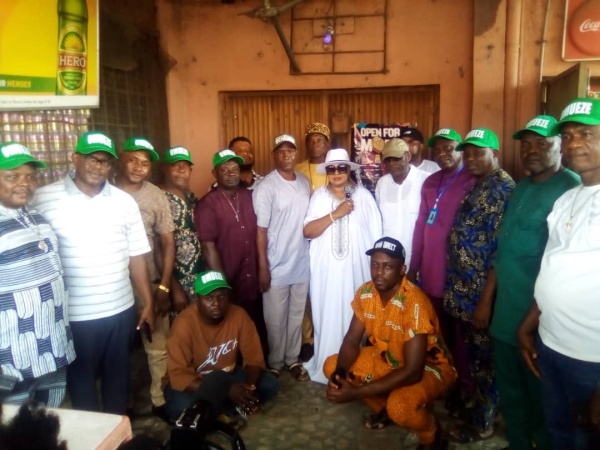
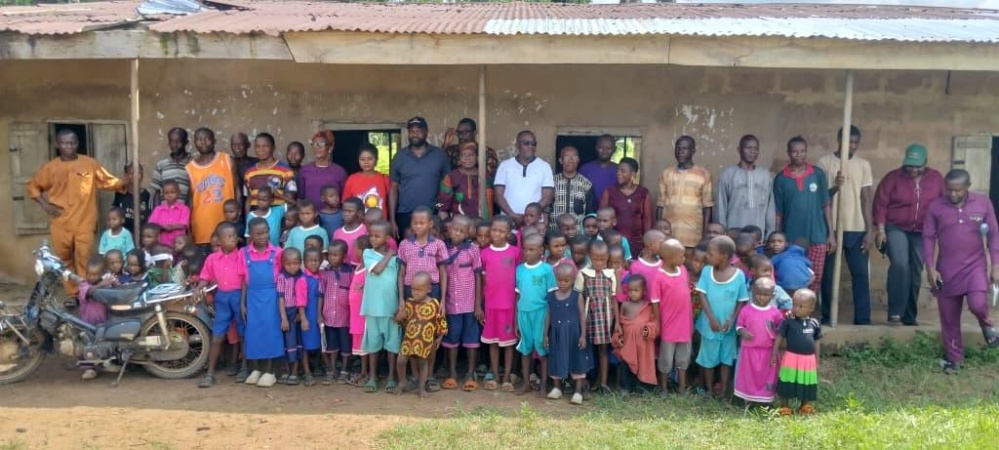
•PHOTO: A cross section of the leadership Obollo Progressive Union, Pupils of Obollo Primary School and the Team from FG who came to inspect the community as a result of their cry for government neglect.