ADAD
Updating your news feed...

NEWS EXPRESS is Nigeria’s leading online newspaper. Published by Africa’s international award-winning journalist, Mr. Isaac Umunna, NEWS EXPRESS is Nigeria’s first truly professional online daily newspaper. It is published from Lagos, Nigeria’s economic and media hub, and has a provision for occasional special print editions. Thanks to our vast network of sources and dedicated team of professional journalists and contributors spread across Nigeria and overseas, NEWS EXPRESS has become synonymous with newsbreaks and exclusive stories from around the world.
.webp)


.webp)
By Prof. USMAN YUSUF
I could not help saying a little prayer for President Bola Ahmed Tinubu after watching a video clip of him at the flag-off of the APC campaign in Kaduna on Saturday, October 24. His appearance and movements raised concerns for me, particularly his seemingly unsteady gait, apparent weakness, and tremors in his left upper limb.
As a physician with more than four decades of experience, I am concerned about the President’s health and whether he can withstand the rigours of campaigning, manage the demands of governing Nigeria, or sustain another four-year term.
Nigeria, and the lives and livelihoods of more than 200 million citizens, is bigger than the ambitions of any individual or interest group. The President and his family should seriously consider whether stepping aside from the race for re-election would serve his best interests and those of the country. He deserves appropriate medical attention, rest, and time to reflect.
1. The Campaign: A Disappointing Start?
The turnout at the flag-off of the APC’s 2027 election campaign in Kaduna appeared disappointing. Despite the party’s resources, the stadium, reportedly with a capacity of 5,000, appeared sparsely populated, even with numerous governors, ministers, political advisers, and support groups in attendance.
If the turnout reflects broader public disaffection, the President and his campaign team have reason to be concerned. No amount of political spin can substitute for public trust.
2. Our Youth: Anger That Cannot Be Ignored
During recent visits and meetings with young people across the 6 North Western states of Kaduna, Katsina, Kano, Jigawa, Sokoto, and Kebbi, I encountered deep dissatisfaction with the ruling party. Their chants of “Bamayi”—meaning “we are not with you”—conveyed a clear message of discontent.
In Kaduna, one young man told me that whenever he heard me speak, he felt reassured that not all “city folks” were disconnected from the sufferings of ordinary Nigerians.
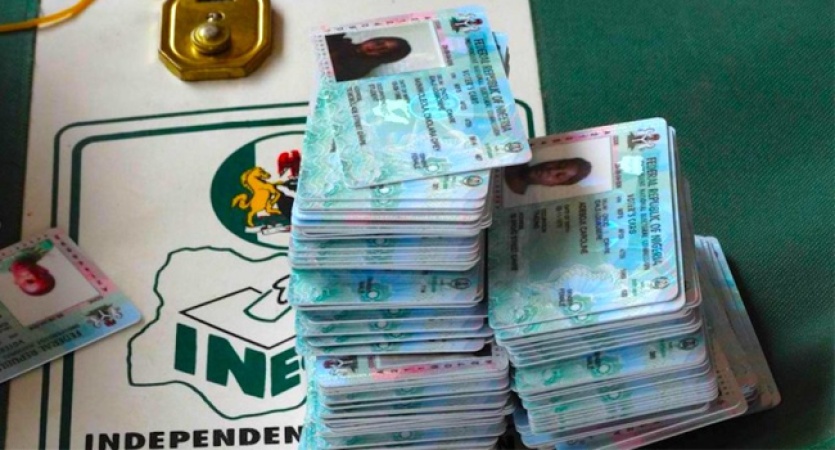
I reminded these youth that they have the power to shape their destiny, but that power must be exercised wisely and peacefully. They must not resort to verbal abuse, violence, the use of stones, machetes, or firearms. They must organise, mobilise, participate, and use their Permanent Voter Cards (PVCs) to express their will at the ballot box. They must cast their votes, escort the boxes and make sure their votes are counted.
3. Rigging: Will the People’s Votes Count?
There are suggestions that the outcome of the 2027 presidential election has already been predetermined and that President Tinubu will be declared the winner regardless of the electorate’s wishes.
Purveyors of this fiction cite the enormous campaign war chest of the ruling party, that poverty, hunger, and insecurity might discourage participation in areas perceived to oppose the government.
These are serious allegations that require scrutiny. The credibility of the election will depend on the independence and transparency of the Independent National Electoral Commission (INEC), the conduct of security agencies, and the ability of Nigerians to vote freely and have their votes counted.
Anyone contemplating the subversion of the electoral process should think again. Any attempt to disenfranchise Nigerians must be resisted through lawful and constitutional means. The popular uprisings in Nepal and Bangladesh remind us of the dangers that arise when citizens believe their voices no longer matter.
A credible election, respect for the people’s mandate, and peaceful resolution of political grievances remain the best safeguards against instability.
4. The South-West: Where Are the Formerly Vocal Critics?
The relative silence of some formerly outspoken government critics from the South-West geopolitical zone is striking amid allegations of ethnic favouritism, corruption, mounting debt, poverty, and pervasive insecurity.
During President Muhammadu Buhari’s administration, a former president, a Nobel laureate, prominent religious leaders, ethnic organisations, human-rights activists, and sections of the media all from the South-West, were in the forefront of challenging government policies. Some warned against what they described as the “Fulanisation and Islamisation” of Nigeria.
Have the issues they once considered fundamental to national unity ceased to matter, or have ethnicity, political loyalties and proximity to power changed their standards?
Principles cannot be selectively defended depending on who occupies the Presidency. Accountability must remain consistent, regardless of ethnicity, religion, or political affiliation.
5. The Muslim-Muslim Ticket: Dividing the Country?
On August 11, 2022, following the APC’s announcement of its presidential and vice-presidential ticket, I published an article titled “APC’s Muslim-Muslim Ticket Is Neither for God nor Country.”
I argued that a same-faith ticket failed to reflect national unity, fairness, and Nigeria’s multi-religious character.
The ticket helped pave Tinubu’s path to the Presidency, but I believe its consequences for national cohesion, particularly in the North, have been damaging. Rather than strengthening a shared national identity, it has contributed to tensions and divisions between Muslims and Christians in the region.
Many Nigerians who supported the ticket on religious grounds may now be questioning whether their expectations have been met. Simplistic religious narratives overlook the complexity of governance and the different experiences of communities.
The President and his party are once again seeking the votes of Muslim electorates, many of whom feel abandoned by the government. Religious solidarity cannot compensate for unmet expectations.
6. Mismanaged Diversity and the Politics of Religion and Ethnicity
Nigeria’s diversity should be a source of strength, not a weapon for political mobilisation. Yet there are growing concerns that ethnic and religious differences are being exploited for political advantage, particularly in the North. Such practices deepen mistrust among communities that should be working together to confront existential issues that plague the region.
National leadership must unite citizens around shared interests, equal rights, justice, and a common national purpose.
7. The Ulama: Where Is the Moral Voice of the Ummah?
The Ulama have a profound responsibility to serve as the moral conscience of the Muslim community. Their duty is to guide the Ummah, uphold justice, and speak truth to power, irrespective of political consequences.
Yet, as Nigerians confront hunger, poverty, insecurity, and corruption, many religious leaders appear reluctant to challenge those in authority.
Have we reduced Islam to historical narratives and public rituals rather than living its teachings through justice, compassion, integrity, and concern for the oppressed?
Religious leadership cannot be reduced to offering prayers at political gatherings or endorsing those in power. It must also involve speaking out against injustice and the neglect of vulnerable citizens. The Ulama must reflect seriously on the responsibilities entrusted to them and the legacy they wish to leave. We will all be held accountable before Allah.
8. The Christian Clergy
The Christian clergy also have an important role in defending human dignity, promoting justice, and holding public officials accountable.
Catholic bishops and other Christian leaders have, at various times, spoken forcefully on governance, corruption, insecurity, and social justice.
Religious leaders should not be expected to support any political party. Their responsibility is to uphold the moral principles of their faith, defend the vulnerable, promote peaceful coexistence, and insist that public officials fulfil their obligations.
Nigeria needs courageous, principled, and consistent moral leadership from all religious communities.
9. The Politicians: A Feast at the Campaign Table?
Nigeria’s political class has a credibility problem. Many politicians surrounding the President appear more concerned about securing positions within the ruling party’s campaign machinery than addressing the sufferings of ordinary Nigerians.
Some may not even be able to guarantee their own households’ votes, yet present themselves as indispensable allies, unwilling to miss opportunities offered by the campaign’s financial resources.
Political endorsements and declarations of loyalty do not translate into genuine popular support. Nor can the distribution of money, food, and other inducements compensate for poor governance.
The real test of leadership is whether citizens have security, jobs, food, education, healthcare, and confidence in their future. Politicians who cannot demonstrate tangible improvements in people’s lives should not assume that proximity to power guarantees electoral support.
10. Security: The Tragedy We Must Not Normalise
Nigeria’s security crisis remains one of its most urgent challenges, particularly in the North. Communities continue to face killings, kidnappings for ransom, attacks on and killings of security personnel, and assaults by bandits, Boko Haram, ISWAP, and other armed groups.
Farmers in many areas in the north cannot access their fields. Families have been displaced, children have lost access to education, and communities are forced to pay ransoms to secure the release of kidnapped relatives.
We must never allow the killing of innocent Nigerians to become normal.
There can never be peace in any society with Nigeria's level of corruption, bad governance, state-imposed hunger, excruciating poverty, out of school children, youth unemployment, alarming rate of illicit drugs addiction among youth, proliferation of light and small arms, and toxic ethnoreligious mistrust and hatred fueled by selfish politicians.
The Federal Government must be judged by its ability to protect lives, secure communities, restore access to farms and schools, strengthen security agencies, and bring perpetrators to justice. Slogans cannot substitute for measurable results.
11. The Emir of Katsina: A Statesman Has Spoken
There is a saying worth repeating: “If the state is failing, where are the statesmen?”
The Emir of Katsina, HRH Alhaji Abdulmumini Kabir Usman, delivered a sharp rebuke to the APC presidential campaign delegation led by Senator Abdulaziz Yari and Governor Dikko Umaru Radda during a visit to his palace.
The Emir stated that farmers in 12 local government areas of Katsina State could no longer access their farms because of banditry, while many schools in affected areas remained closed.
He challenged the delegation over the activities of bandit leader Bello Turji, saying: “Turji is in a forest 100km from here. Go and bring him, then come and campaign.” He also highlighted the enormous ransoms and levies citizens are forced to pay.
Contrasting the government’s “Renewed Hope” slogan with people’s experiences, he observed that many were experiencing “renewed hunger.” He admonished politicians against relying on rice and cash handouts to win votes, reminding them that people will accept such gifts out of necessity and still vote against them.
He reminded the delegation that leaders would answer to God for promises they failed to fulfil.
His Royal Highness the Emir of Katsina’s intervention captures the distance between campaign rhetoric and the lived experiences of citizens. People need security, food, functioning schools, accessible farms, jobs, and the freedom to live without fear. These concerns demand verifiable answers and urgent action.
12. Fourteen Administrations, One Disturbing Question
I have lived long enough to remember fourteen Nigerian administrations, beginning with General Yakubu Gowon (Rtd.), who ruled from 1966 to 1975, and extending to the current administration of President Tinubu, which began in 2023.
Across these administrations, I have witnessed different approaches to power and development.
In my assessment, the recklessness, impunity, and apparent lack of compassion in the conduct of public affairs under President Tinubu are particularly troubling.
I raised the alarm in my February 1, 2026, article, titled; “Must Nigeria Go Up in Flames for Tinubu’s Ambitions?” My concern remains that political ambition must never take precedence over the welfare, security, and future of Nigeria and its citizens.
Conclusion: Who Will Tell the President the Truth?
Nigeria stands at a critical juncture. Insecurity, hunger, poverty, a crushing cost-of-living crisis, mounting public debt, allegations of corruption and ethnic favouritism, and widespread disillusionment demand honest leadership and accountable institutions.
The President needs people around him who will tell him the truth, even when it is uncomfortable. He needs advisers who put the country before personal ambition, religious leaders who place justice above political loyalty, politicians who understand that public office is a trust, and citizens who demand accountability peacefully.
The real concerns about President Tinubu’s health should be addressed through responsible medical assessment and an honest consideration of his capacity to discharge the demands of office. If his administration’s policies are failing citizens, those failures must be acknowledged and corrected. If public trust has eroded, it must be earned back through demonstrable action.
The 2027 election must be free, fair, transparent, and credible. Nigerians must be allowed to choose their leaders without intimidation, manipulation, or disenfranchisement. Any change in leadership must take place through constitutional and democratic means.
The ground may be shifting beneath the feet of the ruling party, but the ultimate verdict belongs to the Nigerian people.
The question remains: Who will tell the President the truth?
•Usman Yusuf is a Professor of Haematology-Oncology and Bone Marrow Transplantation.