ADAD
Updating your news feed...

NEWS EXPRESS is Nigeria’s leading online newspaper. Published by Africa’s international award-winning journalist, Mr. Isaac Umunna, NEWS EXPRESS is Nigeria’s first truly professional online daily newspaper. It is published from Lagos, Nigeria’s economic and media hub, and has a provision for occasional special print editions. Thanks to our vast network of sources and dedicated team of professional journalists and contributors spread across Nigeria and overseas, NEWS EXPRESS has become synonymous with newsbreaks and exclusive stories from around the world.






















Loading banners
Loading banners...

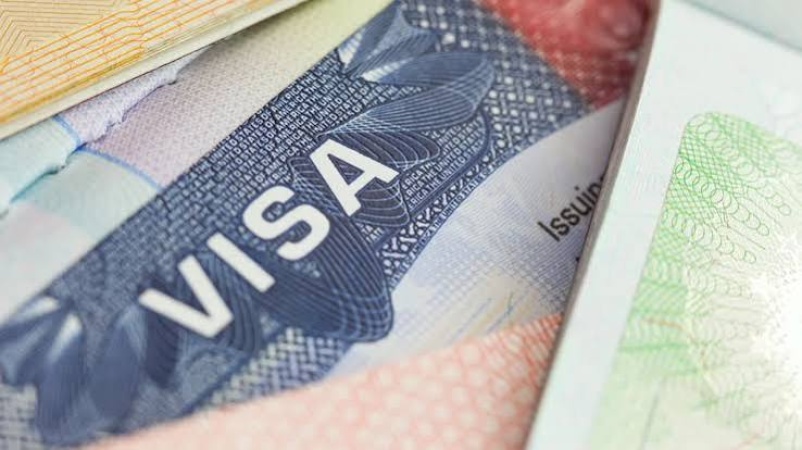
The United States has listed 50 countries whose citizens must pay a visa bond of up to $20,000 when applying for certain visitor visas, including Nigeria, according to the US Department of State.
The measure applies to eligible applicants for B-1 business and B-2 tourist visas travelling on passports issued by the listed countries. The bond amounts are $10,000, $15,000 or $20,000, with the specific amount determined by a consular officer during the visa interview.
In a notice published on October 2, 2026, the Department of State outlined the countries subject to the visa bond programme and their respective implementation dates.
The programme operates under Section 221(g)(3) of the Immigration and Nationality Act, with the department stating that the requirement applies regardless of where an applicant submits their visa application.
Full list of countries subject to US visa bonds
The 50 countries listed by the US Department of State, alongside their implementation dates, are:
Algeria — January 21, 2026
Angola — January 21, 2026
Antigua and Barbuda — January 21, 2026
Bangladesh — January 21, 2026
Benin — January 21, 2026
Bhutan — January 1, 2026
Botswana — January 1, 2026
Burundi — January 21, 2026
Cabo Verde — January 21, 2026
Cambodia — April 2, 2026
Central African Republic — January 1, 2026
Côte d’Ivoire — January 21, 2026
Cuba — January 21, 2026
Djibouti — January 21, 2026
Dominica — January 21, 2026
Ethiopia — April 2, 2026
Fiji — January 21, 2026
Gabon — January 21, 2026
The Gambia — October 11, 2025
Georgia — April 2, 2026
Grenada — April 2, 2026
Guinea — January 1, 2026
Guinea-Bissau — January 1, 2026
Kyrgyz Republic — January 21, 2026
Lesotho — April 2, 2026
Malawi — August 20, 2025
Mauritania — October 23, 2025
Mauritius — April 2, 2026
Mongolia — April 2, 2026
Mozambique — April 2, 2026
Namibia — January 1, 2026
Nepal — January 21, 2026
Nicaragua — April 2, 2026
Nigeria — January 21, 2026
Papua New Guinea — April 2, 2026
São Tomé and Príncipe — October 23, 2025
Senegal — January 21, 2026
Seychelles — April 2, 2026
Tajikistan — January 21, 2026
Tanzania — October 23, 2025
Togo — January 21, 2026
Tonga — January 21, 2026
Tunisia — April 2, 2026
Turkmenistan — January 1, 2026
Tuvalu — January 21, 2026
Uganda — January 21, 2026
Vanuatu — January 21, 2026
Venezuela — January 21, 2026
Zambia — August 20, 2025
Zimbabwe — January 21, 2026
How much must Nigerians pay for a US visa bond?
Nigerian citizens applying for B-1 business or B-2 tourist visas may be required to post a bond of $10,000, $15,000 or $20,000 if they are otherwise eligible for the visa.
The amount Is determined during the visa interview. The bond is an additional financial requirement and does not guarantee that the applicant will receive a visa.
Applicants must submit Department of Homeland Security Form I-352 and agree to the bond’s terms through the US Department of the Treasury’s Pay.gov platform.
The department ’arns applicants not to pay a bond before being instructed to do so by a consular officer. Applicants are expected to use the specific payment link supplied through official instructions.
The bond may be paid by the applicant or a third party, such as a relative, friend or business associate. However, the name of the person identified as the bond obligor on Form I-352 must match the name of the person making the payment.
If the bond conditions are satisfied, the money is refundable under the programme’s terms.
US visa bond holders restricted to commercial air entry
The programme also imposes travel conditions on people who post visa bonds.
According to the State Department, bond holders must enter and leave the United States through designated commercial air ports of entry, including US Customs and Border Protection preclearance locations.
They are not permitted to use charter aircraft, general aviation, land borders or sea ports of entry under the stated bond conditions.
Failure to comply with the designated entry and exit requirements could result in problems with entry or the recording of a traveller’s departure.
When will the US refund visa bonds?
The department outlined several circumstances under which a bond may be cancelled and the deposit returned automatically. (Vanguard)