ADAD
Updating your news feed...

NEWS EXPRESS is Nigeria’s leading online newspaper. Published by Africa’s international award-winning journalist, Mr. Isaac Umunna, NEWS EXPRESS is Nigeria’s first truly professional online daily newspaper. It is published from Lagos, Nigeria’s economic and media hub, and has a provision for occasional special print editions. Thanks to our vast network of sources and dedicated team of professional journalists and contributors spread across Nigeria and overseas, NEWS EXPRESS has become synonymous with newsbreaks and exclusive stories from around the world.






















Loading banners
Loading banners...


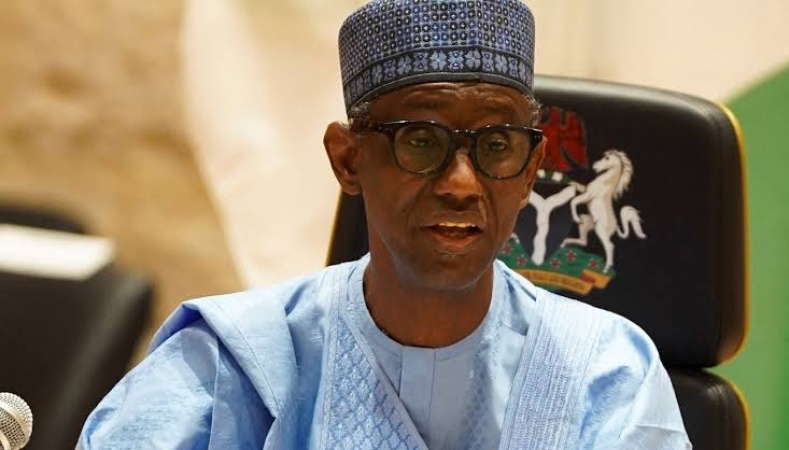
Minister of Finance and Coordinating Minister of the Economy, Taiwo Oyedele
The Minister of Finance and Coordinating Minister of the Economy, Taiwo Oyedele, has said some Nigerians spend as much as 120 per cent of their income on food, forcing them to borrow money or rely on relatives to survive.
Oyedele spoke at Chatham House in London, where he said a government survey showed that food expenses exceeded the incomes of some households.
“In fact, there was a survey we did that shows that up to 120 per cent of household income is spent on food. Like, how do you spend 120 per cent of your income? You borrow food before the end of the month,” he said.
The Minister said Nigeria’s poverty rate remained above 50 per cent despite an unemployment rate of about five per cent, pointing to the growing number of people who work but still struggle to meet their basic needs.
“That tells you something. As a policymaker, you don’t sit back and say we don’t have unemployment. You have working poor,” he said.
Oyedele attributed the pressure on households to high food prices, which he said were not falling as quickly as headline inflation. Food inflation stood at 19.6 per cent in September.
“Headline inflation is falling faster than the price of a basket of tomatoes, gari, and beans. And this widens inequality,” he said.
“Macroeconomic stability means little to a mother who still cannot afford food,” he added.
The Minister also said Nigeria had no taxes on fuel, arguing that the pressure on household budgets was linked to deeper structural problems rather than fuel taxes.
He identified low agricultural yields, seasonal farming, post-harvest losses, poor storage and logistics, high transport costs and insecurity in farming communities as major factors driving food prices.
He cited losses of up to 60 per cent of tomatoes after harvest as an example of the challenges facing the agricultural sector.
On measures to address the situation, Oyedele said the government was investing in agricultural technology, irrigation to support year-round farming, improved storage facilities and access to finance for smallholder farmers.
He said the administration was also providing direct support through a cash transfer programme that had reached more than 10 million “In the short term, the administration is providing direct support through a cash transfer programme that has reached more than 10 million households. Payments are made digitally and beneficiaries are verified with National Identification Numbers to reduce leakage,” he said.
Oyedele said the government was prioritising agriculture and non-tradable services, which together employ 81.4 per cent of working Nigerians.
He said the aim was to grow the sectors faster than the overall economy, increase incomes and gradually reduce dependence on cash transfers. (Daily Trust)