ADAD
Updating your news feed...

NEWS EXPRESS is Nigeria’s leading online newspaper. Published by Africa’s international award-winning journalist, Mr. Isaac Umunna, NEWS EXPRESS is Nigeria’s first truly professional online daily newspaper. It is published from Lagos, Nigeria’s economic and media hub, and has a provision for occasional special print editions. Thanks to our vast network of sources and dedicated team of professional journalists and contributors spread across Nigeria and overseas, NEWS EXPRESS has become synonymous with newsbreaks and exclusive stories from around the world.























Loading banners
Loading banners...

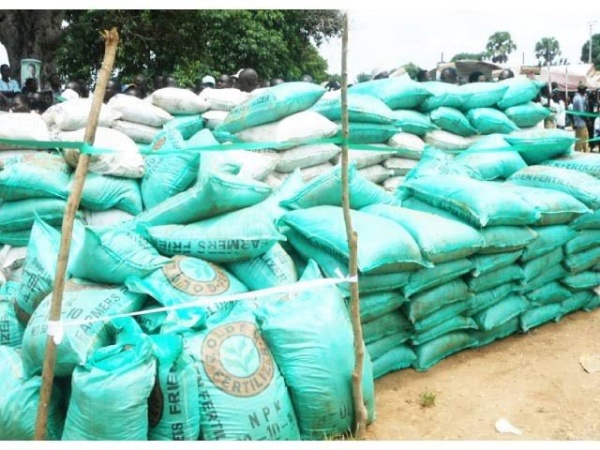
Researchers, policymakers and fertiliser industry stakeholders have called for soil-specific fertiliser recommendations to improve agricultural productivity and food security, warning that applying more fertiliser does not necessarily translate into higher crop yields.
They made the suggestion at a two-day Technical Workshop on Strategic Phosphorus Use in Nigeria, held in Abuja, with participants exploring ways to improve fertiliser efficiency through better soil data, locally adapted nutrient recommendations and coordinated investments.
With the theme: “Phosphorus and Food Security: Challenges in Food Production Systems in Nigeria,” the workshop brought together agricultural researchers, policymakers, fertiliser manufacturers, regulators and development partners to address persistent soil-fertility and fertiliser-use challenges.
Evidence presented by the Regional Hub for Fertilizer and Soil Health for West Africa and the Sahel showed that phosphorus requirements for maize and rice could range from zero to more than 60 kilogrammes of phosphorus pentoxide (P2O5) per hectare within the same target area in northern Nigeria.
The findings, based on the Hub’s 2025 site-specific nutrient recommendations, highlighted the limitations of applying uniform fertilizer rates across different soil conditions and crop-production environments.
While phosphorus is essential for root development, crop growth and grain formation, its inadequate application can restrict productivity, while excessive use can raise farmers’ production costs without delivering corresponding yield increases.
Speaking on the need to translate research into practical agricultural decisions, Senior Agronomist at the Regional Hub, Dr Bello Muhammad Shehu, said improving phosphorus management required more than increasing fertiliser application.
“It is about understanding what different soils and crops need and ensuring that farmers have access to the right products and best advice,” Shehu said.
He explained that better soil information, locally adapted nutrient recommendations and digital advisory tools could improve fertiliser-use efficiency, adding that the next step was connecting scientific evidence with policy, industry and agricultural extension systems.
Also, a visiting scientist with the Regional Hub for Fertilizer and Soil Health at the International Institute of Tropical Agriculture (IITA), Ibadan, Professor Jibrin Mohammed, said research, digital technology and soil information were fundamental to achieving food security amid Nigeria’s growing population.
Mohammed, a professor of Soil Science at Bayero University, Kano, said understanding soil conditions was essential to improving agricultural productivity and ensuring the production of nutritious food.
He explained that farmers and agricultural policymakers needed reliable information on what the soil could supply and the nutrients required to improve its productivity.
According to him, advances in technology, including artificial intelligence, are making it easier to obtain more precise soil information on a larger scale, thereby improving the quality of agricultural recommendations.
“The basis of food production and food security is the soil. You need a healthy soil for you to produce well and to feed the nation with nutritious food. And to do that, you need soil intelligence,” he said.
On the policy and investment measures required to strengthen soil health management, Mohammed said Nigeria was making progress through initiatives aligned with continental and regional frameworks.
He identified the African Fertiliaer and Soil Health Action Plan and the Economic Community of West African States’ Fertiliser Priority Actions as key frameworks guiding efforts to improve fertiliser use and soil health, noting that the Regional Hub emerged from these broader initiatives.
At the national level, the don cited the Nigerian Farmers’ Soil Health Scheme of the Federal Ministry of Agriculture and Food Security as an umbrella programme designed to improve soil intelligence, provide better recommendations and advice to farmers, and promote coordination among stakeholders.
The workshop builds on a national phosphorus dialogue held in October 2025, which identified constraints including limited soil testing, generalised fertilizer recommendations, concerns over fertilizer quality, inadequate extension services and weak stakeholder coordination.
The dialogue also endorsed the establishment of the Nigeria Fertilizer Phosphorus Network, with its secretariat hosted by the Institute of Agricultural Research and Training (IAR&T). (Nigerian tribune)