ADAD
Updating your news feed...

NEWS EXPRESS is Nigeria’s leading online newspaper. Published by Africa’s international award-winning journalist, Mr. Isaac Umunna, NEWS EXPRESS is Nigeria’s first truly professional online daily newspaper. It is published from Lagos, Nigeria’s economic and media hub, and has a provision for occasional special print editions. Thanks to our vast network of sources and dedicated team of professional journalists and contributors spread across Nigeria and overseas, NEWS EXPRESS has become synonymous with newsbreaks and exclusive stories from around the world.














Loading banners
Loading banners...

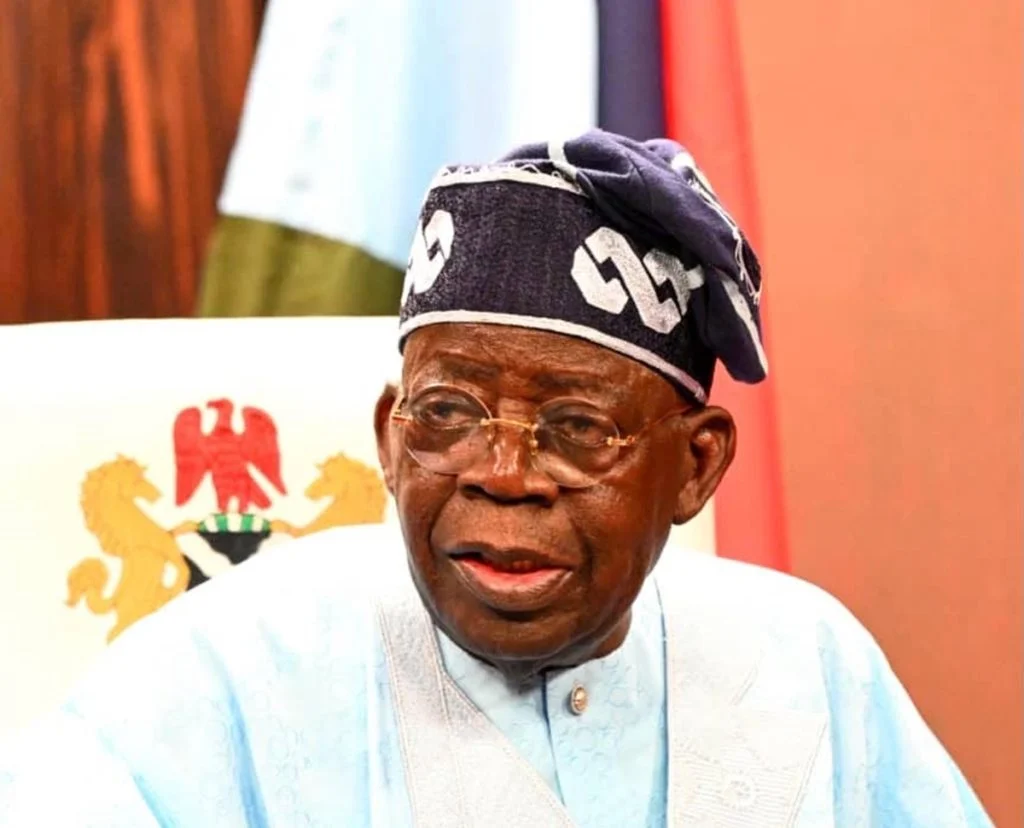
President Bola Ahmed Tinubu has again justified the structural economic reforms introduced by his administration, maintaining that the policies are necessary to turn around the economy.
Speaking on Monday while declaring open the 32nd Nigerian Economic Summit, themed “Growth That Works: Delivering Jobs, Productivity and Shared Prosperity”, Tinubu, represented by Vice President Kashim Shettima, said there was no shortcut to economic growth.
The President noted that his administration was determined to address what he described as decades of economic underperformance through far-reaching reforms designed to dismantle structural barriers, unlock the nation’s enormous potential and deliver jobs, productivity and shared prosperity.
He said, “Distinguished ladies and gentlemen, we came to rewrite the story of a nation that has performed below its potential for far too long.
“But there is no shortcut to economic growth. This is why we began with a difficult reset. For us, rescuing the economy means rescuing livelihoods and transforming the fortunes of young job seekers, farmers, manufacturers, entrepreneurs and innovators.
“We cannot harness the immense opportunities offered by our growing population without first stabilising the economy. We must also create the conditions for the public and private sectors to invest, expand and generate productive employment.”
Tinubu also told the gathering of private sector players and international financial institutions that his administration had made substantial progress towards its targets.
“These reforms are restoring confidence, strengthening our economic foundations and laying the groundwork for sustainable growth,” he said.
He cited figures from the National Bureau of Statistics indicating that Nigeria’s inflation-adjusted gross domestic product (GDP) grew by 3.89 per cent in the first quarter of 2026, compared with 3.13 per cent in the corresponding period a year earlier.
“In the first quarter of 2026, our capital importation reached $10.37 billion, an increase of 83.83 per cent over the corresponding period in 2025. This comprised both portfolio and foreign direct investment. We will, therefore, continue to ease regulatory burdens, strengthen transparency and policy predictability, and expand access to finance.
“Our tax reforms seek to build a modern, equitable system that finances development and gives businesses certainty. This discipline must guide our investments in all sectors of the economy, including energy, agriculture and solid minerals. We are reforming the electricity market to improve supply and attract investment in generation, transmission, distribution and alternative energy.”
On economic diversification, he stated that “non-oil activities accounted for 96.08 per cent of GDP, while manufacturing grew by 3.29 per cent and the oil sector by 2.57 per cent”, emphasising that the gains had reinforced his administration’s confidence in the path to economic recovery and diversification.
Beyond creating jobs, Tinubu said it was important to harness the potential of the underutilised workforce.
“Our pursuit of prosperity demands greater productivity from every worker, enterprise and investment. We must judge infrastructure by the economic activity it generates and education by the skills and productivity it delivers.
“We must judge industrial policy by the competitiveness of our firms and investment incentives by the capital, technology, exports and jobs they attract,” he said.
In her presentation, the United Nations Deputy Secretary-General, Dr Amina Mohammed, acknowledged the gains recorded under Tinubu’s administration but called for urgent consolidation and stabilisation, as well as effective management of expectations among citizens and other stakeholders.
She also commended the African Development Bank (AfDB) for its new financial architecture for development across the continent, particularly its prioritisation of financing programmes targeting impactful development.
The Minister of Finance and Coordinating Minister of the Economy, Dr Taiwo Oyedele, who presented the Nigerian Economic Policy Framework, urged members of the Nigerian Economic Summit Group (NESG) and private sector experts to contribute to its development by rigorously scrutinising the draft proposal using facts and figures.
He said the principles underpinning the framework included enterprise, open but fair markets, and a whole-of-government approach to policy coherence.
The minister also listed key areas of focus in the proposed framework, including economic stability, human capital development and productivity.
In his welcome address, the Chairman of the NESG, Mr Olaniyi Yusuf, said participation in the 32nd summit reflected stakeholders’ commitment to contributing to inclusive and impactful growth. He also acknowledged the Federal Government’s efforts to improve the ease of doing business in the country.
Yusuf said that although the Tinubu administration’s reforms might have introduced significant changes to Nigeria’s economic structures, the task before economic experts at the summit and beyond was to ensure stabilisation rather than seek a reversal of the policies.
He added that the 32nd edition of the summit should help Nigeria move from policy consensus to a framework that addresses practical challenges, noting that deliberations would be guided by proposals for job creation, improved productivity and shared prosperity.
Others in attendance included Prof Chukwuma Soludo and Mr Babajide Sanwo-Olu, governors of Anambra and Lagos states, respectively.
Other members of the Federal Executive Council in attendance included the Minister of Budget and Economic Planning, Senator Abubakar Bagudu; the Minister of Industry, Trade and Investment, Dr Jumoke Oduwole; the Minister of Livestock Development, Idi Mukhtar Maiha; and the Minister of State for Budget and Economic Planning, Dr Doris Uzoka-Anite. (Nigerian Tribune)