Updating your news feed...

NEWS EXPRESS is Nigeria’s leading online newspaper. Published by Africa’s international award-winning journalist, Mr. Isaac Umunna, NEWS EXPRESS is Nigeria’s first truly professional online daily newspaper. It is published from Lagos, Nigeria’s economic and media hub, and has a provision for occasional special print editions. Thanks to our vast network of sources and dedicated team of professional journalists and contributors spread across Nigeria and overseas, NEWS EXPRESS has become synonymous with newsbreaks and exclusive stories from around the world.

























Loading banners
Loading banners...


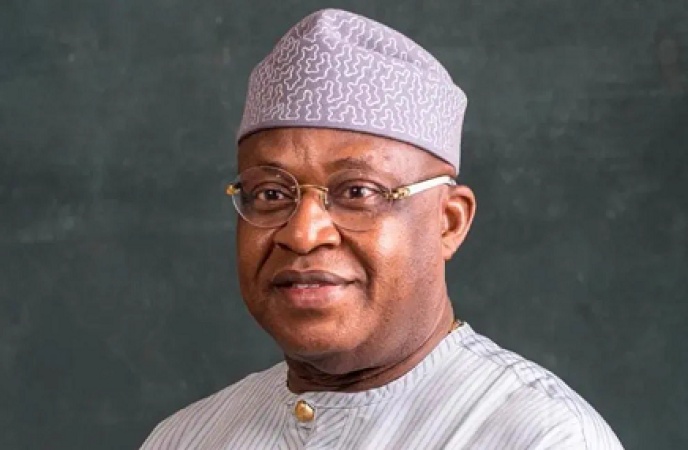
Minister of Finance, Mr Oyedele
By NANA MUSA
The Federal Government says Fitch Ratings’ revision of Nigeria’s economic outlook to positive reflects sustained reforms, stronger external reserves and moderating inflation.
Fitch, on Friday, revised Nigeria’s Long-Term Issuer Default Ratings outlook to positive from stable, while affirming the country’s rating at ‘B’.
The Minister of Finance and Coordinating Minister of the Economy, Mr Taiwo Oyedele, disclosed this in a statement in Abuja on Saturday.
He said that the positive outlook indicated the possibility of a rating upgrade if current economic trends and reform momentum were sustained.
Oyedele said that Fitch attributed the improved outlook to greater naira flexibility, disinflation and faster-than-expected accumulation of foreign exchange reserves.
The minister said that Nigeria’s gross foreign reserves rose to 54.9 billion dollars on Sept. 25, from 32 billion dollars in mid-April 2024.
He said that the increase was supported by stronger portfolio inflows, higher export receipts and remittances, alongside increased formalisation of foreign exchange transactions.
Oyedele said that the improved reserve quality had strengthened Nigeria’s capacity to withstand external shocks, projecting a current account surplus of 6.4 per cent of GDP in 2026.
He said that Fitch also forecast Nigeria’s real GDP growth at 4.3 per cent in 2026, up from four per cent in 2025.
It projected economic growth to remain above four per cent in 2027 and 2028, driven largely by non-oil activities.
The minister said that crude oil production had met Nigeria’s OPEC target of 1.5 million barrels per day since May.
Oyedele said that increased domestic refining was reducing refined petroleum product imports and demand for foreign exchange.
Average inflation was projected to moderate to 15.4 per cent in 2026, less than half its 2024 level.
The minister said that on public finances, Fitch expects tax reforms to increase non-oil revenue relative to GDP, while government debt is projected to average 32 per cent of GDP between 2026 and 2028.
The projected debt ratio is significantly below the 56 per cent median for countries rated ‘B’.
The minister said Fitch also recognised Nigeria’s liquid domestic debt market and bank recapitalisation exercise, noting that many banks had capital adequacy ratios exceeding 20 per cent.
Oyedele said that the three major international rating agencies had taken positive rating actions on Nigeria in 2026.
He recalled that S&P Global Ratings upgraded Nigeria’s rating to ‘B’ from ‘B-’ in May, while Moody’s Ratings revised its outlook to positive in August.
Separately, FTSE Russell returned Nigeria to Frontier Market status, effective Sept. 21, 2026.
According to the minister, the decisions reflect growing confidence in the country’s economic reform trajectory.
Oyedele said that the positive outlook validated reforms implemented under President Bola Tinubu, including fuel subsidy removal, exchange rate unification and tax reforms.
He said that its medium-term ambition was to place the country firmly on the path to investment-grade status.
It added that the reforms were intended to reduce borrowing costs, attract private investment and create decent jobs.
However, he said that the government acknowledged Fitch’s concerns about persistent inflation, low government revenue relative to economic output and high interest payments.
Oyedele said these challenges remained central to the administration’s reform programme.
He reiterated the government commitment to sustaining reforms and maintaining a transparent, market-reflective foreign exchange regime.
Other priorities include implementing new tax laws, improving spending efficiency, strengthening debt management and promoting non-oil growth.
The minister also pledged to translate macroeconomic stability into shared prosperity through food security, job creation, human development and support for small businesses. (NAN)