Updating your news feed...

NEWS EXPRESS is Nigeria’s leading online newspaper. Published by Africa’s international award-winning journalist, Mr. Isaac Umunna, NEWS EXPRESS is Nigeria’s first truly professional online daily newspaper. It is published from Lagos, Nigeria’s economic and media hub, and has a provision for occasional special print editions. Thanks to our vast network of sources and dedicated team of professional journalists and contributors spread across Nigeria and overseas, NEWS EXPRESS has become synonymous with newsbreaks and exclusive stories from around the world.
























Loading banners
Loading banners...


Ex-IGP Egbetokun
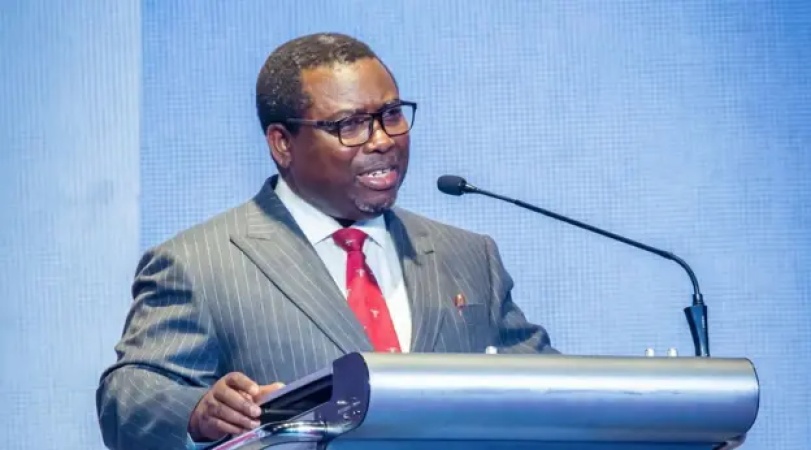
Immediate-past Inspector-General of Police (IGP), Kayode Egbetokun, has called for fundamental reforms in Nigeria’s security architecture, saying the deployment of weapons alone cannot solve the country’s insecurity.
Egbetokun attributed the worsening security situation to systemic and governance failures, arguing that the government must address the socio-economic conditions that make vulnerable Nigerians susceptible to crime and extremist ideologies.
He spoke in his keynote address at the 20th International Conference and General Assembly of the Society for Peace Studies and Practice (SPSP), held at Lead City University, Ibadan.
The conference had as its theme, “Security Governance and Global Dynamics”.
Egbetokun said Nigeria needed to move beyond the traditional approach of deploying security personnel and weapons to confront insecurity.
“There is no military solution to a governance problem,” he said, stressing that the country’s security architecture must focus on the everyday needs and welfare of citizens.
According to him, Nigeria’s security strategy “must be redefined around the daily security of the Nigerian: food security, job security, health security, school security”.
He warned that socio-economic deprivation could create conditions for extremist recruitment.
“A hungry, unemployed youth is a recruitment base for any extremist ideology. Policing poverty with bullets is a losing strategy,” he said.
The former police chief said security should be understood beyond the protection of territorial boundaries and physical assets to include citizens’ welfare, dignity and economic wellbeing.
“For a family, security means having food. It means being able to live without fear. It means access to healthcare. It means employment and economic opportunity.
“It means protection from violence. It means knowing that institutions will treat citizens fairly,” he said.
Egbetokun said one of Nigeria’s major security challenges was not a lack of awareness of emerging threats but the inability of institutions to respond collectively and effectively.
“Perhaps the greatest challenge we face is not the absence of knowledge. We know many of the risks.
“The problem is the governance gap between the emergence of threats and our ability to respond collectively,” he said.
He argued that a global security framework that protects national borders while neglecting poverty, displacement, climate vulnerability and social exclusion would remain inadequate.
Egbetokun called for reforms that would strengthen security governance rather than merely increase spending on security equipment.
“We must reform the governance of security, not just the equipment of security. I led the Nigeria Police Force. I know the dedication of our officers. But I also know the structural deficits,” he said.
He advocated a constitutionally defined multi-level policing structure involving the federal, state and community levels, arguing that the existing arrangement was no longer sustainable for a country of Nigeria’s population.
“We need to unbundle policing. A single federal police structure for 230 million people is ungovernable. We need a constitutionally defined multi-level policing system, federal, state, and community, with clear rules of engagement, funding, and accountability,” he said.
He, however, cautioned against transferring policing responsibilities to states and communities without adequate safeguards and clearly defined roles.
“We must however approach devolution of policing powers to the states and local communities with caution. Security governance means clarity of roles,” he added.
The President of SPSP, Prof. Benjamin Aluko, said the international system was experiencing unprecedented uncertainty, with protracted conflicts, ethno-religious tensions, extremism, state fragility and declining institutional capacity increasingly shaping global affairs.
Aluko said these developments had made security governance central to efforts to promote peace, justice, human rights, development and social order.
“The international system is experiencing unprecedented levels of uncertainty, protracted violent conflicts, ethno-religious tensions, extremism in its diverse dimensions, state fragility and rapidly declining capacity of critical state and international institutions have become defining features of human existence,” he said.
He added that “in virtually all the nations of the world, questions of security governance have become central to debates and efforts at promoting peace, justice, human rights, development and social order in the global community.”
Declaring the conference open, the Vice-Chancellor of Lead City University and host of the event, Prof. Kabiru Adeyemo, also called for a people-centred approach to security and governance.
Adeyemo said security should not be limited to the protection of territorial borders but should enable citizens to live productive and dignified lives.
“Security is not merely the protection of territorial borders. Security is about people. It is about access to justice. It is about trust in institutions. It is about economic opportunities.
“It is about social inclusion. It is about ensuring that citizens can pursue their aspirations without fear,” he said.
The Vice-Chancellor warned that weak governance, lack of justice and declining public confidence in institutions could fuel instability, while accountable and inclusive governance could promote peace and social cohesion.
“Where governance is weak, insecurity thrives. Where justice is absent, conflict grows. Where citizens lose confidence in institutions, instability becomes inevitable.
“Conversely, where governance is accountable, inclusive and responsive, peace flourishes. The challenges confronting Nigeria and Africa therefore demand a broader understanding of security, one that integrates governance, development, human rights, social cohesion and environmental sustainability,” Adeyemo said.
He reaffirmed the university’s commitment to peace education, good governance and national development, saying universities had a role beyond conventional academic training.
“Lead City University has consistently demonstrated its commitment to the promotion of peace education, good governance and national development.
“We believe that universities must serve as centres not only for learning but also of social transformation.
“Our responsibility extends beyond producing graduates; we must also produce problem-solvers, peacebuilders and ethical leaders capable of navigating the complexities of an increasingly interconnected world,” he said. (Nigerian Tribune)