Updating your news feed...

NEWS EXPRESS is Nigeria’s leading online newspaper. Published by Africa’s international award-winning journalist, Mr. Isaac Umunna, NEWS EXPRESS is Nigeria’s first truly professional online daily newspaper. It is published from Lagos, Nigeria’s economic and media hub, and has a provision for occasional special print editions. Thanks to our vast network of sources and dedicated team of professional journalists and contributors spread across Nigeria and overseas, NEWS EXPRESS has become synonymous with newsbreaks and exclusive stories from around the world.






.webp)











Loading banners
Loading banners...

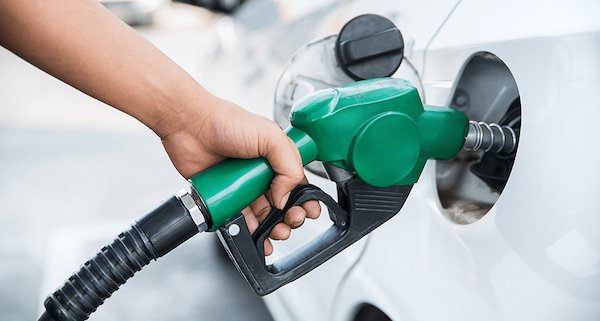
As Nigerians continue to grapple with high transportation costs following increases in petrol prices, countries across Africa, Asia, Europe and North America have adopted a range of measures to cushion citizens from the impact of rising fuel costs.
The interventions range from fuel subsidies and tax cuts to temporary reductions in fuel levies, public transport support and the release of strategic oil reserves.
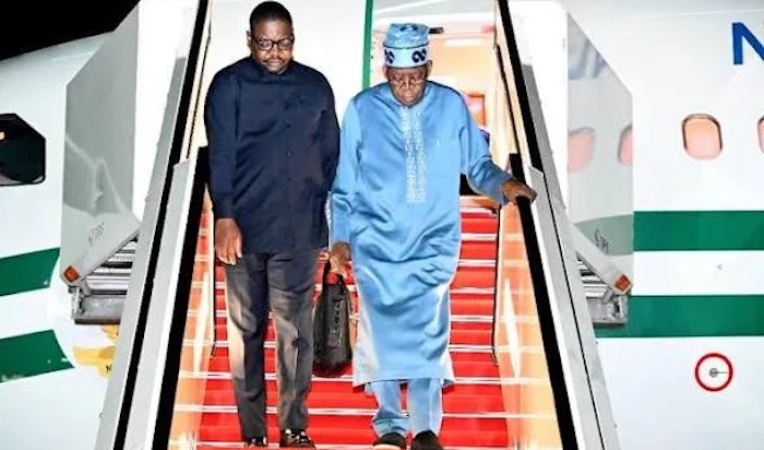
In Nigeria, President Bola Tinubu had said state governors agreed to adopt measures aimed at reducing transportation costs by October 1, including the deployment of Compressed Natural Gas (CNG) and electric vehicles in public transportation.
However, findings by Daily Trust indicate that several states may struggle to meet the target, with CNG infrastructure still unevenly distributed across the country.
While some states have one CNG refuelling station, others have two or three, while some have none. There is also a shortage of CNG conversion facilities in many parts of the country, raising questions about how quickly commercial vehicles can transition from petrol and diesel.
Tinubu had said more than 120,000 vehicles had been converted to CNG, with over 400 certified conversion centres and more than 90 CNG refuelling stations nationwide. He has also ruled out a return to the petrol subsidy regime, arguing that Nigeria must reduce its exposure to fluctuations in international energy markets.
The president cited states including Borno, Kaduna, Oyo, Adamawa, Enugu and Plateau as examples of how alternative-energy transport can reduce fares.
But beyond Nigeria’s CNG strategy, other countries have adopted different approaches to protect households and businesses from the effects of expensive fuel.
KENYA
Kenya has combined fuel subsidies, tax adjustments and import arrangements to moderate increases in pump prices.
President William Ruto said the government had deployed Sh6.5 billion to subsidise fuel costs and reduced VAT to prevent international oil price increases from translating into even higher domestic prices.
“The price of fuel has increased everywhere in the world, but in Kenya, we had planned to ensure that the prices, which would have increased very highly, were moderated,” Ruto said in April.
The government has also been pursuing longer-term measures to improve energy security. Kenya recently broke ground on a $16 billion refinery project backed by Nigerian businessman Aliko Dangote, with the facility expected to help reduce the region’s dependence on imported petroleum products when completed.
South Africa
South Africa has relied on temporary adjustments to fuel levies to limit the impact of imported fuel inflation.
In 2026, the government approved a short-term reduction of 300 cents per litre on petrol and 393 cents per litre on diesel.
The measure, which ran from May 6 to June 2, was designed to provide temporary relief to motorists and businesses as high diesel costs threatened to feed into food prices and logistics expenses.
However, South Africa continues to face exposure to global oil price shocks because of its dependence on imported petroleum products. The government announced another sharp increase in fuel prices in October 2026 following the impact of the global energy crisis.
Namibia
Namibia has also introduced fuel price stabilisation measures to protect motorists and transport operators from volatile international crude prices.
The government temporarily reduced or suspended selected statutory fuel levies by as much as 50 per cent for three months beginning April 1, 2026.
The measure was aimed at reducing the amount consumers paid at the pump while shielding businesses from some of the knock-on effects of higher transportation costs.
India
India adopted one of the more direct fiscal approaches by cutting excise duties on petrol and diesel.
The federal government reduced the excise duty on petrol from 13 Indian rupees per litre to three rupees per litre and removed a 10-rupee-per-litre excise duty on diesel.
The measure resulted in significant revenue losses for the government but was intended to provide immediate relief to consumers.
The Indian government also urged state governments to reduce their own fuel taxes, which account for a significant portion of the retail price of petroleum products.
France and Germany
European countries have also intervened to protect households and motorists from energy price shocks.
France expanded fuel rebate schemes for motorists, with discounts reaching as high as €0.30 per litre, while maintaining support for electricity consumers.
Germany adopted temporary fuel tax reductions and expanded incentives for public transportation as part of efforts to limit inflationary pressure caused by expensive energy.
Across the European Union, governments spent an estimated €17.9 billion in 2026 on measures to cushion households and businesses from surging oil and gas prices. The European Commission has since urged governments to move away from broad price measures towards more targeted support for vulnerable groups.
United Kingdom
The United Kingdom has relied on a combination of fuel duty relief and household energy support.
The government maintained a 5p-per-litre cut in fuel duty introduced during an earlier energy crisis, while continuing support programmes aimed at helping vulnerable households cope with high energy bills.
The approach has focused on limiting the immediate impact of fuel and energy costs while avoiding a permanent return to large-scale fuel subsidies.
United States
The United States responded to periods of high fuel prices by releasing millions of barrels of crude oil from its Strategic Petroleum Reserve to increase supply and moderate market pressure.
American lawmakers also debated a temporary federal gasoline tax holiday that would have suspended the 18.4-cent-per-gallon federal gasoline tax.
Although such proposals have generated political debate over their effectiveness and impact on government revenue, they illustrate another approach to easing pressure on motorists: temporarily reducing taxes rather than directly subsidising fuel.
Different approaches, same problem
The experiences of these countries show that there is no single solution to rising fuel prices.
Some governments have opted for direct subsidies, while others have reduced taxes and levies. Others have invested in public transportation, alternative fuels or energy infrastructure to reduce their vulnerability to international oil price shocks.
Nigeria has chosen to emphasise CNG and electric vehicles as part of its response, with the Federal Government arguing that the country’s large gas reserves provide an opportunity to reduce dependence on petrol and diesel.
But the immediate challenge remains infrastructure.
With CNG conversion and refuelling facilities still unevenly distributed across the states, the extent to which the alternative-fuel strategy can quickly translate into lower fares will depend largely on how fast the infrastructure is expanded and whether the savings from cheaper energy are passed on to commuters.
The global experience also suggests that governments face a difficult balancing act: providing immediate relief to citizens without creating expensive and unsustainable subsidy regimes. (Daily Trust)