Updating your news feed...

NEWS EXPRESS is Nigeria’s leading online newspaper. Published by Africa’s international award-winning journalist, Mr. Isaac Umunna, NEWS EXPRESS is Nigeria’s first truly professional online daily newspaper. It is published from Lagos, Nigeria’s economic and media hub, and has a provision for occasional special print editions. Thanks to our vast network of sources and dedicated team of professional journalists and contributors spread across Nigeria and overseas, NEWS EXPRESS has become synonymous with newsbreaks and exclusive stories from around the world.












Loading banners
Loading banners...

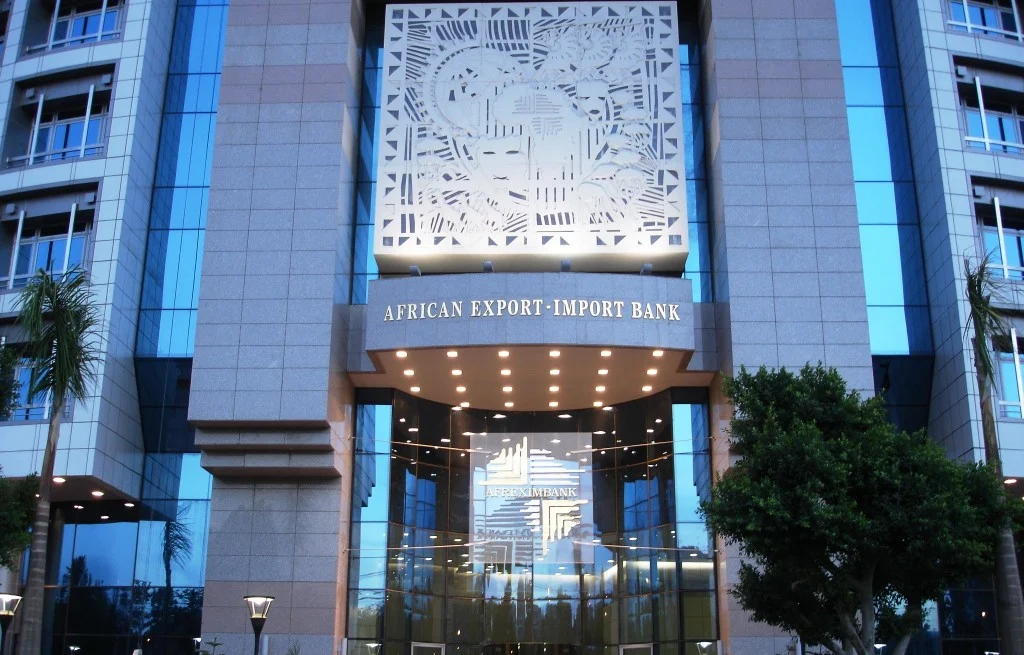
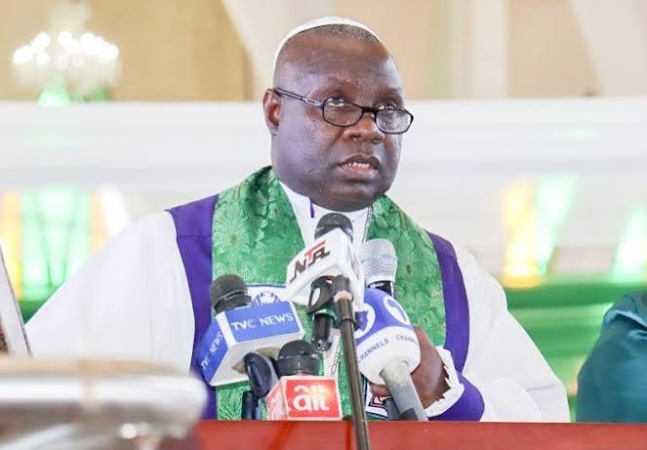
Shareholders’ of the African Export-Import Bank (Afreximbank) have risen to almost $9 billion, reflecting sustained capital injections by African shareholders, the bank’s President and Chairman of the Board of Directors, George Elombi, has said.
Elombi disclosed this at the opening ceremony of the Alamein Africa Forum 2026 in New Alamein, Egypt, on Saturday, stressing that the bank’s financial strength had been built largely through successive cash contributions from its shareholders
He said Afreximbank’s net income increased by 30 percent in the first half of 2026, while its balance sheet had expanded to roughly six times its size a decade ago.
“Your Bank remains strong. Today, shareholders’ funds stand at almost US$9 billion. In the first half of this year alone, our net income rose by 30 per cent. Our balance sheet is roughly six times what it was a decade ago,” Elombi said.
According to him, African shareholders contributed nearly $300 million in fresh equity to the bank in 2025, while another $226 million had been paid so far in 2026, with a further $300 million expected.
He described the capital contributions as evidence of shareholders’ commitment to keeping the continental development finance institution financially strong and capable of responding to economic shocks.
Elombi said the bank’s ability to intervene during crises was central to its mandate, noting that Afreximbank was established in 1993 against the backdrop of Africa’s debt crisis and the withdrawal of international banks from the continent.
He said the institution had subsequently responded to major crises, including the COVID-19 pandemic, the Russia-Ukraine war and, more recently, disruptions arising from the Gulf conflict.
“On the 28th of February this year, conflict in the Gulf disrupted the shipping lanes, fuel markets and fertiliser supplies on which much of our continent depends. Within weeks, before most institutions had finished their assessments, our Board approved a US$10 billion Gulf Crisis,” he said.
He added that Afreximbank deployed $4 billion during the food and energy crisis triggered by the Ukraine war and provided liquidity and vaccine financing during the COVID-19 pandemic.
Elombi also explained why Afreximbank continued financing Ghana when other international lenders had reduced or withdrawn credit lines to the country during its economic crisis.
He said the bank’s decision to support Ghana was consistent with its mandate as an African-owned institution and was taken without seeking approval from institutions outside the continent.
“Ghana was at its most vulnerable, many, including the major multilateral institutions, cut off lines to the country. What were we at Afreximbank supposed to do? Join the bandwagon to deny Ghana access to finance? We chose to do otherwise,” he said.
According to him, Afreximbank’s intervention helped sustain the Ghanaian economy at a critical period and subsequently made it possible for other multilateral institutions to intervene.
He said, however, that the bank was subsequently downgraded by rating agencies because of its exposure to Ghana during the country’s debt restructuring.
“It was only Afreximbank that supported the Ghanaian economy at that critical moment. For that support, which saved lives and, paradoxically, made it possible for other large multilaterals to intervene, our rating was downgraded,” Elombi said.
He argued that the downgrade did not result from losses on the Ghana exposure, but from the treatment of Afreximbank as a private lender during Ghana’s debt restructuring.
Elombi said Afreximbank intervened because it was “wholly owned and wholly controlled” by African stakeholders and therefore did not require permission from external shareholders before supporting Ghana.
“When Ghana started the debt treatment, those who refused to intervene claimed that Afreximbank was not a multilateral financial institution, and so must be treated as a private lender,” he said.
He criticised what he described as an international credit-rating framework that gives significant weight to callable capital and highly rated sovereign shareholders, while giving insufficient recognition to the actual cash capital provided by African shareholders.
He said African governments had repeatedly demonstrated their willingness to inject real capital into Afreximbank, unlike callable capital that, according to him, has historically remained largely a promise.
“We, however, do not have to guess about you. You have answered, again and again, in cash,” he said.
Elombi said the bank should be assessed based on its actual capital, ownership structure and track record rather than its conformity with financial frameworks designed for institutions established under a different historical model.
He noted that S&P had returned to rate Afreximbank this year after more than a decade and assigned it an investment-grade rating, pointing to its countercyclical lending role and shareholder support.
“The facts are on our side. That is recognition of the institution we have built. Now the frameworks must catch up with the reality,” he said.
Elombi urged African governments to continue capitalising the bank and defend its treaty-based preferred creditor status, arguing that the continent needed stronger home-grown financial institutions capable of mobilising African savings and financing trade, businesses and infrastructure.
He said the issue went beyond Afreximbank’s credit rating to the broader question of Africa’s ability to own and control its financial institutions.
“A continent of 1.5 billion people cannot depend indefinitely on financial systems designed elsewhere… to determine the value of what we build here,” Elombi said.
He stressed that Afreximbank was not seeking to replace the global financial system but wanted Africa’s institutions to have a position within it that reflected the continent’s capital, markets and economic ambitions. (Nigerian Tribune)