Updating your news feed...

NEWS EXPRESS is Nigeria’s leading online newspaper. Published by Africa’s international award-winning journalist, Mr. Isaac Umunna, NEWS EXPRESS is Nigeria’s first truly professional online daily newspaper. It is published from Lagos, Nigeria’s economic and media hub, and has a provision for occasional special print editions. Thanks to our vast network of sources and dedicated team of professional journalists and contributors spread across Nigeria and overseas, NEWS EXPRESS has become synonymous with newsbreaks and exclusive stories from around the world.











Loading banners
Loading banners...

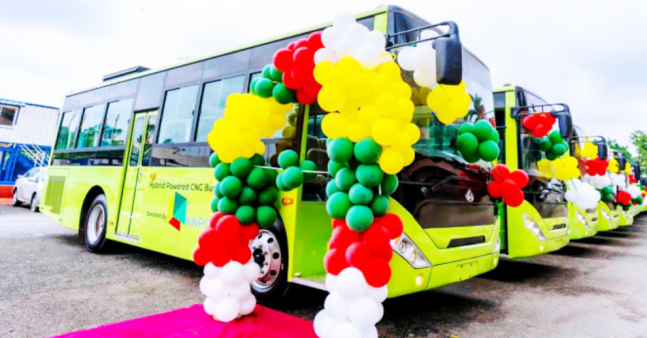
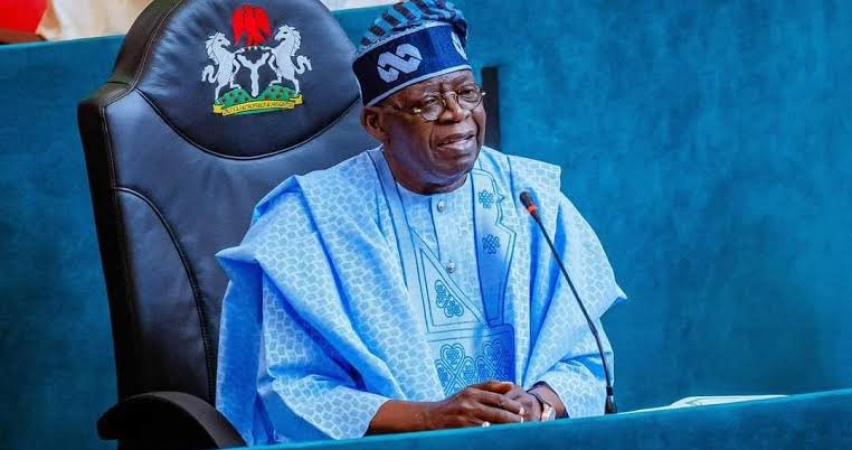
President Bola Tinubu has given approval for the importation of the mobile fueling units in a fresh bid to make Compressed Natural Gas (CNG) readily available in the hinterland.
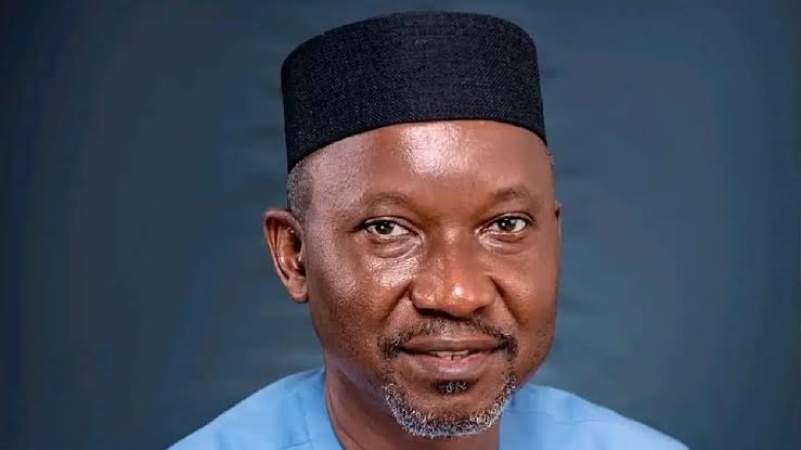
The units will be distributed nationwide for even distribution of the gas across the country, according to the Minister of State for Petroleum Resources (Gas) Hon. Ekperikpe Ekpo.
Ekpo told reporters in Abuja yesterday that the President’s action underlined his “zeal to make sure that these sufferings get off. And it is a process you are not producing here in Nigeria.”
He added: “Once those mobile refueling units come into the country, it will be distributed across the length and breadth of the nation.”
Throwing light on why the supply of the CNG is slow, the minister described it as a new technology and market that would take time to consolidate.
“You know, before now, gas was not given the consideration that it is being given today.
“We are exploring it. And to change it into commercial viable entity, it takes a lot of technical work, technology, money involvement,” said Ekpo.
The minister, however, stressed that those fueling their vehicles with the CNG have confirmed it is cheaper than Premium Motor Spirit (PMS) petrol.
He was optimistic that with time, the CNG would further crash the cost of transportation in the country.
He confirmed the existence of a partnership with the independent marketers for CNG penetration.
He said government was making tremendous progress in terms of the establishment of refueling stations.
Ekpo stressed that owing to Tinubu’s zeal to bring down the cost of transportation, the Midstream Gas Infrastructure Development Fund (MDGIF) is sponsoring some investors, de-risking them to establish Mother Stations and Daughter Stations.
Seeking the patience of the citizenry, the minister stressed that “It will take a little time.”
On how to achieve the additional 2.5 billion cubic feet of gas, he recalled that on assumption of office, there were only about 10 gas projects.
The minister added that with Tinubu’s directive, there are currently about 20 gas projects in the country, which are at the Final Investment Decisions (FIDs) stages.
He recalled that some of the projects that are now online did not commence production prior to his assumption of office.
Federal Government ‘s other efforts to reduce transportation costs nationwide include new interventions targeting university communities and commuters.
Many states are also adopting varying approaches to cheaper and cleaner mass transit, according to findings by our reporters.
Under the latest initiative, the government will subsidise the conversion of vehicles owned by university lecturers, non-teaching staff and other eligible workers to Compressed Natural Gas (CNG), while 100 CNG-powered buses will be deployed to 20 public universities.
Students using the buses will pay a fixed fare of N150 per trip.
The initiative, known as Project SPROUT, is being implemented through the Presidential Initiative on CNG and Electric Vehicles (PCNGI-EV), in partnership with FEMADEC Group and the Midstream and Downstream Gas Infrastructure Fund (MDGIF).
The programme was launched at the University of Lagos (UNILAG), Akoka, on Thursday, with the first phase covering 12 federal universities before expanding to 20 institutions.
PCNGI-EV Chief Operating Officer Tosin Coker said the intervention was part of the Federal Government’s commitment to reduce transportation costs following its 2024 agreement with the Academic Staff Union of Universities (ASUU).
He said the government recognised the burden of transportation on university communities and was therefore providing cheaper alternatives for both students and workers.
Under the vehicle-conversion component, eligible workers will access designated conversion centres, with government subsidies and an amortised payment arrangement designed to make conversion more affordable.
The bus component will be funded on a 50:50 basis by PCNGI-EV and participating universities.
The universities will contribute through a student Green Transit Levy, while FEMADEC Express will provide and operate CNG daughter stations, conversion workshops and bus fleets.
FEMADEC Group Chief Executive Officer Fola Akinnola said students would pay N150 per trip, irrespective of changes in fuel prices outside the university environment.
He said CNG would also be supplied to participating campus fleets at a fixed rate of N500 per Gasoline Gallon Equivalent for the duration of each lease.
The model is already operating at the Federal University of Technology, Owerri (FUTO), the University of Abuja and Obafemi Awolowo University, Ile-Ife, with UNILAG joining the rollout. The exercise is expected to continue in Kano on October 5.
The Federal Government’s wider transport intervention is aimed at ensuring that lower operating costs from alternative energy translate into cheaper fares for commuters.
President Bola Tinubu had said the government and the 36 state governors agreed in August that more Nigerians should begin to see measurable reductions in transport costs from October 1. The Presidency said more than 120,000 vehicles had been converted to CNG nationwide.
The Federal Capital Territory is already recording reductions on some routes following the deployment of CNG-powered commercial vehicles, although concerns remain over the visibility and availability of the subsidised services.
The PCNGI-EV said yesterday that passengers on the Area 1-Gwagwalada route were paying about N900, compared with N1,500 previously, while fares to Nyanya had fallen from about N700 to N420. The Wuse route was also cited by the Presidency as having dropped from N400 to N240.
The initiative said additional CNG buses had been allocated to Abuja and would be deployed on high-traffic routes, while discussions were continuing with the FCT Administration, transport unions and operators on priority corridors, vehicle conversion and refuelling infrastructure.
However, the Independent Petroleum Marketers Association of Nigeria (IPMAN) said expanding the programme would require greater investment in CNG stations and conversion facilities.
Its National President, Abubakar Maigandi, urged the Federal Government to partner with independent petroleum marketers, whose outlets are spread across the country, to provide conversion and daughter stations.
He said long queues at existing CNG stations were frustrating consumers and proposed an Energy Bank through which marketers could access single-digit-interest loans for CNG investments.
The PCNGI-EV said the objective was to ensure that savings made by operators from cheaper energy were reflected in passenger fares. However, field reports have also indicated that some commuters have difficulty identifying CNG-converted vehicles and determining whether the advertised reductions apply to their journeys. An independent fact-check published recently found the specific Abuja fare-reduction claims difficult to verify consistently among commuters.
The state has opted for electric buses rather than CNG for its Green Shuttle programme.
It has 40 active electric buses after commissioning 20 additional buses in August, following the initial 20 launched in 2025.
The buses operate on routes including Umuahia-Arochukwu, Umuahia-Okigwe-ABSU, Umuahia-Michael Okpara University, Aba-Ukwa, Aba-Owerri and Umuahia-Owerri.
Fares are substantially below those charged by conventional operators on some routes.
Umuahia-Arochukwu costs about N2,000 on the Green Shuttle compared with as much as N5,000 commercially, while Umuahia-Aba costs N800 against N1,500-N2,000 charged by other operators.
The Presidency has also cited Abia’s 40 electric buses as part of the national alternative-energy transport programme.
Delta State is preparing to launch its MORE Mass Transit Scheme with 50 CNG buses.
Commissioner for Transport Onoriode Agofure said the buses would arrive after completion of terminals in Asaba and Warri.
The pilot fleet will provide intra-city and inter-city services in response to the state’s assessment that about 80 per cent of residents depend on public transportation.
Enugu has recorded significant fare reductions following the deployment of 100 CNG buses.
The Enugu-Nsukka fare has fallen from N2,500 to N1,500, while the Enugu-Agbani fare has dropped from N1,000 to N500.
Some commuters said the cheaper buses had encouraged them to abandon private cars for public transport.
However, residents on routes not covered by the buses are asking the state government to expand the scheme.
Anambra State Commissioner for Transport Edward Obiefuna Ibuzo said the ministry was discussing collaboration with investors, including Innoson Motors, and would unveil its programme soon.
Ebonyi has procured four CNG buses for students and workers and is seeking to acquire more.
Commissioner for Transport Collins Igboke said the state was engaging manufacturers and planning additional funding for CNG and electric vehicles in its next budget.
Akwa Ibom has taken delivery of 50 CNG buses to support cheaper public transportation.
The state is also developing CNG infrastructure through a private-sector partnership.
Nsik Oil and Gas Company is constructing a 10 million standard cubic feet per day CNG mother station at Uquo Isi Edoho in Esit Eket Local Government Area.
The first batch of compressors, dehydration and filtration equipment and generators has arrived at the site.
The project is expected to feed daughter stations across the state and support vehicle conversion and wider CNG distribution.
Bayelsa appears to be lagging in the rollout, with no visible CNG filling stations or electric vehicles reported across the state.
Transport costs remain high as residents depend mainly on privately operated buses and tricycles.
The absence of conversion centres and refuelling infrastructure is also limiting the transition of commercial vehicles to CNG.
Ogun State is preparing to introduce electric vehicles, including cars and motorcycles, as part of its clean-mobility strategy.
The state government said it was working on the necessary framework and engaging stakeholders.
It expects lower energy and maintenance costs to reduce pressure on commercial operators and eventually fares, while creating opportunities in vehicle conversion, charging, refuelling and maintenance.
Niger State procured 200 CNG buses in 2024, but many remain unused because of inadequate CNG stations and road works.
Some buses are being used on the Suleja-Abuja route, where the state government has already introduced reduced fares.
The fare on the route had fallen to N550 from about N800.
The state is yet to commence a broader CNG transport rollout, with road rehabilitation cited as one of the constraints.
Lagos has received 20 additional high-capacity CNG buses, bringing the number of CNG buses in its regulated transit system to about 170.
The buses, delivered to the Lagos Metropolitan Area Transport Authority (LAMATA), are expected to be deployed to routes with capacity gaps, particularly the Ikorodu-TBS corridor.
The latest deployment is intended to increase carrying capacity and reduce waiting times, although CNG availability and infrastructure remain important to expanding the programme.
Ondo State has completed a CNG conversion and pressure centre along the Federal University of Technology, Akure road.
Built in partnership with FEMADEC Energy at an estimated cost of N1.2 billion, the facility is designed for vehicle conversion, fuelling and pressure management.
The state is awaiting the Federal Government’s dispatch of CNG buses. It had requested 100 buses and 100 CNG-powered tricycles.
Ekiti has rolled out 15 CNG buses supplied under the Federal Government’s palliative programme.
The buses operate on the Ekiti-Abuja and Ekiti-Lagos routes. The state has also secured a CNG station and plans to expand the scheme through its newly established transport agency.
It is also expecting electric-powered vehicles as part of efforts to broaden affordable transport options.
Kaduna was among the early states to deploy CNG buses, launching free mass transit in July 2025.
The state government said the programme had carried about 3.2 million passengers and saved commuters an estimated N3.5 billion in one year.
About 30 buses currently operate daily across Kaduna metropolis, Zaria and Kafanchan, with the service covering about 200 bus stops. (The Nation)