Updating your news feed...

NEWS EXPRESS is Nigeria’s leading online newspaper. Published by Africa’s international award-winning journalist, Mr. Isaac Umunna, NEWS EXPRESS is Nigeria’s first truly professional online daily newspaper. It is published from Lagos, Nigeria’s economic and media hub, and has a provision for occasional special print editions. Thanks to our vast network of sources and dedicated team of professional journalists and contributors spread across Nigeria and overseas, NEWS EXPRESS has become synonymous with newsbreaks and exclusive stories from around the world.







.webp)

.webp)





Loading banners
Loading banners...

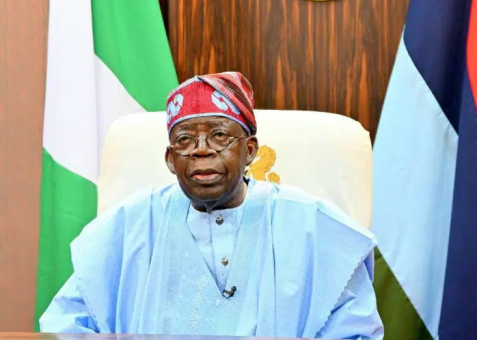
President Bola Ahmed Tinubu has described corruption as a major obstacle to economic advancement and national development, saying it has weakened the country’s ability to mobilise resources for the benefit of citizens.
Tinubu spoke on Friday in Awka, Anambra State, during the commissioning of a zonal directorate of the Economic and Financial Crimes Commission (EFCC) covering Anambra and Imo states.
The President said the prolonged diversion of public resources had undermined the country’s capacity to use its wealth for the common good.
He said the trend must be reversed to ensure that national wealth serves all citizens rather than a privileged few.
Tinubu, who was represented at the event by the Speaker of the House of Representatives, Hon. Tajudeen Abbas, said his administration had taken steps to strengthen the country’s anti-corruption framework.
According to him, over the years, particularly during the last three years of his administration, efforts had been made to strengthen anti-corruption institutions and enhance their capacity to deliver on their mandates
“I dare say that the edifice we are about to commission today is a testament to the determination to ensure that the wheel of anti-corruption not only grinds surely, but also touches every section of our society.”
“The establishment of the Awka Zonal Directorate marks a strategic milestone for the people of Anambra State and Imo State, bringing the Economic and Financial Crimes Commission (EFCC) into close proximity with the region’s key economic hubs.”
“From the vibrant industrial hubs of Onitsha and Nnewi, to the vital oil and gas sectors in Ohaji/Egbema, and the rapidly growing tourism industry in Owerri, businesses can now operate with the assurance of ethical oversight and anti-corruption safeguards, both of which are critical to enhancing the ease of doing business.”
“Ultimately, this local enforcement mandate ensures that public resources are protected, driving transparent governance and delivering tangible value to ordinary citizens.”
“I wish to, at this juncture, commend the leadership of the EFCC under Mr Ola Olukoyede for this laudable initiative, which is in accord with the renewed hope agenda of my administration.”
“When we came into office three years ago, I highlighted nine major focal areas of my administration, two of which were reforming the economy for sustained and inclusive growth and promoting good governance.”
“Both objectives would remain a mirage without the requisite institutional support, including financial justice and an accountability framework.”
“The anti-graft agencies complement this agenda, as their focus on accountability and transparency ensures system integrity and the appropriate deployment of resources.”
“As a government, we are determined to provide the necessary environment for the fight against corruption to succeed.
“This edifice is part of the deliberate efforts of my administration to strengthen the capacity of the EFCC.
“For those who have followed the progress of this agency, you will immediately recall that this is not the first zonal office to be commissioned under this administration.
“We have held similar events in Enugu, Ilorin, and, most recently, in Benin City.
“We are committed to doing more to ensure that the presence of the Commission is felt more directly in every section of the federation. Supporting the EFCC is not particularly difficult. The agency has consistently demonstrated that the confidence reposed in it is well-founded.
“However, the import of the data lies in its transformational impact. The portion available to the government adds fiscal value by easing pressure on revenue mobilisation, without necessarily imposing an additional tax burden on citizens.
“Additionally, investing the proceeds of crime in critical social intervention programmes such as the Nigerian Education Loan Fund (NELFUND) and the Nigerian Consumer Credit Corporation (CrediCorp) ensures that more young people are afforded hassle-free tertiary education, while public service employees can now acquire critical assets and pay over a period of time.
“Furthermore, Nigeria’s economic resurgence and improved investment outlook owe much to the Commission’s decisive action, which culminated in the country’s removal from the FATF grey list in October 2025.”
“The EFCC’s aggressive enforcement operations serve as the ultimate proof of Nigeria’s effectiveness in anti-money laundering and counter-terrorism financing. These achievements have fortified the nation’s financial security and reignited international trust in our economic potential.
“To sustain this momentum, we must commit to strategic investments that strengthen the Commission and allied anti-corruption agencies. Nigeria’s true potential will remain out of reach until we decisively dismantle the architecture of corruption. This transformation begins at the grassroots, through heightened public consciousness and unwavering support for our anti-graft institutions,” Tinubu said.
In his address, the Chairman of the EFCC, Mr Ola Kayode, commended Tinubu for his determination to fight crime and called on religious leaders, traditional rulers, among others, to join the fight.
He said his mission is not to witch-hunt anyone or oppress people; rather, it is to enforce the laws.
Kayode outlined the Commission’s achievements from 2023 to date, adding that its mandate has been its dominant focus.
He said that between October 2023 and July 2026, the Commission received 49,673 petitions, investigated 39,615 cases, filed 14,476 cases in court, and secured 10,872 convictions.
“This gives a conviction-to-filing ratio of 75.1 per cent. In the first half of 2026 alone, we recorded 1,370 convictions from 1,889 filings.”
“The Commission also recorded recoveries of ₦1,233,612,040,411.11, $684.478,457.32, £373,905.78, and €9,343,803.66, in addition to recoveries in other currencies.”
“At the institutional level, we have initiated radical reforms that have yielded optimal results in our work.
He added that processes and procedures have improved significantly, which partly explains the impact EFCC has made and continues to make across all matrices of law enforcement.
Furthermore, he said reforms that strengthened the Commission during the period under review included new guidelines on arrest and bail, a review of sting operations, and the establishment of the Department of Fraud Risk Assessment and Control, the Security Department, the Immigration and Visa Section, and the Cybercrime Rapid
“We also instituted policies on gifts and hospitality, conflict of interest and exhibit-room security. We have renamed and restructured the Internal Affairs Department as the Ethics and Integrity Department to reflect our commitment to Internal Cleansing.
“At the same time, we are investing heavily in digitalisation projects. At the moment, almost 60% of our processes and operations have been digitised.
“The EFCC exists not merely to arrest and prosecute. Our official mission encompasses prevention, enforcement and coordination in the effort to eradicate economic and financial crimes. This balance is extremely important.
“We must investigate where crimes have occurred. We must prosecute cases on the strength of evidence. We must trace and recover proceeds of crime. However, a fundamental question is how we prevent financial crime from occurring in the first place.
“If we can identify vulnerabilities before billions of naira are lost, prevent fraudulent transactions before citizens lose their savings, strengthen procurement systems before public resources are diverted and interrupt criminal financial flows before they mature, then we would have saved the nation enormous economic and social costs.
“This new Directorate will not only enforce the law professionally and courageously; it will be high on corruption prevention. (The Nation)