Updating your news feed...
NEWS EXPRESS is Nigeria’s leading online newspaper. Published by Africa’s international award-winning journalist, Mr. Isaac Umunna, NEWS EXPRESS is Nigeria’s first truly professional online daily newspaper. It is published from Lagos, Nigeria’s economic and media hub, and has a provision for occasional special print editions. Thanks to our vast network of sources and dedicated team of professional journalists and contributors spread across Nigeria and overseas, NEWS EXPRESS has become synonymous with newsbreaks and exclusive stories from around the world.






















Loading banners
Loading banners...

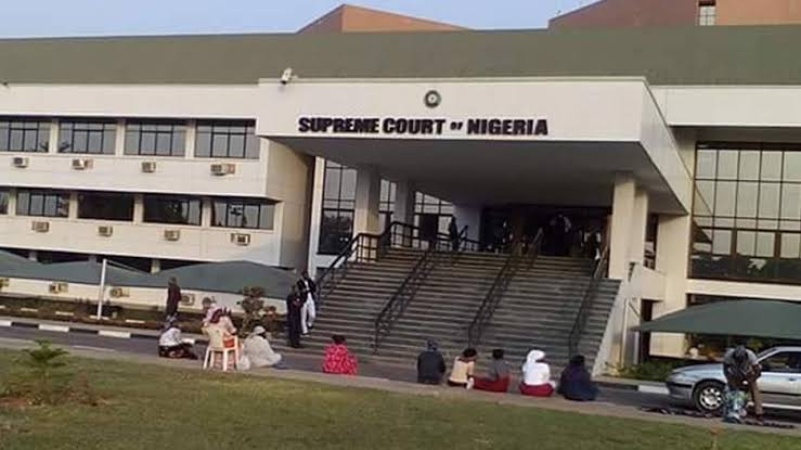
The Supreme Court of Nigeria
Two leading political parties at the weekend declined comments on the implications of the Supreme Court judgment of Thursday, which affirmed the powers of the Independent National Electoral Commission (INEC) over political parties’ membership registers and the nomination of candidates, setting aside a contrary judgment of the Court of Appeal, Abuja Division.
The apex court, in its judgment delivered on Thursday, September 24, 2026, upheld the validity of Sections 77(5), 77(6), 77(7) and 84(2) of the Electoral Act 2026, ruling that the provisions are not inconsistent with the 1999 Constitution.
The judgment followed an appeal filed by INEC against the July 16, 2026 judgment of the Court of Appeal, which had voided provisions of the Electoral Act dealing with political party membership registers and candidate nomination.
Speaking with Nigerian Tribune, the National Publicity Secretary of the PDP, Honourable Jungudo Haruna Mohammed, declined to comment on the issue when contacted on Sunday, insisting that it would only state a position after receiving the Certified True Copy (CTC) of the judgment.
He said: “We are yet to receive the CTC of the judgement as such cannot comment.”
The National Secretary of the ruling APC, Senator Ajibola Basiru, also said his party has no official reaction as he declared that the party national secretariat was not in custody of the CTC of the apex court judgment.
Senator Basiru also noted that APC was not a party to the suit and maintained that the justices of the Supreme Court could not have nullified the candidacy of Honourable Chinda, the APC candidate in Rivers State.
He said: “I haven’t read the judgment; our party isn’t a party to the suit. Our candidate in Rivers State isn’t a party to the suit.
“As a legal practitioner, I can’t make a comment on a judgment that I haven’t read. We have asked the INEC, which is a party to the suit to avail us a copy of the judgment. Until we see a Certified True Copy of the judgment of the Supreme Court, it will be difficult for us (APC) to take an informed position on the judgement.”
INEC awaits legal advice
INEC has said that it is yet to meet to consider Supreme Court ruling that validated Sections 77(5), 77(6), 77(7) and 84(2) of Electoral Act 2026.
National Commissioner and Chairman of Information and Voter Education Committee, IVEC, Mohammed Kudu Haruna, disclosed this in phone interview with Nigerian Tribune on Sunday.
Asked about position of INEC on the ruling, Haruna said ruling was delivered on Thursday towards weekend and Commission has not met to consider its implications.
“You said the ruling was on Thursday, which is towards the weekend. So, INEC hasn’t met yet to consider the implications based on that. And you can’t take anything for granted. You can’t say since the ruling favours us; this is exactly what it is. Until we sit down and hear advice from the legal department before we can say this is our position,” he said.
Apex Court declared what the law has been – Raji
Reacting to the judgment and whether it could have a retrospective effect, a Senior Advocate of Nigeria, Dr Ahmed Raji, said the issue of retrospect did not arise because the Supreme Court had merely declared what the law had always been.
Raji told Nigerian Tribune: “The Supreme Court merely pronounced the state of the law. The issue of being retroactive does not arise. What it means is that the law has always been what the Supreme Court said it is.”
The national leadership of the Social Democratic Party (SDP) also declared that the pronouncement of the Supreme Court on the suit instituted by the Zenith Labour Party would not in any way affect the emergence of its Governorship Candidate in Nasarawa State, Mohammed Adamu.
The National Publicity Secretary of the Party, Araba Rufus Ayenigba, told Nigerian Tribune, “Adamu’s membership of the SDP had been for three months or so before the governorship primary election through which he emerged as the SDP candidate.
“The ruling does not affect the former IGP in any way; he joined SDP on May 24, 2026, on the day he resigned his membership of APC.
“His name was listed on the party register and forwarded to INEC more than 3 months before the substitution primary election, which was conducted on September 5, 2026.”
The party insisted that Adamu was validly nominated, and he remained the candidate who is legally recognised by INEC.
Ruling won’t affect Obi’s nomination – NDC spokesman
The Nigeria Democratic Congress (NDC) equally dismissed reports suggesting that the Supreme Court’s recent judgment could affect the nomination of its presidential candidate, Peter Obi, for the 2027 general election.
Reacting to the report, NDC National Publicity Secretary, Osa Director, dismissed suggestions that the judgment had created a legal obstacle to Obi’s candidacy.
“We hope that those who are afraid of Peter Obi on the ballot will concentrate on telling Nigerians why they should be re-elected or voted for rather than spreading mischievous information. The Supreme Court judgment will not and shall not in any way affect Peter Obi,” director said.
Implications for parties, candidates – SANs
Speaking in an interview with the Nigerian Tribune, a Senior Advocate of Nigeria (SAN), Dr Abiodun Layonu, insisted that the question of whether the decision would operate retrospectively should be approached differently from the ordinary rule concerning the retrospective application of legislation.
The SAN posited that legislation ordinarily does not operate retrospectively unless the law expressly provides otherwise, subject to constitutional limitations.
However, Dr Layonu distinguished between the operation of legislation and the effect of a judicial pronouncement by the Supreme Court.
In his words, the significance of the apex court’s judgment was that it had now authoritatively determined that the disputed provisions of the Electoral Act were valid.
Layonu explained that because the provisions were part of the Electoral Act from the time the legislation was enacted, the Supreme Court’s validation meant that their legal validity had now been affirmed at the highest judicial level.
According to Dr Layonu, “It would therefore be inaccurate to simply describe the judgment as giving the Electoral Act retrospective effect. Rather, the Supreme Court had determined the legal status of the provisions as contained in the legislation, meaning that conduct occurring after the enactment of the law could be subject to those provisions where applicable.”
The SAN stressed that the earlier Court of Appeal judgment could not necessarily be relied upon by a candidate or political party seeking to avoid the consequences of the Supreme Court’s subsequent pronouncement.
Another SAN, Mr Francis Amobi Nzelu, saw the judgment from the perspective of the changing relationship between political parties, candidates, INEC and the electorate.
Nzelu queried the continued relevance of the traditional position that political parties have the final say in determining their candidates, particularly considering the statutory framework governing party primaries under the Electoral Act 2026.
The SAN said political parties in earlier periods operated under a system in which their conventions effectively selected candidates to represent them in elections.
The senior lawyer suggested that the introduction of direct primaries, under which registered party members participate in determining candidates, had changed the character of the process.
Nzelu held that where a party member had obtained nomination forms, got screened and cleared, participated in a primary election and emerged victorious; questions could arise if the party subsequently sought to remove the person’s name.
Nzelu insisted that such circumstances should also be considered from the standpoint of the electorate, which ultimately votes for candidates at general elections.
On his part, a human rights crusader, Ige Asemudara, described the decision of the Supreme Court as a development that would reinforce order and adherence to established electoral rules.
The legal luminary stated that persons who were not listed on the membership register of a political party within the statutory period should not seek to participate in the party’s primary process.
Asemudara referenced instances where aspirants dissatisfied with the outcome of primaries in one political party subsequently moved to another party and sought to contest under its platform.
The Supreme Court, according to Asemudara, had restored clarity regarding the relevance of party membership registers and the statutory requirements governing participation in party primaries.
Reacting to the judgment, legal practitioners, Ubong Esop Akpan and Victor Giwa urged the electoral body not to interpret the decision as an automatic disqualification of candidates whose emergence may be questioned.
According to Akpan, who expressed his preference for the Court of Appeal’s decision which upheld party autonomy, the Supreme Court had settled the constitutional validity of the statutory provisions but did not determine the validity of individual candidates.
“I personally prefer the Court of Appeal decision on grounds of party autonomy. But the Supreme Court has the final say in these matters and we must deal with its real-world consequences.
“I caution against interpreting the judgment as an automatic disqualification of candidates whose nominations may be questioned.”
On his part, Giwa submitted that INEC should not use the Supreme Court’s decision as a weapon against political parties, adding that most political parties acted based on the Court of Appeal’s decision.
He said that the Supreme Court’s decision might not be a political tsunami, asserting that if democracy is truly all-encompassing, INEC should not use the decision of the apex court against political parties.
“INEC should not use the judgment of the Supreme Court against the political parties.
The reason is this, the trial court upheld the power of INEC but the Court of Appeal removed that power.
“Most political parties acted based on the decision of the Court of Appeal; they acted in compliance with the court order.
“Now that the Supreme Court took a different decision, will you now say those political parties, which based on the Court of Appeal’s decision did their own primaries, then later submitted their lists of members outside of the time provided by INEC?
“If democracy is all-encompassing, you don’t have to eliminate anybody. Moving forward, INEC should not take it against any political parties,” Giwa said.
Judgment does not automatically nullify PDP nominations – Kwara legal practitioner
A legal practitioner based in Kwara State, Taofiq Olateju, has said that the Supreme Court’s judgment on sections of the 2026 Electoral Act should not be interpreted as automatically nullifying nominations of politicians who recently defected and emerged as candidates of other political parties in Kwara State.
Olateju said the interpretation of the judgment circulating on social media does not, in his view, accurately reflect its legal effect, stressing that the decision must be considered within the specific facts and circumstances of each case.
According to him, the effect of the judgment on any particular candidate would depend on the facts surrounding the candidate’s membership, the relevant party’s membership register, the nomination process and compliance with the applicable electoral requirements.
Olateju therefore maintained that documentary evidence could become important in determining disputes over party membership and nominations, rather than relying solely on political declarations concerning defection or membership. (Nigerian Tribune)