Updating your news feed...
NEWS EXPRESS is Nigeria’s leading online newspaper. Published by Africa’s international award-winning journalist, Mr. Isaac Umunna, NEWS EXPRESS is Nigeria’s first truly professional online daily newspaper. It is published from Lagos, Nigeria’s economic and media hub, and has a provision for occasional special print editions. Thanks to our vast network of sources and dedicated team of professional journalists and contributors spread across Nigeria and overseas, NEWS EXPRESS has become synonymous with newsbreaks and exclusive stories from around the world.





Loading banners
Loading banners...

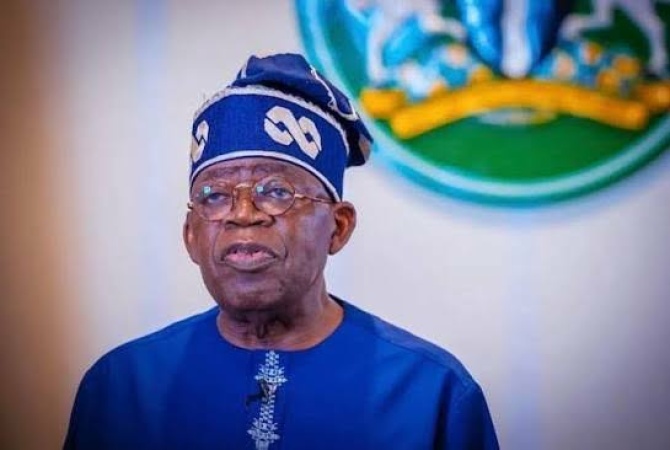
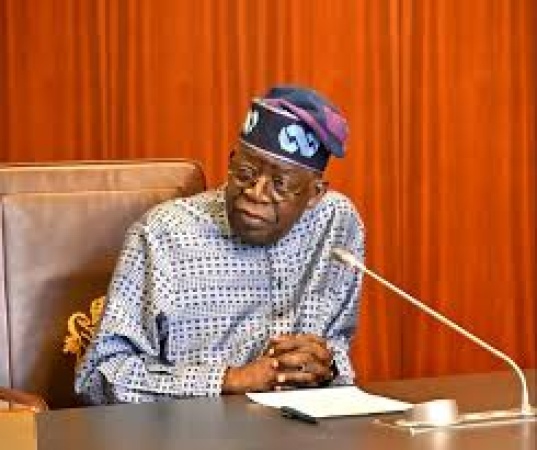
President Tinubu
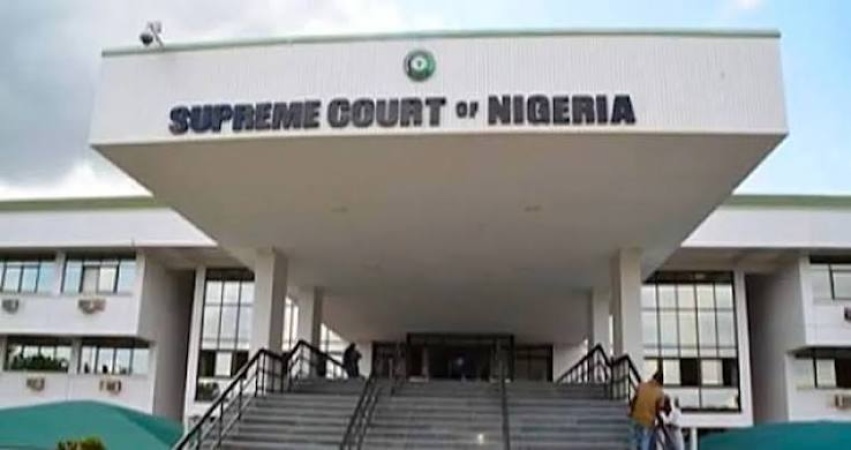
President Bola Ahmed Tinubu on Tuesday issued a stern directive to the chairmen of Nigeria’s 774 Local Government Areas to translate the historic financial autonomy affirmed by the Supreme Court into tangible improvements at the grassroots.
Represented by the Secretary to the Government of the Federation, Senator George Akume, at the inaugural Annual National Conference of Council Chairmen in Abuja, the President declared that “local government autonomy is not an end in itself, but an instrument for service.”
He tasked councils with delivering verifiable results in six sectors: primary healthcare, basic education infrastructure, rural feeder roads, potable water, food security, and grassroots livelihoods.
The charge rings with noble intent. But more than two years after the landmark July 11, 2024 judgment ordering direct disbursement of federal allocations to local governments, most councils still do not receive their funds directly. That bottleneck renders the demand for performance aspirational.
Critical voices dismissed the charge as mere rhetoric. Chief Chekwas Okorie noted: “The directive given by the President to local government chairmen to ensure service delivery at the grassroots, four months to the election, is mere political posturing. Nobody will take him seriously because he had the opportunity to enforce the judgment of the Supreme Court on the autonomy of local governments but refused to do so. He has not impressed anybody at all with that statement.”
States remain defiant
Sunday Sun investigations across Osun, Benue, Abia and other states show state governments still exert firm control over FAAC revenues meant for councils, using joint project schemes and regulatory loopholes to preserve financial dominion.
In Osun State, council autonomy remains trapped in court battles. Service delivery is still largely ineffective due to legal and political supremacy battles. The opposition APC is in court seeking tenure elongation, claiming its chairmen were illegally ousted. Prof. Tunji Ogunyemi, lawyer and public affairs analyst told Sunday Sun autonomy will remain unachievable until Sections 162 (5), (6) and (7) of the Constitution are amended. “The Joint State and Local Government Account (JAAC) is completely unnecessary. In fact, it undermines the Supreme Court’s landmark judgment mandating direct allocation to local governments,” Ogunyemi said. He explained that existing provisions still grant states control over local finance, structure and tenure. “Nobody can open a separate local government account contrary to a governor’s directive without committing an illegality. Local government finances are managed by the Director of Finance, who is a gubernatorial appointee,” he added.
Ogunyemi urged amendment of the INEC Act to allow the National Judicial Council, not the President, to appoint a retired Justice to oversee local polls.
Meanwhile, Osun ALGON Chairman Hon. Abiodun Idowu maintained autonomy is operational though funding is constrained by litigation. Conversely, Commissioner for Local Government and Chieftaincy Affairs Hon. Dosu Babatunde described distribution of motorcycles and patrol vehicles by former chairmen as political manipulation and financial illegality.
ADC chieftain in Lagos, Tunji Shelle, asked: “There is a Supreme Court ruling that local governments should receive their allocations directly from the Federation Account. Are local governments receiving their allocations directly? Even in Osun, where the court ruled that local government allocations should be returned to the party in power, did they return the money? Where do we go from here if everybody is breaking the law?”
In Benue, Katsina-Ala LGA Chairman and state ALGON Chairman, Hon. Justin Shaku, said autonomy was working under Governor Hyacinth Alia. “If you come to my local government, Katsina-Ala, you will be shocked by the level of activity, including the construction of the 21km Yooyo Road and the renovation of the council secretariat,” Shaku said.
He, however, called for a review of the sharing formula: “My proposal is that local governments should receive 40 per cent, states, 35 per cent, and the Federal Government 25 per cent. About 80 per cent of people from Katsina-Ala may never visit Abuja, and 70 per cent may not visit Makurdi. That is why more resources should go directly to local councils.”
He noted Insecurity and inadequate funding as hurdles and urged cooperation with security agencies.
Chairmen in Ado, Guma, and Ohimini council areas, Sunday Oche, Maurice Orwough, and Gabriel Adole respectively, confirmed infrastructure drive. In Guma, ₦4 billion was earmarked for the Gbajimba secretariat road and security vehicles. In Ado, ₦2.8 billion for roads plus ₦1.2 billion RAAMP counterpart for solar lighting. Otukpo Chairman Maxwell Ogiri also cited projects in Otukpo town as proof of direct utilization.
In Abia, reports show that financial autonomy is not fully in place as allocations still pass through JAAC.
Under JAAC, states statutorily add 10 per cent of IGR before disbursing to councils. But officials anonymously said councils were far from direct allocation despite Supreme Court ruling. They revealed state government controls council finances, including salary payments, while projects are mostly executed jointly, leaving councils without independent control.
“If councils were allowed to manage their own funds directly, staff leave allowances and gratuities owed over the years would have been cleared,” an anonymous council official noted.
Sources further added that the state had usurped key local revenues, including market and signage fees, preventing councils from performing their statutory duties.
Former President of Kano Chamber of Commerce, AbdulKarim Daiyabu, queried the disparity: “I wonder why people keep talking about direct or indirect allocations to local governments. If the federal and state governments are receiving direct allocations, why not local governments? “What kind of country are we if the Supreme Court passes a judgment and that judgment is not implemented? What kind of country is that? What form of justice system are we running in this country? If the Supreme Court cannot be respected, is that not an invitation to anarchy? It also means that our lawmakers are part of the criminality. We should rather recall them if they cannot hold the President and the governors accountable.
“Okorie stressed the finality of apex court pronouncements.
“The pronouncement of the Supreme Court as the highest court of the land is final. It overrides the Constitution. President Bola Ahmed Tinubu became President by virtue of the Supreme Court ruling on the 2023 general election. Despite the fact that he did not secure majority votes, all presidential candidates complied as soon as the Supreme Court made its final pronouncement and immediately started preparing for another election, for those who still want to contest.”
“In the case of Peter Obi in Anambra State, it was the Supreme Court that introduced off-cycle elections when he won his governorship petition. Despite the fact that the Constitution stipulates a four-year tenure, the Supreme Court ruled that his tenure must start to run from the day he took the oath of office. That was how we came about off-season elections. It is this same Supreme Court that everybody is treating with disregard. This is the unfortunate situation Nigeria has found itself in.”
The Jigawa exception
In this landscape, Jigawa stands as a beacon of compliance. Long before the 2024 verdict, it institutionalised direct funding. According to Jigawa ALGON Chairman, Sibu Abdullahi, all 27 LGAs receive monthly FAAC directly into independent council accounts, bypassing SJLGA. Multiple reports confirm Jigawa as the sole state with verifiable end-to-end direct disbursement, while Sunday Sun findings show councils in 35 other states remain entangled in state-controlled arrangements.
Governors view autonomy as erosion of patronage.
For decades, council allocations have been used to reward loyalists and fund state expenditures at the expense of rural development. By withholding direct access, authorities reduce chairmen to subordinates dependent on hand-outs. Okorie questioned the lack of will despite ruling party dominance.
“This is the first time a party in power is in control of 31 out of 36 states of the federation and has the majority in the National Assembly. Why can’t the President and the ruling party enforce local government autonomy as directed by the Supreme Court so that there will be service delivery at the grassroots? Why are state governors refusing to obey the judgment of the Supreme Court and continuing to deny governance to the people at the grassroots,” he queried.
This scenario creates an administrative paradox. Council chairmen are expected to fix security, renovate schools, stock clinics, clear drainages and boost agriculture with tied hands. Shelle echoed concerns on opacity: “I learnt that a reasonable amount is being allocated to local governments, but we cannot see any evidence of it. Clearing drainages, ensuring that everywhere is clean, and ensuring that there is primary healthcare service delivery at the grassroots are part of the responsibilities of local governments. I cannot see anything commendable they have done so far. It is possible the governors are holding them back, sitting on their allocations, or that they are misapplying the allocations. We do not know who to hold accountable. There is no accountability in the country generally. Everything is being done with impunity.”
When councils are denied fiscal autonomy, rural infrastructure decays, healthcare collapses, education fails and local economies stagnate, accelerating rural-urban migration and insecurity. Beyond structure, some blame civic morality. Daiyabu said: “The problem is that we do not vote for the right people who are God-fearing and empathetic towards the masses they are meant to serve. We vote and give a licence to those we elect to loot.
“It is high time we looked inward and voted for honest people to whom we can entrust our future in the coming elections. Otherwise, they will continue to loot our money.
“For me, it is not a matter of direct or indirect allocations to local governments. Rather, there should be a judicial committee that will be given all the powers required to investigate and recover all the monies that have been looted, and thereafter the looters should be publicly punished.
Stakeholders insist if government intends real grassroots change, it must move from speeches to enforcement. The CBN, Accountant General and anti-corruption agencies must sanction states that intercept or co-manage LG funds. The true test of policy, they say, is not what is announced in Abuja, but what changes in our wards, villages, towns, and communities. Until roadblocks are dismantled, grassroots governance remains empty narrative.
As Okorie noted: “Campaigns have started. This will form part of the issues political parties will put before Nigerians when they begin their rallies in a month’s time.”
How financial autonomy is undermined
Financial autonomy should make chairmen accountable to citizens. Normally, accountability relies on being voted out. But under SIEC structure, performance is irrelevant; loyalty to the governor is sole requirement. Without credible elections, autonomy cannot improve service delivery. Shelle framed the monopoly: “Part of the problem is that all local government chairmen come from the ruling party in a state. How can there be discipline or the rule of law? If you are an APC governor, all your local government chairmen must be APC. If you are a PDP governor, all your local government chairmen must be PDP. How do you have checks and balances?”
Some argue transferring oversight from SIECs to INEC or a new National Independent Local Government Electoral Commission (NILGEC) is critical. Financial autonomy guarantees money flow, democratic oversight determines who controls it. Without electoral reform, they insist, direct allocation goes to proxies.
Under current system, SIECs are appointed, funded and controlled by governors, yielding 100 per cent wins for ruling parties. Chairmen who owe nomination to governors readily sign off on joint projects and deductions. Governors also delay elections, using Caretaker Committees to retain total control. An independent body ensures predictable cycles. But reform advocates are divided on INEC. Shelle said: “INEC itself is a problem on its own. Everybody has reservations about INEC. I would not recommend INEC conducting local government elections. It is not a trusted body.”
Okorie proposed reforming SIECs with technology: “Part of the reason for the lack of governance at the local government level is the way elections are conducted by the state electoral bodies. I do not subscribe to the idea of INEC conducting local government elections because of its unimpressive performance. What I would suggest is amending how state electoral bodies are constituted to make them truly independent. I also do not support a situation where local governments rely on the INEC voters’ register. We should allow electronic technology like BVAS to be deployed to local governments so that we can have credible elections.” (The Sun)