Updating your news feed...
NEWS EXPRESS is Nigeria’s leading online newspaper. Published by Africa’s international award-winning journalist, Mr. Isaac Umunna, NEWS EXPRESS is Nigeria’s first truly professional online daily newspaper. It is published from Lagos, Nigeria’s economic and media hub, and has a provision for occasional special print editions. Thanks to our vast network of sources and dedicated team of professional journalists and contributors spread across Nigeria and overseas, NEWS EXPRESS has become synonymous with newsbreaks and exclusive stories from around the world.





Loading banners
Loading banners...

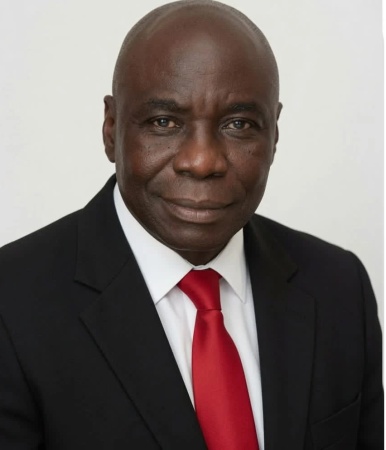
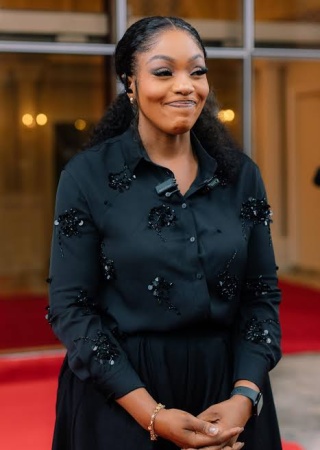
Managing Director of Walsh Blanc, Uloma Rochas Nwosu
Architecture is far more than mortar and stone; it is the physical archiving of a people’s history, heritage, and identity. For the Igbo nation, the newly designed Ohanaeze Ndigbo facility stands as a bold, breathtaking testament to this truth. At the helm of this monumental transformation is a woman who effortlessly embodies the ultimate trifecta of beauty, brilliance, and boundless grace, Uloma Rochas Nwosu. As the daughter of Senator Rochas Okorocha, she brings a deeply rooted understanding of legacy to her work, but it is her formidable creative genius as the driving force behind The Walsh Blanc that truly commands the spotlight. Taking on this mammoth project, she has masterfully blended royal cultural aesthetics with striking modern functionality. The sprawling complex is intentionally designed to bridge the past and the future, honouring a rich lineage while actively embracing the youth. In this insightful interview with TOMI FALADE, the captivating visionary details the inspiration breathing life into the space. From the symbolic seven pillars and the majestic Isi agu-themed amphitheater to the delicate preservation of historical artifacts, she navigates the complexities of balancing sentimental attachments to the old structure with the undeniable necessity of growth. This conversation reveals the profound sacrifice and intention required to build a unifying monument meant to stand proudly for the next 150 years.
What inspired the design of this space?
When His Excellency contacted The Walsh Blanc and asked us to create this for the Ohanaeze Ndigbo, the inspiration came from the idea that the Igbo people needed a place to unite. So, the inspiration came from His Excellency’s brief, His Excellency, Senator Rochas Okorocha. He asked us to create something that would tell the story of the Igbo nation. The Igbos are known to be very royal and proud in a good way, and so that’s what inspired this. We wanted to create something that gave the Igbo people a sense of pride, a sense of belonging, and beauty. So, if you see it, you will notice we played with a lot of lights, a lot of crystals. Most Igbo homes carry a bit of a royal theme, so we decided to incorporate that in our design.
Can you just take us through some of the elements that would stand out eventually when this space is opened, especially for the future generation? What element do you think would merge the past, the present, and the future to make it something worthy of this investment?
One of the things is the memorabilia, which sits in the basement of this facility. The idea is to preserve history, so you’ll be seeing a lot of audio-visual setups and arts that will tell children stories where we play documentaries. We have a lot of screens there, so we’re learning about our historical fathers, what makes the Igbo race, and all of that. So, that’s one of my favorite spaces at the Ohanaeze building.
We also have used a lot of sevens, like the seven pillars and the seven lights in the second amphitheater. This represents the seven Igbo-speaking states, from Imo, Enugu, parts of Rivers, and so forth. We have about 11 offices: we have the ICT office, the President General’s office, Deputy President General’s office, and the conference rooms. These are all set up intentionally to preserve Igbo history.
The building sitting to my left was told to have been in existence for the past 150 years, and so we have designed this space in a way that it could hold the next 150 years and tell our children, generations unborn, what the Igbo race is all about.
What will happen to the old building?
The plan is to demolish it, but we intend to keep a part of this building to the corner for history’s sake. But the major building would be demolished.
What motivated you to take up this project?
That’s an interesting question because I put a lot of my heart and soul into it. It stemmed from the fact that the person who hired The Walsh Blanc is also very dear to me and told me the importance and significance of what we’re creating. It was supposed to be a place that would unify the Igbo nation. Once there’s a sense of pride, it brings a sense of unity, a unity of purpose. That got my attention, and I wanted to be a part of that. I wanted to be a part of history in the making, and I’m glad that we’re finally here.
Looking at what it looks like in here with the audio-visual spaces, the library, the conference areas for a lot of people, it might feel like a space for elite meetings and to direct the affairs of the organisation. But day to day, what are the things that will happen here that will make a difference for the younger people?
I did a bit of research, and I found that the former Ohanaeze building was a decision-making space where they would hold meetings, so you’re right. But what we did was create more room for experiences. So, it’s not just about history, but about preserving history and redirecting our young ones to understand their roots, where they’re from, and all that. We’ve created those spaces to intentionally guide that.
For instance, while we won’t be managing the Ohanaeze affairs, I imagine that with the facilities put in place, they would have excursions for young children and students to fly all the way to see the space. We also hope that this becomes a tourist destination that they would take advantage of, because it has been created to serve that purpose.
I like the fact that you mentioned it’s going to be like a tourist destination. When I came here and saw this building, I thought that was a way to preserve this as a museum of what this has grown into to measure growth. So I was quite sad when you said it would be demolished. Is there any way that it could be preserved as a reference point?
Like I said, we have two buildings. We have one sitting right in front of the multipurpose hall. It’s small, but we intend to move some of the old tables and old furniture so you still get a sense of what was there and what we’re doing now. So, we intend to keep that building and build something around it so it serves as a museum. The major building is closing out the beauty of what this holds and it is blocking the view, so we don’t want to lose our messaging. We’re still preserving something. The old tables and old floors will be artistically put together in the smaller building, so you still get a sense of what it was before. We’re also going to get the videos and pictures of how it used to be and play them at the memorabilia area so you get a sense of what it used to be like.
From an architectural point of view, what part of this project are you most proud of?
All of it, to be honest. It’s in the way that I’ve worked with the two amphitheaters. If you notice, the Isi agu-themed amphitheater, where we worked with the lion face, everyone who sees that will know that this is a space for the Igbos. That’s something that I’m really happy about, as well as how we infused red and white, the known Igbo heritage colours.
I’m proud of all of it, but there’s something that’s interesting, the lobby. We intentionally created seven pillars to depict the seven Igbo-speaking states. And this is just 85% near completion, so there’s still a lot that’s coming in that would further drive the story of what this whole thing represents. I don’t want to let it all out because I want the surprise factor and people to get excited.
When did this project start, and how do you plan to appeal to those who have sentimental attachment to the old building?
There’s always beauty in growth and evolving. Like I said, we’re not bringing down the entire old building; we still have one that we’re preserving. We are careful and intentional about taking the wooden floors and stairs, and we’re going to artistically put them together. So, once you walk in there, those of you that have a sentimental attachment will still feel a sense of what it used to be, and the nostalgia will come back. You’re going to remember it for what it was, but there’s also beauty in growing and evolving, and we are very intentional about preserving history.
Let’s talk maintenance. We know that this project is still ongoing, but are you looking at a maintenance system? Because that is one thing that we lack a lot, so that all of the effort put in here doesn’t just ”o down after handover.
As far as maintenance culture, if you notice from our level of finishing, we tried to incorporate a lot of low-maintenance finishes. For instance, most of our walkways are cladded in boards, so you would hardly ever see hand stains, taking into cognisance that it’s a public building where people won’t manage it like their personal homes. We used a lot of surface coverings like boards, alcoves, glass, and stones. We adorned the entire façade with stones, which are timeless finishes, so there will be little or no need for excessive maintenance. But obviously, we’re still going to leave a maintenance instruction with the Ohanaeze team once we hand over, and hope that they do it justice.
What were the challenges you experienced in handling a project of this complexity?
As with any project of this magnitude, there are challenges, but they weren’t out of the ordinary or things that we couldn’t overcome and handle. By God’s grace, I’m just excited that we’re here. We’re not 100% done, but so far, I am glad, excited, and grateful to God at how it has been received by the late President General of Ohanaeze, His Excellency the Executive Governor of Enugu, and His Excellency Senator Rochas. They’re all smiles, and that’s fulfillment for us, that we’ve done something right.
Looking around, most of the things we see here look foreign. When we are talking about home and made in Nigeria, can you tell us what percentage of what you put up here is made in Nigeria?
The furniture and couches you see are all made locally. The art at the amphitheaters were done by our very own people; we didn’t import those, so locals put those in place. I would say that a huge percentage of what we’ve done here is foreign, because there are certain finishing materials that are not yet locally produced. Hopefully, this is supposed to inspire a lot of young people to go into manufacturing things that we could use to finish at this level. What’s most important is ensuring that this can stand the test of time for the next 150 years.
It’s 85% near completion, and the remaining percentage will bring in a lot of soft finishings and art pieces that speak to people, like flooring that says “Igbo Kwenu!” This is all created to tell the Igbo story. I like surprises, so I want people to come and be wowed.
Can you disclose how much it took to set up this facility?
To be honest, I think it’s way above my pay grade to say how much. But speaking from the standpoint of what I represent, I know that it took a lot of sacrifice, and it needed to be done. It’s interesting that for a race like the Igbo people, we didn’t have a central identity or a place to fall back to. You have this in the West and in the North, but the Igbos had nothing to be proud of, and that’s what is most important. It’s not in the cost, but in the fact that it is standing before us and what it represents for the Igbo people. (Daily Independent)