Updating your news feed...
NEWS EXPRESS is Nigeria’s leading online newspaper. Published by Africa’s international award-winning journalist, Mr. Isaac Umunna, NEWS EXPRESS is Nigeria’s first truly professional online daily newspaper. It is published from Lagos, Nigeria’s economic and media hub, and has a provision for occasional special print editions. Thanks to our vast network of sources and dedicated team of professional journalists and contributors spread across Nigeria and overseas, NEWS EXPRESS has become synonymous with newsbreaks and exclusive stories from around the world.









.webp)
Loading banners
Loading banners...

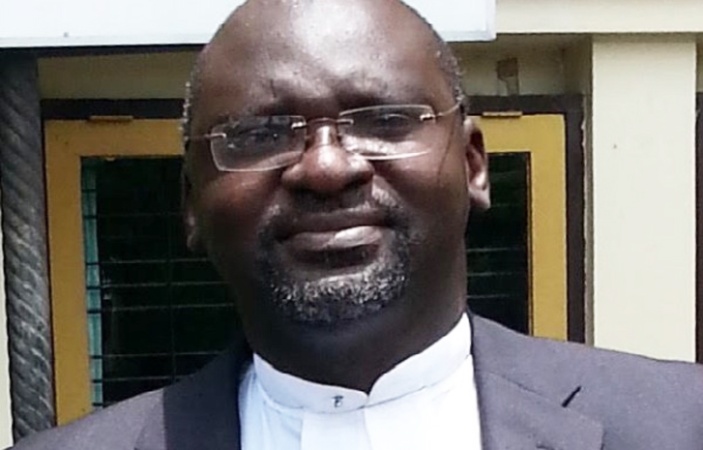
Human rights lawyer Emmanuel Ogebe
By BONIFACE AKARAH
Human rights lawyer Emmanuel Ogebe has urged the Federal Government to take urgent practical steps to address growing human security challenges facing Nigerians in the diaspora, including those being deported from the United States, as well as Nigerian refugees and internally displaced persons affected by the conflict in the North-East.
Ogebe made the call at a Human Security and Leadership UN side event held at the Nigerian Consulate in New York on September 23, 2026, where he appealed to the Minister of State for the Federal Capital Territory to consider making some government-forfeited properties available to Nigerians returning from abroad.
The lawyer specifically proposed that some of the 853 houses forfeited to the Nigerian government from former Central Bank of Nigeria governor Godwin Emefiele be made available to Nigerians returning after deportation, saying the arrangement could provide immediate accommodation while allowing beneficiaries to eventually acquire the properties.
“Some of the houses that have been forfeited to the Nigerian government, including 853 houses from the former CBN governor, should be made available to diaspora who are coming back,” Ogebe said.
He said the returning Nigerians could eventually liquidate their assets and purchase the properties, describing the proposal as a practical way for the government to respond to the challenges confronting deported Nigerians.
Ogebe said Nigerians in the United States were currently facing arrest, shackling and deportation, adding that two of his friends who had spent about 30 years in the US had recently been deported.
“Two of my friends, after thirty years in America, were just deported,”** he said, stressing that the situation had created a new form of insecurity for Nigerians who had previously been financially established in the United States.
The lawyer also linked the problem to the contribution of Nigerians abroad to the country's economy through remittances.
“We have been sustaining that country with twenty-two billion dollars a year remittances, and now we're finding our people homeless,” Ogebe said.
He recalled an earlier Federal Capital Territory initiative described as a “diaspora village”, saying his experience with the programme had also exposed challenges that could undermine confidence among Nigerians abroad seeking to invest or relocate to Nigeria.
Ogebe said participants who purchased properties under the scheme were given five years to pay, but alleged that the subsequent administration changed the arrangement and required immediate payment or risk losing the properties.
“People who took loans to buy property in Abuja, to buy land, they lost money because of that policy,” he said, urging the authorities to focus on practical interventions rather than rhetoric.
Ogebe also drew attention to Nigerian refugees in Cameroon, saying more than **70,000 Nigerians had remained there since 2013.
“It’s unacceptable that in this day and age, Nigerians are refugees anywhere on the planet. That's a total failure of governance,” he said.
He said some refugees had been repatriated to Abuja, but that Gwoza people who returned to Nigeria were still facing serious humanitarian challenges in Nasarawa and Abuja.
Ogebe recounted his experience during a medical mission in Abuja, where he said 39 women attended an antenatal clinic despite having no adequate support system and living in a school.
He urged the FCT authorities to translate their development plans into opportunities for vulnerable Nigerians, particularly displaced families.
Referring to a statement by the Minister of State for the FCT that “demographic potential can only be capitalized as a development dividend when you create opportunities,” Ogebe urged the government to demonstrate that principle in its treatment of displaced Nigerians and returning members of the diaspora.
“You ended by saying that yours is a responsive and inclusive government for development. Kindly exemplify that,” he said.
Ogebe further illustrated the potential of displaced Nigerian children by recounting the story of a former child soldier who later became president of a university in New York.
“Right now there’s a President of an American university who is a child in a refugee camp in Cameroon waiting to be discovered,” he said.
He also recalled the experience of two Gwoza sisters who, according to his account, trekked with their mother to a UN camp in Cameroon but returned to Nigeria after six months when they were rejected. He said the sisters were subsequently placed in an orphanage in Miango, which was later attacked, while one of them had since gained admission to university.
Ogebe's intervention therefore placed the challenges facing deported Nigerians, refugees and internally displaced persons within a broader call for government to treat human security as a practical governance responsibility, with housing, healthcare, rehabilitation and opportunities forming part of the response.