
Updating your news feed...
NEWS EXPRESS is Nigeria’s leading online newspaper. Published by Africa’s international award-winning journalist, Mr. Isaac Umunna, NEWS EXPRESS is Nigeria’s first truly professional online daily newspaper. It is published from Lagos, Nigeria’s economic and media hub, and has a provision for occasional special print editions. Thanks to our vast network of sources and dedicated team of professional journalists and contributors spread across Nigeria and overseas, NEWS EXPRESS has become synonymous with newsbreaks and exclusive stories from around the world.











Loading banners
Loading banners...

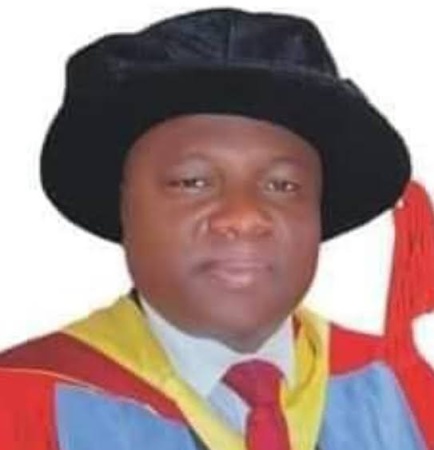
Jeff Godwin Doki PhD
By JEFF GODWIN DOKI Ph.D
Since 1975, the African continent has been confronted with a sad historical reality which is the annexation, occupation and subjugation of Western Sahara by Morocco, a fellow African country. But more than the annexation and occupation of Western Sahara is the failure of the African Union (AU), the United Nations (UN) or indeed, the international community, all of which have demonstrated a willful incapacity to decolonize this region. We may need to recall that this failure has long been anticipated by two radical Africana decolonial theorists: Frantz Fanon and Amical Cabral. Fanon saw the efforts of the AU as elite nationalism meaning that the colonized man may step in to replace the colonizer and suggested resistance and outright violence as the only cleansing solution. Cabral, on the other hand, emphasized a return to the sources or our cultures and traditions.
But underlying, these two theories is the fact that the existing mechanism for preventing colonization both at the international and regional levels are inadequate or non-existent. Equally important, especially in connection with the principles of ASUU as a union, this failure has demonstrated that ASUU’s activities go beyond trade union struggles to embrace the more all-encompassing political struggles of African people for genuine national independence, national unity and material advancement. In a word, ASUU’s involvement in the struggle for the decolonization of colonized people is a recognition of the basic and enduring links which binds the union and other colonized and working peoples of the world. In simple terms, ASUU desires to be one with the people so as to articulate their deepest aspirations for freedom and higher quality of life. And this is the subject-matter for today’s dialogue.
But, a full understanding of the above thesis can hardly be reached without an analepsis and examination of the very substance of colonization, decolonization and the role of ASUU.
So, I begin with Morocco. Morocco was colonized by two European powers namely: France and Spain which divided the country into protectorates from 1912 to 1956. Independence for Morocco took a very long time to come and it did not come without a price. For example, after the restoration of the exiled Sultan Mohammed V, France still exerted a lot of influence in the colony and the right to station French troops and have a say in Morocco’s foreign policy. Opposition to France rule continued in the region between 1914 to 1921 and up to World War 11. The declaration by Franklin D. Roosevelt and the United States of America expressing support for Moroccan independence gave the Moroccans additional fillip after World War 11. Through transnational activism and diplomacy, Moroccan nationalists globalized the Moroccan question creating a vibrant and wide global coalition of supporters who advocated the Moroccan cause. In the 1940s and 1950s, with political and non-violent efforts proving futile, the Moroccan struggle to regain independence became violent with massacres, bombings and riots, particularly in the industrial center of Casablanca.
In all of the quest for independence, we must concede that the most prominent figure and outspoken leader of Morocco’s struggle for autonomy was Sultan Mohammed V. Several times Sultan Mohammed V was harassed, gagged, arrested and even banished. But the Sultan remained undaunted in his demand for complete independence for Morocco. For example, in 1954, Sultan Mohammed V and his family were banished by the colonial authorities to Madagascar and was replaced by the unpopular Mohammed Ben Aarafa. However, Aarafa’s reign was perceived by the Moroccans as illegitimate and, therefore, sparked active opposition to France. Besides, there was a united Moroccan demand for Sultan Mohammed V’s return. Sultan Mohammed V eventually returned from exile in 1955 and in March 1956 he successfully negotiated with France to enforce the independence of Morocco. In August 1957, Mohammed V assumed the title of king. He thus became the father of Moroccan independence and ruled from 1955 to 1961.
Note this: it was the son of Mohammed V, King Hassan 11 (1961-1999), who conquered Western Sahara in 1975. Originally, Spain was Western Sahara’s colonial power. On November 6, 1975, king Hassan 11 of Morocco sent 350,000 unarmed Moroccan civilians and 25,000 troops across the border carrying Korans and Moroccan flags. This civilian invasion is grandly known in African History as the Green March and it compelled Spain to hand over the administration of Western Sahara to Morocco in 1975. Since then, Morocco has controlled 80% of Western Sahara including the major cities and the economy.
Now, to the question: what has been the response of the people of Western Sahara to this indigenous colonial power? On February 27, 1976 Polisario, a Sahrawi nationalist liberation movement declared the Sahrawi Arab Democratic Republic SADR which became a full member of the African Union in 1982. Again, the question could be asked: what is the role of the African Union in this matter?
First and foremost, the charter of the AU is very explicit and it states clearly that ‘borders from colonialism are sacred and all peoples have a right to self-determination’. But it seems clear that the AU is very unwilling to grant Western Sahara the right to self-determination. And to this must be added the fact that there seems to be a huge split in the African Union itself which has compounded the decolonization of the Western Saharan region. For example, the pro-SADR camp led by countries like Algeria, South Africa, Nigeria and Tanzania argue that the African Union must finish the task of decolonization because allowing Morocco to annex Western Sahara is a total betrayal of the principles of self-determination. On the other side, is the pro-Moroccan camp led mostly by France, US, Israeli and other Gulf- allied states who make the case for historical ties, political stability and economic integration. Without doubt, the latter group is more interested in economic benefits which, of course, translates to an extension of modern industrial capitalism.
It Is true that Morocco has economic power and it is also one of the biggest AU investors in Africa. Besides, Morocco has huge deposits of phosphate, large banks and telecommunications and this is chiefly the reason many countries do not want to sever relations with her.
Now, what about the United Nations? The UN has also played a quisling role in this matter. In the first place, the UN has never fully and openly recognized Morocco’s sovereignty in that region. Rather, the UN has frequently relied on semantic obfuscation by referring to Western Sahara as ‘unfinished decolonization’ which connotes two things: either that Western Sahara is not a self-governing country because it has not fully completed the process of decolonization or that Western Sahara is a disputed territory that was a Spanish colony and now mostly occupied by Morocco. In the second place, in 1991 the United Nations secured a ceasefire and a deal deploying a Peace keeping mission: United Nations Mission for the Referendum in Western Sahara (MINURSO) raising hopes for a Referendum in that region.
But it is 35 years today since then and there has been nothing like a Referendum while Morocco continues to exploit the region’s economic resources. As a matter of fact, Polisario calls MINURSO a mission without a Referendum. It may be safe to say that MINURSO has no meaning and has made no impact in that region all these years.
Lastly, ASUU believes strongly and firmly in the links that bind us as a people. The obvious implication is that for ASUU blood is an accident and it is only our beliefs that bind us together. As a union of intellectual workers, ASUU is patriotic and its patriotism knows no borders. ASUU understands the needs, anxieties and aspirations of all the working and colonized peoples of the world. Besides, ASUU as a union, knows the global character of imperialism with all its changing manifestations: capitalism, neo-colonialism and globalization. Accordingly, the union is in solidarity with the Sahrawi people and will stop at nothing to ensure the liberation of Western Sahara. In a similar vein, the union considers the Moroccan invasion of Western Sahara as an extension of imperialism working in concert with the ruling elite in Morocco and determined to stop the Sahrawi people from realizing their full potential. And in the precise case of Western Sahara, ASUU’s distaste for imperialism is reflected in the followig activities. One, in the year 2013, ASUU organized a conference for the liberation of Western Sahara. The event which took place in Abuja, Nigeria’s capital city, was a forum for the exchange of diverse ideas concerning freedom and decolonization. But the common denominator was freedom for the Sahrawi and other colonized peoples of the world. Two, ASUU established a Movement for the liberation of Western Sahara. Led by Prof. Ibrahim Gambari, Nigeria’s longest serving UN Ambassador, the Movement’s paramount concern is to liberate the Sahrawi people from the chains of colonialism.
Additionally, the union sponsored three Sahrawian candidates for terminal degrees in Nigerian universities. Today, one of the beneficiaries of that collaboration is Senouci Quadadi who obtained a Ph.D at the University of Ibadan and is currently a university teacher in Western Sahara. In the final analysis, Moroccan annexation is nothing but neo-colonial occupation and this is completely unacceptable to ASUU as a union. But more than that, Moroccan annexation violates the very principle of decolonization on which the OAU (now AU) was founded in 1963. To say the least, Moroccan invasion is a classic case of territorial expansionism. In fact, what Morocco has done is reminiscent of what settler-colonialism did many decades ago: move its own people into another’s territory, control its resources like phosphate, fishing and most painfully deny indigenous people a vote.
Recall that ASUU fought Apartheid and colonialism on the African continent (especially in South Africa and Guinea-Bissau/Cape Verde) and the union cannot be quiet while one African country continues to colonize another.
The Moroccan Invasion must be resisted stiffly, consistently and resolutely by all progressive peoples of the world whose desire is to defeat imperialism and to create a more higher system of democracy and a truly human community.
•Jeff Godwin Doki is a Professor of Comparative Literature at the University of Jos (UNIJOS), Nigeria