
Updating your news feed...
NEWS EXPRESS is Nigeria’s leading online newspaper. Published by Africa’s international award-winning journalist, Mr. Isaac Umunna, NEWS EXPRESS is Nigeria’s first truly professional online daily newspaper. It is published from Lagos, Nigeria’s economic and media hub, and has a provision for occasional special print editions. Thanks to our vast network of sources and dedicated team of professional journalists and contributors spread across Nigeria and overseas, NEWS EXPRESS has become synonymous with newsbreaks and exclusive stories from around the world.














Loading banners
Loading banners...

Use map of West Africa with humans insert
By MARK LONGYEN
The Economic Community of West African States (ECOWAS) says 32 million people risk being displaced from their communities due to ravaging effects of climate change currently confronting the sub-region.
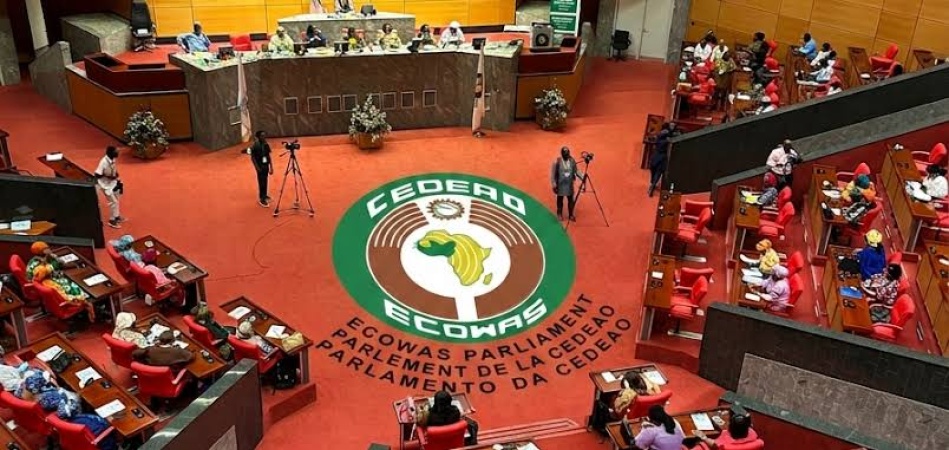
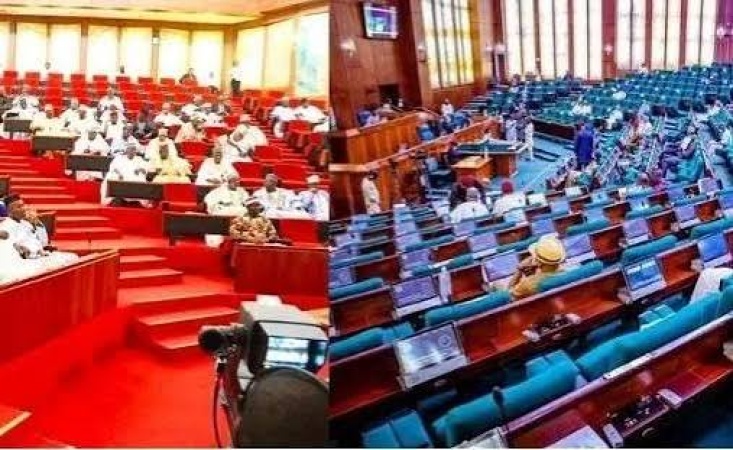
The President of the ECOWAS Commission, Gen. Birame Diop, disclosed this at the Second 2026 Parliamentary Seminar of the ECOWAS Parliament on Tuesday in Accra, Ghana.
The News Agency of Nigeria (NAN) reports that the week-long event has “Climate Change as A Driver of Environmental Degradation, Population Displacement and Rising Insecurity” as its theme.
The seminar is aimed at enabling regional parliamentarians, experts and other stakeholders to interrogate the link between climate change, population displacement and rising insecurity in West Africa.
Diop warned that the combined effects of climate change, environmental degradation and insecurity could push the number of Internally Displaced People (IDPs) in the sub-region to about 32 million by 2050.
Citing World Bank projections, the commission’s president said women and children accounted for about 80 per cent of the figure.
Represented by Prof. Nassirou Bako-Arifari, the ECOWAS Commissioner for Human Development and Social Affairs, Diop identified climate financing as a major challenge confronting the sub-region, adding that “West Africa requires about 294 billion dollars to tackle the crisis of climate change.”
The president said since 2024, ECOWAS had been working towards establishing a regional carbon market platform under Article 6 of the Paris Agreement to help mobilise investment for climate action.
He recalled that in 2024 alone, about two million West Africans were displaced by climate-related natural disasters.
He said more than seven million people were affected by flooding alone during the same period, resulting in the destruction of homes, roads, schools, health facilities, farms and other critical infrastructure.
Diop also disclosed that between 2025 and 2026, more than 12 million people were displaced internally across West and Central Africa due to the combined effects of climate change, insecurity and other vulnerabilities.
He, therefore, appealed to member states to adopt a comprehensive regional approach to climate resilience and human security, instead of fragmented responses.
He added that “climate change is not simply an environmental issue. It is a development issue, a humanitarian issue, a peace and security issue, and ultimately an issue of human survival and regional stability.
“We must be proactive and invest in resilience before crises occur. We must protect ecosystems, create livelihoods and address grievances before they escalate into conflict.”
He also appealed to the regional parliamentarians to strengthen climate-responsive legislation and oversight.
Diop urged them to prioritise climate financing, improve early-warning and early-action systems, and promote sustainable management of land, water, forests and fisheries.
He further appealed to the governments of Member States to prioritise women and youths in their climate-resilience efforts, describing them as innovators, entrepreneurs, community leaders and agents of resilience. (NAN)