Updating your news feed...
NEWS EXPRESS is Nigeria’s leading online newspaper. Published by Africa’s international award-winning journalist, Mr. Isaac Umunna, NEWS EXPRESS is Nigeria’s first truly professional online daily newspaper. It is published from Lagos, Nigeria’s economic and media hub, and has a provision for occasional special print editions. Thanks to our vast network of sources and dedicated team of professional journalists and contributors spread across Nigeria and overseas, NEWS EXPRESS has become synonymous with newsbreaks and exclusive stories from around the world.




















Loading banners
Loading banners...

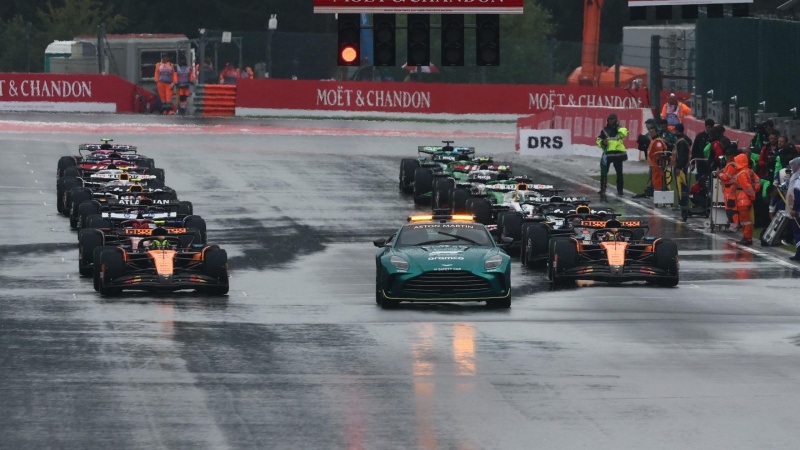
Formula 1 has announced the maximum race distance for grands prix will be reduced by 15km from 305km (189.5 miles) to 290km (180.2 miles) for the 2027 season.
And a change to the rules over timings will allow for greater flexibility to complete disrupted races.
Grands prix will remain limited to a maximum of two hours of racing, but when there are interruptions caused by rain or accidents, a "hard stop time" will from next year replace the current maximum three-hour duration to finish the event.
A statement from governing body the FIA said: "These changes were introduced to ensure that the spectators have the best possible chance to enjoy a full race if disruptions occur."
The hard stop time will vary from race to race, depending on local conditions.
At night races, for example, there will be more flexibility to allow the race to run later than at a daytime race when there is a relatively early sunset.
The reduction in race distance has been introduced because the ratio of internal combustion to electrical power is changing from 53-47 this year to 58-42 next year, before becoming 60-40 in 2028.
This means that the cars will use more fuel, and that became a concern when it emerged that some teams wanted to carry their chassis over into next year to save money.
As the fuel tank is within the chassis and therefore its size could not be changed, this meant those teams might not have been able to finish grands prix with their existing fuel tanks.
Another change agreed at a meeting of the F1 Commission, a rule-making body composed of the teams, the FIA and commercial rights holder F1, was to introduce "greater flexibility to extend free practice sessions should they be interrupted".
Under current rules, the clock does not stop in practice sessions in the event of a red flag caused by an incident, unlike in qualifying and races when the competition is suspended. (BBC)