
Updating your news feed...
NEWS EXPRESS is Nigeria’s leading online newspaper. Published by Africa’s international award-winning journalist, Mr. Isaac Umunna, NEWS EXPRESS is Nigeria’s first truly professional online daily newspaper. It is published from Lagos, Nigeria’s economic and media hub, and has a provision for occasional special print editions. Thanks to our vast network of sources and dedicated team of professional journalists and contributors spread across Nigeria and overseas, NEWS EXPRESS has become synonymous with newsbreaks and exclusive stories from around the world.





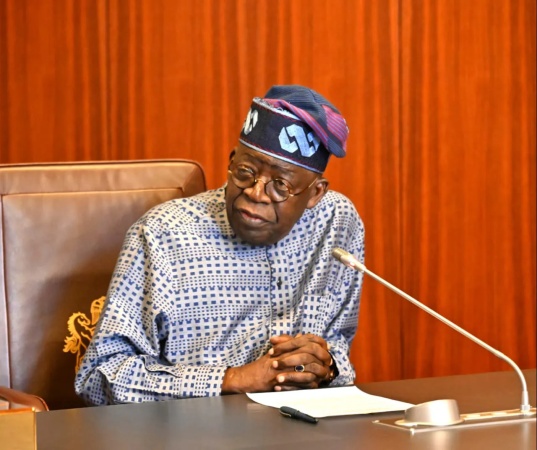










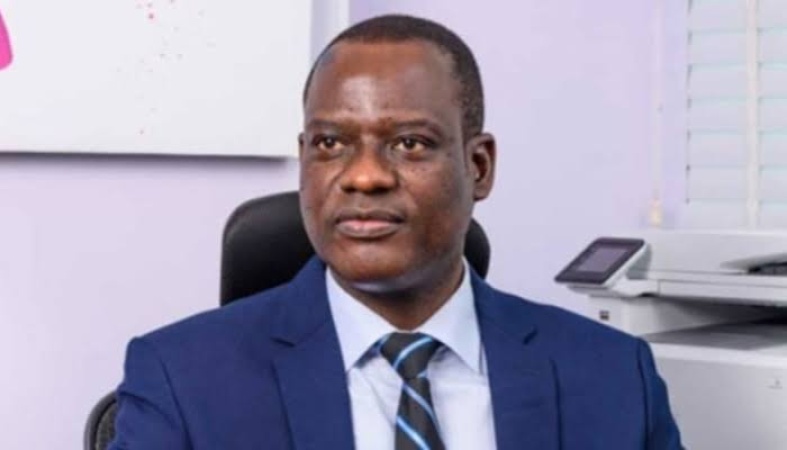

Minister of Finance, Taiwo Oyedele
The Federal Government is set to review Nigeria’s withholding tax rules to prevent the system from putting unnecessary pressure on the working capital of businesses, Minister of Finance and Coordinating Minister of the Economy, Mr Taiwo Oyedele, has said.
Oyedele spoke in Abuja on Thursday at the inauguration of the Technical Subcommittee on Fiscal Policy and Tax Reforms, where he said the review would form part of the government’s wider effort to make the country’s tax system simpler, clearer and more supportive of economic growth.
The subcommittee has six weeks to prepare recommendations for the Finance Bill 2027, review the withholding tax regulations, and examine Nigeria’s Significant Economic Presence rules governing the taxation of certain digital and cross-border businesses.
Oyedele said withholding tax should remain an advance payment and compliance mechanism, not an additional cost of doing business or a drain on funds companies need to operate and expand.
“Withholding tax is an advance payment and compliance mechanism, not an additional cost of doing business or a tax on working capital,” he said.
The Minister said the issue was particularly important because of Nigeria’s high cost of capital, noting that keeping business funds tied up for an extended period could impose high costs on companies.
He said the committee must therefore review the existing deduction-at-source regulations against the new tax laws and recommend changes that would improve compliance without placing avoidable financial pressure on businesses.
Oyedele also directed the committee to review the Significant Economic Presence Order 2020 and develop an updated framework that reflects the country’s new tax laws and international best practices.
According to him, Nigeria needs to protect its legitimate tax base in an increasingly digital, global economy while ensuring its tax rules do not discourage technology companies and cross-border investment.
He said the country needed to balance protecting revenue with remaining open and competitive to international business. “Nigeria must protect its legitimate taxing rights while remaining competitive for technology and cross-border investment,” he said.
The Minister said the wider reform programme also aimed to reduce the complexity of Nigeria’s tax system, which he said had imposed high compliance costs on businesses and created room for discretion and tax arbitrage.
He told members of the subcommittee that where two policy options could achieve the same result, the simpler option should be preferred. “Complexity is itself a cost. It raises compliance costs and creates room for discretion and arbitrage,” Oyedele said.
The government, he added, received 134 submissions through its online public consultation on the proposed fiscal and tax reforms, in addition to further submissions made in person.
The submissions came from businesses, investors, professional organisations, civil society groups, academics and members of the public across the country.
Oyedele said the wide range of submissions was important to the reform process because those who experience difficulties in the tax and fiscal system should have an opportunity to propose ways of improving it.
Among the issues emerging from the submissions are calls for clearer and simpler provisions in the new tax laws, particularly on value-added tax thresholds, withholding tax and capital gains treatment.
The proposals also aimed to strengthen taxpayers’ rights, speed up tax refunds and provide safeguards for small businesses.
The Minister said the committee would also consider proposals to improve investment and competitiveness in sectors including mining, renewable energy, healthcare and the capital market.
Multiple taxation and poor coordination among revenue authorities also emerged as major concerns from the public submissions.
Oyedele said stronger coordination among revenue agencies, as well as greater digitalisation and data sharing, could reduce the burden on taxpayers by preventing them from repeatedly submitting information that government agencies already have.
He said the government’s fiscal reform should support investment, production, productivity and the formalisation of businesses rather than discourage economic activity.
The Minister said the reform’s guiding philosophy was that government should avoid taxing the economy’s productive base in a way that discourages future growth. “Our philosophy remains that we should not tax the seed but the fruits,” he said.
He added that the objective was to create an environment where businesses could grow, invest, employ more people and contribute more to the economy.
Oyedele directed subcommittee members to examine every proposal based on evidence and its implications for the wider economy, rather than its popularity or the identity of the person or organisation making the proposal.
He said members should ask what problem a proposed change would solve, how much it would cost, who would benefit and who would bear the burden, and consider possible unintended consequences.
He warned that a tax measure that increases government revenue could impose a much higher cost on the wider economy if it discourages investment or productive activity.
The committee was also asked to examine the impact of proposed tax measures on low-income earners, households, workers, small businesses, women and young people.
Where a policy change creates winners and losers, Oyedele said the committee should consider appropriate safeguards and balancing measures.
He also urged members to look beyond immediate policy objectives and consider the long-term effects of their recommendations so that measures designed to address current problems do not create new distortions in the future.
Oyedele said the review followed the enactment of what he described as Nigeria’s most comprehensive tax reform in decades.
He recalled that when President Bola Tinubu established the Presidential Fiscal Policy and Tax Reforms Committee in July 2023, the country’s tax system was complex and fragmented, with businesses facing multiple taxes and revenue agencies.
He said the situation also placed a disproportionate burden on low-income Nigerians and small businesses, while government revenue remained constrained.
The reforms subsequently produced the Nigeria Tax Act 2025, Nigeria Tax Administration Act 2025, Nigeria Revenue Service Establishment Act 2025 and Joint Revenue Board Establishment Act 2025.
However, Oyedele said the passage of legislation did not mark the end of the reform process.
He said implementation would inevitably expose areas where taxpayers, businesses, administrators and investors encountered difficulties, requiring clarification, adjustment or further reform. “No serious reforms end with the enactment of legislation. Good reform is a process, not an event,” he said.
He said the Finance Bill 2027 should therefore not be treated as another annual legislative exercise or an attempt to rewrite the 2025 reforms.
Rather, the bill should preserve the core principles of the existing reforms while addressing problems revealed during implementation and responding to new economic realities.
The government has brought together officials from the Ministry of Finance, the Ministry of Justice, the Nigeria Revenue Service, the Joint Revenue Board, professional bodies, organised private sector, and other stakeholders to participate in the process.
Oyedele said the approach was designed to resolve issues collaboratively rather than through separate institutional positions.
The Ministry of Justice, he said, would participate throughout the drafting process instead of waiting until the documents had been completed before carrying out a legal review.
The Minister also directed members to keep their deliberations and working documents confidential until they are authorised for release.
Members must disclose conflicts of interest and withdraw from voting on matters in which they have a conflict.
Oyedele told members that they were appointed to contribute their professional knowledge to a national assignment, not to advance narrow institutional interests.
He said the reform process had moved from the first stage of changing the structure of the tax system to a new stage focused on making the new structure work more effectively.
“The first phase of our reforms was about changing the architecture. The next phase must be about making that architecture work better,” he said.
According to him, the success of the next phase should not be measured by the number of sections of legislation amended, but by the number of real problems resolved for taxpayers and the economy.
He said the broader objective was to achieve greater economic prosperity for Nigerians while improving the competitiveness of the Nigerian economy through a tax and fiscal system that provides greater clarity and predictability.
Oyedele urged the subcommittee to approach its work with discipline, listen to different views, question existing assumptions and rely on evidence in reaching its recommendations.
Speaking at the event, the Co-Chair of the Technical Subcommittee, Mr Albert Folorunsho, said the committee’s assignment was both important and time-sensitive.
He said the members understood that their work covered the preparation of the Finance Bill 2027, review of the withholding tax regulations and examination of the Significant Economic Presence Order.
Folorunsho said the recommendations should produce a tax system that is fair, clear and efficient while supporting investment and sustainable economic growth.
He said the committee would ensure that its proposals were technically sound, practical for tax administrators to implement and responsive to the challenges facing taxpayers, businesses and government.
Although the six-week deadline was short, Folorunsho expressed confidence that the experience and commitment of members would enable them to complete the assignment within the specified period.
He said the committee would work with relevant stakeholders and seek reforms that strengthen revenue mobilisation without imposing unnecessary burdens on taxpayers.
“Although six weeks seems like a short period, I am confident that with the experience and commitment represented in this room, we can deliver within this time frame,” Folorunsho said.
He assured the Minister of the members’ diligence, objectivity and commitment to producing recommendations capable of meeting the expectations placed on the subcommittee. (The Nation)