
Updating your news feed...
NEWS EXPRESS is Nigeria’s leading online newspaper. Published by Africa’s international award-winning journalist, Mr. Isaac Umunna, NEWS EXPRESS is Nigeria’s first truly professional online daily newspaper. It is published from Lagos, Nigeria’s economic and media hub, and has a provision for occasional special print editions. Thanks to our vast network of sources and dedicated team of professional journalists and contributors spread across Nigeria and overseas, NEWS EXPRESS has become synonymous with newsbreaks and exclusive stories from around the world.
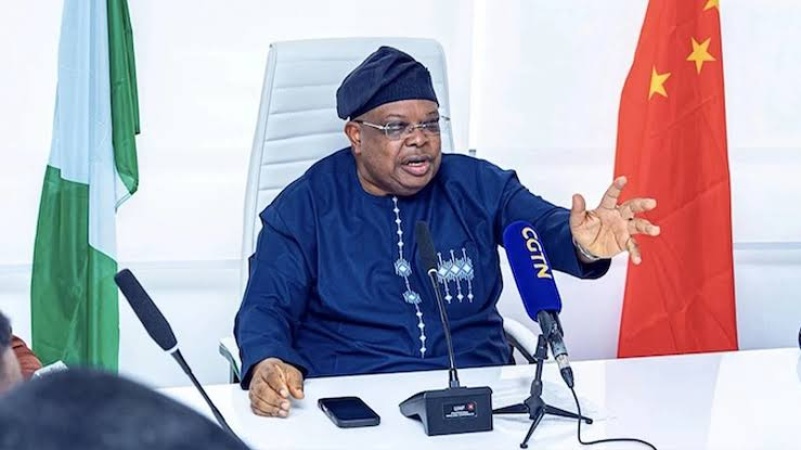


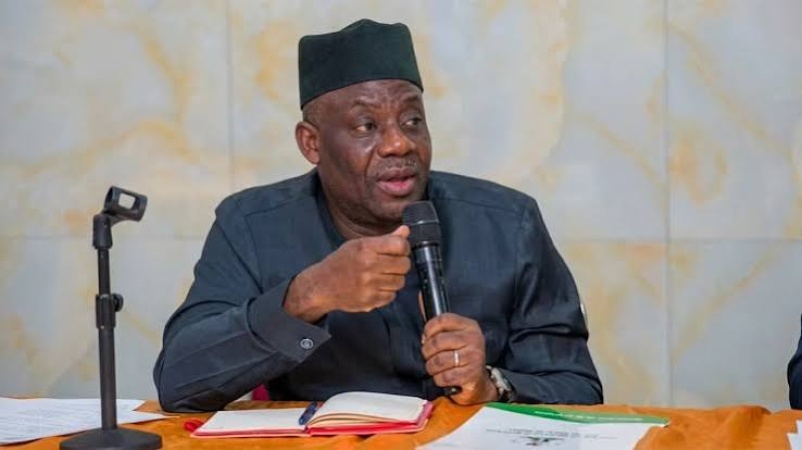

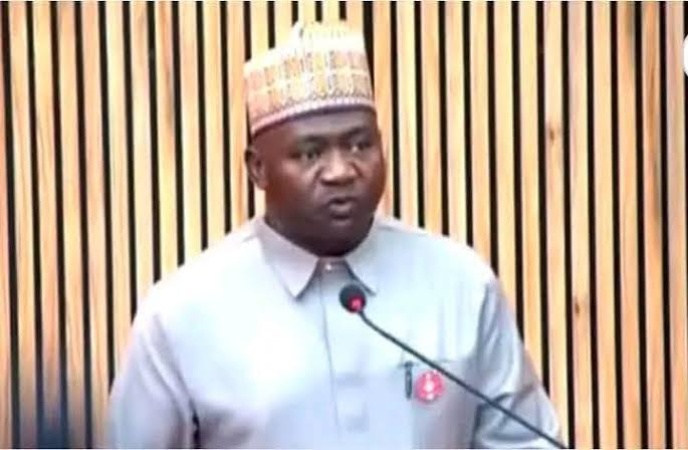

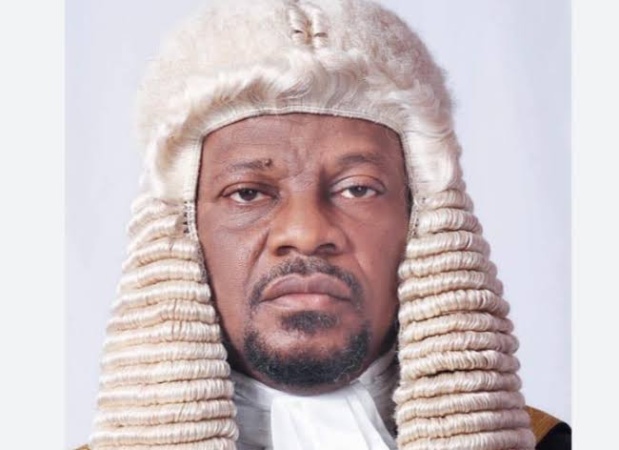
Minister of Defence, General Musa
By ABBA DUKAWA
There have been few moments in recent history when people across Northern Nigeria’s ethnic, religious and regional divides have spoken with such a united voice in support of General Christopher Musa’s appointment as Minister of Defence. That support represented more than enthusiasm for an individual. It reflected a longstanding aspiration for an Arewa in which ethnic and religious diversity becomes a source of strength rather than division. Many saw in Musa’s military career a record of sacrifice, discipline, professionalism and service to Nigeria.
That is why his recent comments about former Kaduna State Governor Nasir El-Rufai deserve more than the usual partisan reaction. I listened carefully to General Musa’s remarks. My concern is not that he criticised El-Rufai. Former governors, like all public officials, are open to scrutiny. The concern is the gravity of the allegation he made.
Musa said: “We can never be happy with somebody who deliberately planned for the killing of our people.”
That is an extraordinary statement. When pressed, he maintained his position and referred to El-Rufai’s videos and speeches, including claims that the former governor had spoken about paying bandits.
This is no ordinary political accusation. It is an allegation of deliberate criminal intent. And because it came from Nigeria’s Defence Minister and a former Chief of Defence Staff, it carries a weight that demands evidence.
I am not a supporter of El-Rufai, but justice must be served. Kaduna’s troubles did not begin with him, and history must not be rewritten to fit the politics of the moment.
Kaduna’s communal and religious conflicts long predate El-Rufai’s arrival at Government House in 2015. General Martin Luther Agwai, a Southern Kaduna-born four-star general who rose through the Nigerian Army to become Chief of Army Staff and later Chief of Defence Staff, has traced the region’s crises through the 1970s, the 1987 Kafanchan crisis, the 1992 Zangon Kataf crisis, the 2000 Sharia crisis and the violence that followed the 2011 presidential election. Those conflicts were driven by a complicated combination of factors, including land and boundary disputes, pastoral grazing, political competition, drug abuse, religion, ethnicity and the deeply contentious indigene-settler question.
None of this absolves El-Rufai of responsibility for events during his tenure. A governor must be judged by how he manages the problems he inherits. But there is a fundamental distinction between saying that El-Rufai governed Kaduna during years of terrible violence, or that his policies and failures contributed to that violence, and alleging that he deliberately planned the killing of Southern Kaduna people.
The first is a question of governance that can be examined through policies, decisions and outcomes. The second is an allegation about criminal intent. That distinction cannot simply be brushed aside. When El-Rufai became governor in 2015, he appointed General Agwai to investigate the Southern Kaduna crisis. The investigation and the peace process that followed are important to understanding the controversy.
The Agwai process identified the 2011 post-election violence as an important part of the recent history of the conflict, while also pointing to longer-running farmer-herder disputes and the indigene-settler question. Its recommendations emphasised dialogue, reconciliation and peace-building, including the proposal for a permanent Peace and Reconciliation Commission.
This history matters because it shows that Kaduna was dealing with a longstanding conflict with multiple causes, not a crisis created by one governor.
One of the most contentious issues is El-Rufai’s acknowledgement in 2016 that his government had paid compensation to some Fulani. There is no need to pretend otherwise. The important questions are: what was the money for, who received it and under what circumstances?
According to contemporary accounts, the government, following the Agwai process, reached out to some Fulani affected by the violence, including transhumant Fulani, and sought to compensate people who had lost family members or cattle during previous violence, with the objective of ending reprisals.
Some accepted the appeal without payment. Others sought compensation for cattle losses. Some were paid. General Agwai subsequently became involved when controversy arose over the payments. His position was that if compensation was being provided to victims of the crisis, all aggrieved parties should be considered rather than one side alone.
That makes General Musa’s description particularly important. Musa said El-Rufai “told us he paid bandits.” Who were these people? Were they active bandits? Were they criminal gangs? Were they individuals who had participated in attacks? Or were they Fulani who had lost cattle and relatives during earlier violence and whom the Agwai peace process sought to compensate as part of reconciliation?
These are not semantic differences. They describe fundamentally different events.
If General Musa is referring to a different payment, Nigerians deserve to know which one. If he is referring to the compensation publicly acknowledged by El-Rufai, then he should explain why a documented compensation and reconciliation exercise is being characterised as payment to bandits.
There is another issue that deserves clarification. Could part of Musa’s criticism be connected to El-Rufai’s decision to run a Muslim-Muslim ticket in Kaduna? El-Rufai chose Hadiza Balarabe, a Muslim from Southern Kaduna, as his running mate in 2019 and retained her in 2023. He defended the arrangement as an attempt to move Kaduna away from what he described as an increasingly religionised and ethnicised political environment.
Whether that was wise politically is a legitimate subject for debate. But if Musa believes a Muslim-Muslim ticket is inherently divisive, Nigerians are entitled to ask how that principle applies at the federal level. President Bola Tinubu and Vice-President Kashim Shettima also ran a Muslim-Muslim ticket in 2023, and Musa now serves in that administration as Defence Minister.
The principle should therefore be consistent. If Muslim-Muslim tickets are inherently dangerous, why is the federal arrangement acceptable? If they are not inherently dangerous, then the specific actions by El-Rufai that Musa considers divisive should be clearly identified.
Perhaps the most revealing part of Musa’s interview came when he was asked whether Southern Kaduna regarded El-Rufai as an enemy. He said no. He described him instead as “misguided.”
That distinction matters. General Musa has every right to regard El-Rufai’s politics or policies as misguided. He can argue that the former governor was divisive, wrong-headed or irresponsible. But those political judgments should be separated from an allegation that El-Rufai deliberately planned the killing of citizens.
If El-Rufai was politically divisive, demonstrate it. If his policies were harmful, examine them. If he abused his office, investigate it. But if the allegation is that he deliberately planned the killing of Southern Kaduna people, evidence is required.
This argument is not an attempt to rehabilitate Nasir El-Rufai. There is much about his eight years in Kaduna that deserves scrutiny. His combative style of governance generated controversy. His administration’s demolitions remain contentious. Southern Kaduna experienced devastating violence during his tenure, and his policies and decisions should be examined. If credible evidence exists that he knowingly facilitated criminal violence, he should answer for it.
But killings that occurred while he was governor do not, by themselves, establish that he planned them. Nor does the payment of compensation. And neither does the political disagreement between his administration and some Southern Kaduna leaders. General Musa has now opened a Pandora’s box. Nigerians have a right to see what is inside it.
If he has evidence that Nasir El-Rufai deliberately planned the killing of Southern Kaduna people, he should produce it. If he has evidence that El-Rufai paid active bandits, he should identify them, the payments, when they were made, how they were made and why.
If, however, he is referring to the compensation El-Rufai publicly acknowledged paying to Fulani who lost cattle and relatives during the 2011 violence, then he should explain why that exercise should be described as payment to bandits—particularly when General Agwai himself argued that compensation should be extended to all aggrieved parties.
And if Musa knew of evidence implicating a sitting governor while he was still serving in the military, Nigerians are entitled to know what he did with that information.
This is not about protecting El-Rufai. It is not about attacking Musa. It is about the truth. A Defence Minister alleging that a former governor deliberately planned the killing of citizens is too serious to become another conventional media or social-media talking point. If the allegation is true, Nigerians deserve justice. If it is false or unsupported, Nigerians deserve to know that too. Either way, the answer cannot be another political speech. It must be evidence.
Kaduna has suffered enough from selective memory, competing narratives and the political manipulation of old wounds. What the state needs now is not another accusation, but the whole truth. Nigeria first, always and a united Arewa within a united Nigeria.
•Dukawa writes from Abuja and can be reached at abbahydukawa@gmail.com