
Updating your news feed...
NEWS EXPRESS is Nigeria’s leading online newspaper. Published by Africa’s international award-winning journalist, Mr. Isaac Umunna, NEWS EXPRESS is Nigeria’s first truly professional online daily newspaper. It is published from Lagos, Nigeria’s economic and media hub, and has a provision for occasional special print editions. Thanks to our vast network of sources and dedicated team of professional journalists and contributors spread across Nigeria and overseas, NEWS EXPRESS has become synonymous with newsbreaks and exclusive stories from around the world.
















Loading banners
Loading banners...

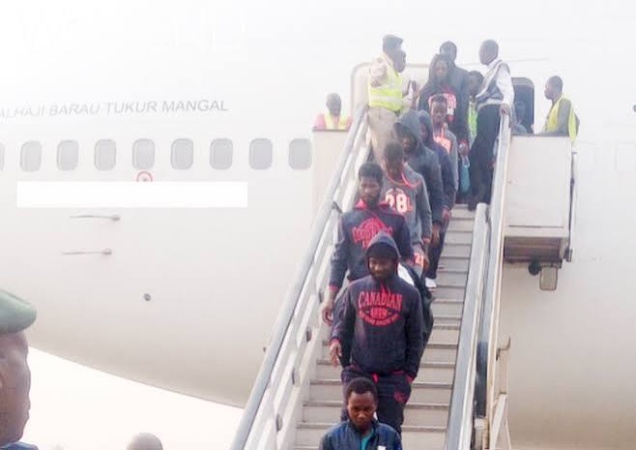
Few weeks ago, we published a report about the flaws in the reintegration programme of the United Nations agency, the International Organisation for Migration (IOM). Shortly after the publication, countless returnees reached out to us decrying the sad turn their empowerment has taken after the agency returned them to the country with full assurances that they would be given a new lease of life. It has been tales of woes lasting many years for hordes of returnees. Reintegration programme in this part of the world has been a jamboree and re-exodus fund, INNOCENT DURU reports.
Tunde, a fashion designer, left the shores of the country in 2024 to seek greener pastures in Libya. Bubbling with youthful energy and zeal, the lad expressed optimism that he would soon be earning foreign currency and subsequently return home to establish his business to an enviable standard.
His hopes, however, crashed as the hostile condition in Libya fuelled by EU’s border externalization policy made life unbearable for him and other migrants.
“I eventually came back from Libya in 2025 through IOM’s Assisted Voluntary Return,” he said.
After returning to the country, Tunde was assured by IOM that he would be empowered and supported to get reintegrated back into the society.
For many months, the returnee waited for the promised empowerment to the point of getting frustrated.
When he was almost giving up hope, “my agent sent me N200, 000 to rent a shop without supplying the goods or providing money for me to buy what I need to work in the shop.”
The decision to give such money to a vulnerable migrant without immediately providing goods or tools to enable him start his business leaves so much to be desired as stories abound of how returnees squandered money given to them and remigrated.
Incidentally, the need to prevent remigration is one of the key reasons for IOM’s reintegration programme.
But Tunde is not one of such returnees who would lavish money given to him and return to the perilous route. “I have rented a shop but have nothing doing there because I have no equipment. I have begged that they should fast track the delivery of the goods so that the rent paid for the shop would not just be running for nothing.
“I have received no response since then.”
Another returnee who identified himself simply as Jamiu, has also received money for shop rent without any support for goods.
He said: “I went to Libya in 2019 and came back in December 2025.
When we came back to Nigeria through the support of IOM, we were taken to Igando area in Alimosho Local Government Area. They gave us an ATM card containing about N300,000 for our transportation back to our bases and for other basic needs.
“They promised to call us back after three months to empower us. After the three months, some of my colleague called that hey gave them N1.4 million each for empowerment. The money was not paid to them in cash. It was paid to the vendor who would supply the goods they would be selling as their empowerment.”
When he didn’t hear from IOM, Jamiu went to their office at Ikeja GRA with three other colleagues. “They collected our documents to find out the person that is our case manager. They gave us the contact of the case manager and immediately, I called him.
“After calling him, he said I should send him a message on WhatsApp.
“It took him about two to three days before he replied my message without telling me when he would get back to me.
“After a month, I received an alert of N200,000. When I called him to know if he sent me any money, he replied in the affirmative, adding that it was for my shop rent.
When I asked how I would get the goods I had submitted invoice for, he didn’t reply.”
Asked what IOM wanted to empower him with, Jamiu said: “I am an electrician. I asked for support to be selling electrical materials and related things.
“I have rented a shop with the money given to me since last month because I was hopeful that the goods would be sent about that time.
“A month has passed since I rented the shop. The shop is just there. I am not doing anything in it.
“There is nothing inside it. I can’t just open an empty shop and sit down in it.”
Kiki asked to sign documents for yet to be delivered goods
Like Tunde and Jamiu, Kemi has received only N200,000 to rent a shop without any goods to sell in the shop.
While she was waiting to get her goods, she shockingly received a message asking her to sign a document showing that she had received N200, 000 for shop rent and N1,247,680 lump sum for saloon business.
“I signed the document and returned it. When I demanded to know when the goods would be supplied, I was simply told ‘soon’. I am yet to hear from them as we speak.”
The reverse is the case for Blessing, another migrant who went to Libya in 2021 and came back in 2025. “IOM brought me and others to Lagos. They gave us N350,000 on return,” she said, adding: “Thereafter, they told us to indicate if we needed IOM’s help to start business or hand work.
“I am a nurse but they said they wouldn’t be able to support such. I subsequently opted to be selling chemicals, boots and other item that my father was into because I know the business very well.
“They gave my vendor money to get the goods for me, but I have no shop to keep the goods for sales.
“My vendor said they sent N1.2m plus. The vendor has been calling me all this while to come and carry my goods, but I have nowhere to keep them.
“I have even suggested to the vendor to give me part of the money to rent a shop but she refused.
“My case manager is no longer picking my calls. I found a shop, but because I didn’t pay any money, they gave the shop out to another person.”
Mohammed left in darkness
While the previous respondents have either received shop rent or goods, Mohammed, who went to Libya in 2000 and came back through IOM in December 2025 is yet to receive anything from the UN agency.
He said: “When I came, they gave me N350,000 and promised to give me N1.5 million later for my empowerment.
“I didn’t do any training with IOM. I was into computer engineering before I travelled and that’s what I wanted to use the empowerment money for.
“IOM has not sent me money for either shop or goods.
“I have sent all the required documents to the organisation more than two months ago without any response.
“The lady that I am interfacing with in the organisation does not reply anytime I send her a message.”
Observers have raised concerns about the sincerity and transparency of the IOM reintegration project.
IOM, in a post on its website, said it views reintegration to be sustainable when “returnees have reached levels of economic self-sufficiency, social stability within their communities, and psychosocial well-being that allow them to cope with (re)migration drivers.
“Having achieved sustainable reintegration, returnees are able to make further migration decisions a matter of choice, rather than necessity”. This definition highlights the multidimensional nature of a reintegration process – economic, social and psychosocial – and the need to approach migrant reintegration in a comprehensive manner, considering the factors that can affect reintegration at the individual, community and structural levels.”
Laudable as the idea is on paper, the implementation, from the experiences of the returnees and those in our previous report, only exposes the idea as a complete charade. Newspapers
Mark Obi, a migration expert rhetorically asked: “What is sustainable about what you said the IOM did to the returnees? How on earth will an international organisation give N200,000 to ‘hungry’ returnees for shop rent without monitoring if the money was actually used to rent a shop?
“What if the returnee received the money in a moment of pressing need and uses it for that purpose? Would you blame him or her?
“Now you said those returnees were sincere enough to use the money to rent shops, but of what value is having a shop without doing anything in it?
“Again, what happens to the money for goods? Is monetary approval given for shop rent separately and approval for goods at another period?
“There are many questions begging for answer in all this. When goods are not delivered early enough and inflation affects the budget or prices, who bears the brunt? Would you blame the returnee or the IOM?
“How did IOM determine the competence of the returnees in the business or the skills they are empowering them for, because from what you said, the returnees didn’t go through any training by IOM.”
Continuing, he said: “Why would a returnee be made to sign that he or she collected goods and money in the excess of N1.5 million when such has not been done.
“It is disheartening that a UN agency is at the heart of this kind of porous arrangement. I think they need to look inward and come up with a workable plan that will really improve the lives of the returnees.
“For me, there is no way the reintegration experience you painted can be sustainable. It is like grading and pouring tar on a road and claiming a durable road project has been done. It only requires one downpour to expose all the deceit.
“This is exactly what has happened with this reintegration episode.
“If you hadn’t beamed your journalism searchlight on it, it would have gone as a successful project.”
Idea of migrant reintegration has received criticism from a migration expert and Director of Platformfor Cooperation on Mixed Migration, Victor Aihawu.
In a statement titled “The Jamboree and Re-Exodus Fund: A Failed Reintegration Promise for Returnee Migrants, the PCMM director said: “For years, the Reintegration Assisted Fund for Returnee Migrants has been presented as a vital safety net for those returning to their countries of origin.
“It is designed to help returnees re-establish their lives, start businesses, pursue education, and reintegrate into their communities.
“However, the reality on the ground is often quite different, leaving many returnees disillusioned and unsupported.”
“Instead of fostering a sustainable return, Victor said, “the fund has frequently fallen short of its intended goals, with returnees either using the funds to re-migrate or mismanaging it due to inadequate guidance.”
Providing further details on the subheading he titled ‘A Mismanaged Promise: Squandered Opportunities and Broken Dreams, he said: “One of the most glaring issues with the Reintegration Assisted Fund is the lack of proper oversight and professional management.
Many returnees, left to navigate complex reintegration challenges on their own, often misuse the funds they receive.
“Without a clear understanding of how to allocate resources effectively or how to develop sustainable income streams, returnees frequently face financial difficulties soon after receiving the funds. This has led to a cycle of “re-exodus,” where returnees, unable to sustain themselves in their home country, are driven to re-migrate in search of better opportunities.”
He went on to blame inexperience and lack of sustainable support as the real causes of failure.
“The failure of the fund is not simply due to returnees’ mismanagement but also to the incompetence of those overseeing the programmes. Many handlers of returnee programmes lack both the requisite experience and the specialised skills necessary to manage sustainable reintegration initiatives.
“Being in the sector for years does not necessarily translate to genuine expertise; effective reintegration requires an in-depth understanding of developmental best practices, personalised care, and a commitment to long-term outcomes.
Professional reintegration should encompass a comprehensive support system tailored to the individual needs of returnees.
“This means addressing immediate needs like shelter, healthcare, and trauma counseling, as well as providing vocational training, access to financial literacy programmes, business mentorship, and long-term support.
“Sustainable reintegration should not be limited to short-term financial aid but should extend to building capacity, fostering resilience, and enhancing local community acceptance.”
Continuing, he said: “Successful reintegration programmes in other parts of the world offer valuable lessons that can help reshape the Reintegration Assisted Fund.
“Best practices suggest that effective reintegration requires a multi-faceted approach that addresses not only economic needs but also social and psychological factors.
Some key elements include:
1. Individualized Reintegration Plans: Tailoring support to each returnee’s unique needs, skills, and aspirations is crucial. This involves conducting thorough assessments to understand their background, challenges, and goals before releasing any funds.
2. Financial Literacy Training: Returnees should be provided with basic financial training to help them understand how to manage their funds, make sound investments, and develop a savings culture. Teaching them about budgeting, debt management, and savings could prevent the fund from being squandered.
3. Business Mentorship and Skills Development: Providing ongoing business mentorship can significantly improve the chances of successful entrepreneurship among returnees. Programs that offer hands-on training, mentorship, and coaching in business development, coupled with access to micro-loans, can help returnees create sustainable livelihoods.
4. Long-term Monitoring and Support: Reintegration is a process, not a one-time intervention. Continuous follow-up and support are essential to ensuring that returnees can navigate challenges, adapt to changing circumstances, and maintain progress towards stability. Monitoring should focus on both personal development and the sustainability of funded ventures.
5. Community Involvement and Acceptance: Effective reintegration is not just about the individual—it also involves the community. Efforts should be made to sensitise and engage local communities to support returnees. This involves educating community members about the benefits of reintegration and fostering a sense of shared responsibility for returnees’’ success.
6. Strong Partnerships with Local Stakeholders: Collaborating with local governments, NGOs, vocational training centres, and businesses can provide returnees with a broader network of support. This can also help link returnees to job opportunities, skills training, and local resources, which are essential for long-term reintegration.
Speaking on how to address the challenges, Victor said the gap between policy promises and ground realities has undermined the credibility of the Reintegration Assisted Fund. Returnees often feel betrayed by what was meant to be a fresh start but has instead turned into a cycle of failed expectations.
To move forward, there must be a renewed focus on designing programmes that prioritise human-centered solutions, sustainable development, and genuine expertise.
“Policymakers and programme managers should invest in training reintegration officers, improving financial literacy modules for returnees, and introducing stronger monitoring systems to track outcomes.
“Reintegration must be seen as a long-term commitment rather than a quick fix, with emphasis placed on building skills, providing meaningful employment opportunities, and supporting personal growth.”
Concluding, he said: “The Reintegration Assisted Fund was designed to offer hope and a chance for a fresh start, but its current implementation has fallen short of this promise.
“Without a shift toward sustainable reintegration practices, the fund will continue to be a failed promise that drives returnees back into the uncertainty of re-migration.
“It is time to rethink, restructure, and refocus efforts on a holistic, sustainable approach that delivers real change and fulfills the promise of a new beginning for returnees.”
IOM denies allegation
The UN agency in a reply to our inquiries regarding the allegations by the returnees, said it has not identified evidence that substantiates the allegations raised. It, however, said “our review remains ongoing.”
The response signed by the Head, Media, Advocacy, Communication and Partnerships, IOM, Nigeria, Rajat Madhok, is reproduced below:
“IOM takes any allegation of misconduct seriously and is reviewing the cases shared with us on 30 July 2026.
“Reintegration assistance is provided through individualized reintegration plans and may be delivered through different modalities depending on the support approved for each returnee.
This can include cash-based assistance, support provided through approved vendors and partners, or a combination of both.
“These are selected through established procurement and due diligence processes and are required to comply with IOM’s ethical standards.
“Based on the records reviewed so far, we have not identified evidence that substantiates the allegations raised. However, our review remains ongoing.
“Our review of available programme records indicates that among the four cases referenced in your inquiry, three involve reintegration assistance that has either been completed or remains under implementation, while a fourth case requires additional information before it can be conclusively identified and verified in programme records.
“For context, since 2017 IOM has supported over 53,000 migrants with reintegration assistance, including 43422 returnees who have received comprehensive reintegration support.
“IOM recognizes that concerns about assistance can be distressing for returnees and takes such concerns seriously.
“While we are unable to provide detailed information on individual beneficiaries due to data protection, privacy and confidentiality obligations, we can confirm that we have identified and reviewed the records associated with three of the four individuals referenced in your inquiry.
“In the fourth case, additional information would be required to conclusively identify the individual, as the name provided corresponds to multiple possible records.
“IOM maintains a zero-tolerance policy on fraud, corruption, sexual exploitation and abuse, and all other forms of misconduct. We encourage anyone with information regarding these allegations to report them through IOM’s confidential complaints mechanisms.”
Background
IOM’s reintegration programme supports returnees through individualised reintegration plans that are tailored to each beneficiary’s needs and circumstances. Depending on the approved plan, assistance may be delivered through cash-based support, in-kind assistance, business support, vocational training, accommodation support or other services.
The use of implementing partners and vendors is a longstanding and standard feature of IOM reintegration programming globally. These arrangements enable the delivery of specialised goods and services while helping to ensure assistance is provided in line with approved reintegration plans.
While partners and vendors may support programme delivery, IOM retains responsibility for programme oversight, monitoring and quality assurance.
Case managers support beneficiaries throughout the reintegration process, including counselling, development of reintegration plans, coordination of assistance and follow-up. They do not independently determine beneficiaries’ entitlements, and all assistance is subject to established programme, financial and oversight procedures.
IOM reiterates that reintegration assistance is provided free of charge to beneficiaries. No staff member, case manager, implementing partner or vendor is authorised to request payments, commissions, percentages or any other personal benefit in connection with programme assistance.
Any allegation of fraud, coercion, exploitation, unauthorised deductions or other misconduct is treated seriously and reviewed through established accountability and oversight mechanisms.
IOM implements reintegration assistance for a large number of returnees in Nigeria and remains committed to ensuring assistance is delivered transparently, fairly and in accordance with programme requirements. Concerns raised by beneficiaries, staff, partners, donors, accountability mechanisms or the media are taken seriously and reviewed carefully, and improvements are made where necessary.
Anyone with specific information relating to alleged misconduct is encouraged to report it through IOM’s confidential complaints mechanisms so the information can be properly assessed and, where appropriate, investigated. (The Nation)




