
Updating your news feed...
NEWS EXPRESS is Nigeria’s leading online newspaper. Published by Africa’s international award-winning journalist, Mr. Isaac Umunna, NEWS EXPRESS is Nigeria’s first truly professional online daily newspaper. It is published from Lagos, Nigeria’s economic and media hub, and has a provision for occasional special print editions. Thanks to our vast network of sources and dedicated team of professional journalists and contributors spread across Nigeria and overseas, NEWS EXPRESS has become synonymous with newsbreaks and exclusive stories from around the world.






















Loading banners
Loading banners...

The United Kingdom has introduced several significant changes to its immigration system in 2026, affecting international students, including Nigerians planning to study or already studying in the country.
The changes cover the way visas are issued, post-study work opportunities, financial requirements and English language requirements, among other areas.
For Nigerian students considering the UK as a study destination, understanding the new rules is important, particularly as some changes introduced in late 2025 will have consequences in 2026 and beyond.
In this article, Tribune Online identifies some major changes to the UK student visa system so far in 2026.
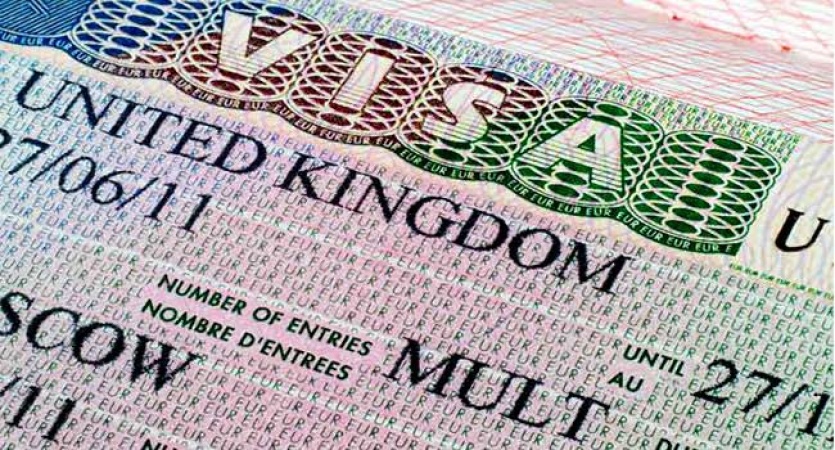
UK transition from physical visa stickers to eVisas
One of the major changes affecting Nigerian students is the transition from physical visa stickers to electronic visas, known as eVisas.
From February 25, 2026, Nigerian nationals applying for UK visit and student visas are expected to receive electronic immigration status rather than the traditional physical visa sticker in their passports.
Successful applicants need to create a UK Visas and Immigration (UKVI) online account to access and manage their immigration status.
The digital system allows visa holders to prove their immigration status when travelling, studying or dealing with employers.
However, Nigerians who already have valid physical visa stickers do not need to replace them simply because the UK has introduced eVisas. Existing valid visas remain usable until they expire, subject to the conditions attached to them.
Graduate Route duration reduction
Another major change concerns international students hoping to remain in the UK and work after completing their studies.
The Graduate Route currently allows eligible international graduates to remain in the UK and work without needing an employer to sponsor them immediately.
However, changes announced by the UK government mean that the duration for most graduates will be reduced.
From January 1, 2027, graduates of bachelor’s and master’s programmes applying for the Graduate Route will generally receive 18 months, instead of the current two years.
PhD graduates will continue to have access to a three-year Graduate Route.
Students who submit their Student visa applications on or before December 31, 2026, will remain eligible for the current two-year Graduate Route after completing eligible bachelor’s or master’s programmes, provided they meet the other requirements.
This means students planning to begin longer programmes in 2026 should pay attention to when they will eventually become eligible to apply for the Graduate Route.
Increase in maintenance funds
Financial requirements for international students have also increased.
Under the new requirements, students must demonstrate that they have sufficient funds to cover their living expenses while studying in the UK.
The current maintenance requirement is £1,483 per month for students studying in London and £1,136 per month for those studying outside London.
Students generally need to show that the required amount has been held for at least 28 consecutive days before submitting their visa application.
The financial requirement is separate from the money needed to cover tuition fees.
Applicants should therefore ensure that their bank statements meet the UK government’s requirements and that the required funds are maintained throughout the 28-day period.
Restrictions on dependants remain
International students hoping to travel to the UK with their spouses or children continue to face restrictions.
Since changes introduced in 2024, most students studying postgraduate courses that are not research programmes cannot bring dependants to the UK.
Generally, dependants can accompany international students who are studying a postgraduate research programme or a PhD, subject to the relevant immigration requirements.
This means students planning a taught master’s programme should not assume that their spouse or children will automatically qualify for dependant visas.
Increase in English language requirements for some work visas
While Student visa applicants continue to be required to meet the relevant English language standard, the UK has also raised English language requirements for some work-related immigration routes.
From January 8, 2026, the English language requirement for the Skilled Worker, High Potential Individual and Scale-up routes increased from B1 to B2 on the Common European Framework of Reference for Languages.
The change is particularly relevant to international students who intend to remain in the UK after graduation.
Students who eventually want to move from the Graduate Route to a Skilled Worker visa should therefore be aware of the requirements for the route they intend to use.
Plans for an international student levy
The UK government has also announced plans for an international student levy.
Under the proposal, universities sponsoring international students would pay a levy of £925 per international student for each year of study, with implementation scheduled for August 2028.
The levy is not yet in effect in 2026.
However, international students and prospective applicants may want to monitor developments because universities could consider the additional cost when reviewing tuition fees and other charges in the future.
Government continues to scrutinise asylum applications
The UK government has also increased its scrutiny of immigration routes, including asylum applications made by people who initially entered the country on work, study or visitor visas.
The government has expressed concerns about the use of asylum claims as an alternative route to remain in the UK after the expiry of another visa.
For Nigerian students, this highlights the importance of maintaining lawful immigration status and understanding the requirements attached to their visas.
What Nigerian students should know
Nigerians planning to study in the UK in 2026 should ensure they are working with current immigration information rather than relying on rules that applied to previous applicants.
Prospective students should obtain their Confirmation of Acceptance for Studies (CAS), meet the financial requirements, complete any required English language testing and ensure they meet health and other visa conditions before applying.
Students intending to work in the UK after graduation should also consider the changes to the Graduate Route when planning their studies and career.
With the UK immigration system continuing to evolve, students should check the latest requirements from the UK government before submitting their applications. (Nigerian Tribune)




