
Updating your news feed...
NEWS EXPRESS is Nigeria’s leading online newspaper. Published by Africa’s international award-winning journalist, Mr. Isaac Umunna, NEWS EXPRESS is Nigeria’s first truly professional online daily newspaper. It is published from Lagos, Nigeria’s economic and media hub, and has a provision for occasional special print editions. Thanks to our vast network of sources and dedicated team of professional journalists and contributors spread across Nigeria and overseas, NEWS EXPRESS has become synonymous with newsbreaks and exclusive stories from around the world.



.webp)




















Loading banners
Loading banners...

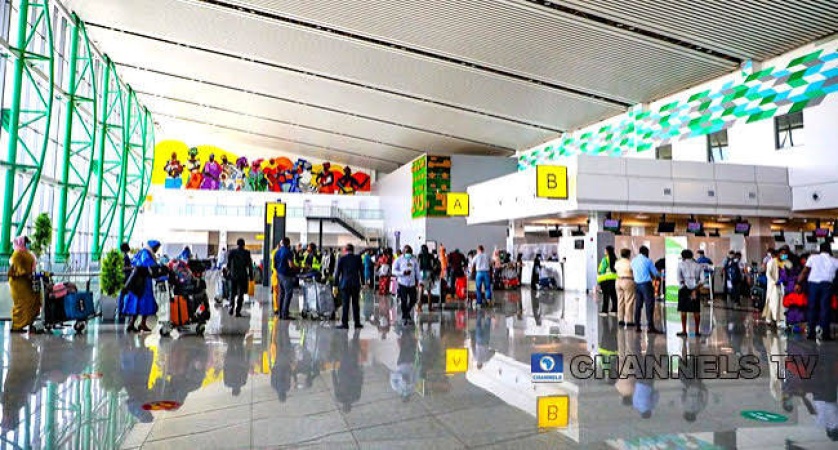
Travellers at the Nnamdi Azikiwe International Airport
The aviation industry said earlier delays had caused some travellers to miss flights and connections.
The expiry does not mean that identical checks will immediately be enforced at every European border. Some countries are reportedly still experiencing technical problems, while authorities may continue to manage queues differently at individual airports.
The development nevertheless matters to African tourists, students, business travellers and people visiting relatives because the EES applies to short-stay visitors who are not citizens of the European Union.
What the system collects
According to the European Commission, the EES operates at the external borders of 29 European countries.
It records a traveller’s name, passport information, facial image, fingerprints and the date and location of entry or exit. It also records refusals of entry.
The system became fully operational on 10 April 2026 and replaced routine passport stamping for affected visitors.
Its purpose is to identify people who remain longer than their authorised stay and detect travellers using false or forged documents. It can also support automated border gates and self-service kiosks where the necessary equipment is available.
Short-stay visitors are generally permitted to remain in the participating European area for up to 90 days within any 180-day period, unless their visa or immigration status provides otherwise.
What African travellers should expect
A traveller registering in the system for the first time may need to provide biometric information at a kiosk or to a border officer.
Subsequent journeys should normally be processed by comparing the traveller’s passport and facial image with the existing EES record, although officials can request further checks.
Many African travellers requiring Schengen visas will already have submitted fingerprints during their visa applications. That does not exempt them from EES registration, but it may affect which biometric information must be collected again at the border.
The system does not apply only to Africans. It covers eligible short-stay nationals from countries outside the EU, including both visa-required and visa-exempt travellers.
It also does not replace a visa. Travellers who require a Schengen visa must still obtain one before departure.
Risk of uneven implementation
The main uncertainty concerns how consistently the system will be enforced.
Airlines and travel organisations argue that full biometric processing can create delays when several international flights arrive together, kiosks malfunction or passengers are unfamiliar with the procedure.
France reportedly continues to face technical challenges at some entry points. Industry sources have also questioned whether officials in busy tourist destinations will enforce every procedure when queues become unmanageable.
Travellers should therefore prepare for the full process even if previous trips involved limited checks. (Business Insider Africa)




