
Updating your news feed...
NEWS EXPRESS is Nigeria’s leading online newspaper. Published by Africa’s international award-winning journalist, Mr. Isaac Umunna, NEWS EXPRESS is Nigeria’s first truly professional online daily newspaper. It is published from Lagos, Nigeria’s economic and media hub, and has a provision for occasional special print editions. Thanks to our vast network of sources and dedicated team of professional journalists and contributors spread across Nigeria and overseas, NEWS EXPRESS has become synonymous with newsbreaks and exclusive stories from around the world.



.webp)




Loading banners
Loading banners...

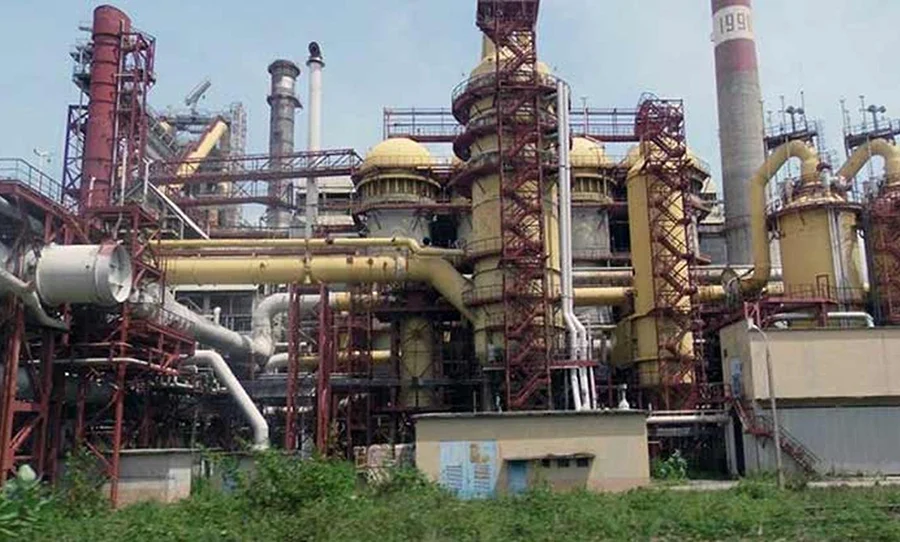
The Federal Government spent about N7.21bn running Ajaokuta Steel Company Limited between 2020 and 2025, even as the nearly 50-year-old complex in Kogi State remained largely dormant.
The expenditure spanned 501 transactions and covered taxes and other statutory obligations, pension and housing-fund contributions, maintenance, road works, and other infrastructure-related payments, according to spending records obtained from GovSpend and reviewed by The PUNCH on Monday.
GovSpend tracks and analyses Federal Government spending over time.
The spending occurred as Nigeria continued to rely heavily on imported steel, with the country’s iron and steel imports exceeding $1tn in 2025, according to data from the National Bureau of Statistics.
Nigeria’s iron and steel imports averaged about N526bn annually over the past six years, the NBS data showed. The figures represent officially recorded trade and exclude possible unrecorded or under-reported imports.
Ajaokuta was conceived in 1979 and built with Soviet backing as a cornerstone of Nigeria’s industrialisation drive.
The complex was designed to produce up to five million tonnes of steel annually, using the country’s iron-ore reserves to reduce dependence on imports and support industrial development.
Yet the spending records show that the company continued to incur substantial costs during the six years despite the plant’s inability to deliver the large-scale steel production for which it was designed.
In 2020, spending linked to Ajaokuta stood at about N795.4m across 57 transactions. The figure rose to N1.19bn in 2021, when 119 transactions were recorded, before falling to about N1.01bn in 2022.
Spending increased to N1.36bn in 2023 and peaked at about N1.66bn in 2024 across 107 transactions. It then fell to approximately N1.20bn in 2025. The figures indicate that the expenditure was not a one-off intervention but a recurring cost associated with the state-owned steel company.
Some payments were routine obligations, including taxes, value-added tax, pension contributions, National Housing Fund contributions, and other statutory payments.
Others were linked to maintenance and infrastructure, including road rehabilitation, repairs to access roads, and the installation of solar street lights.
The records also show payments for infrastructure work in Lagos, including projects around Obalende, Okofaji, Olowogbowo and Isale Eko, as well as the rehabilitation of a 250-metre access road at Idoluwo Street on Lagos Island.
The payments raise questions about the scope of Ajaokuta’s responsibilities and why a steel company whose primary industrial asset is in Kogi State was involved in some infrastructure-related expenditure in Lagos.
The purpose of those payments and their relationship with Ajaokuta would need to be established through the relevant authorising agencies, contracts and procurement records.
The continued expenditure comes as the government renews efforts to revive the steel complex and attract investment into the long-delayed project.
The Ajaokuta Presidential Project and Implementation Team, inaugurated in May 2020, was established to accelerate the revival of the plant, coordinate a work plan and help structure the project for possible concession or implementation with private and international partners.
In July 2026, Ajaokuta Steel Company signed a reported 20-year gas supply agreement with the Nigerian National Petroleum Company Limited, with the Gas Aggregation Company of Nigeria and NNPC Exploration and Production Limited also involved.
The agreement provides for three million standard cubic feet per day of firm gas and up to 47 million standard cubic feet per day of interruptible gas, according to reports. The supply is intended to support power generation and the eventual revival of the steel complex.
Ajaokuta’s Managing Director, Nasir Naeem Abdulsalam, who was appointed in April 2025 to lead the turnaround, said prospective investors had repeatedly identified gas availability as a major concern.
“Without gas, you can’t operate the steel plant,” Abdulsalam said, describing gas supply as critical to steel production and the independent power generation serving the complex.
There are limited signs of production at the site, with engineers operating a modular blast furnace producing manhole covers, utility poles and rail-track components for a small domestic market.
The limited output contrasts sharply with the scale of the complex, which was designed to produce millions of tonnes of steel annually.
The development comes as President Bola Tinubu’s administration seeks to expand domestic manufacturing and has set a target of 10 million tonnes of annual crude-steel production by 2030.
Nigeria continues to spend hundreds of billions of naira importing steel despite having a major steel complex built to support domestic production.
The Minister of Steel Development, Abubakar Audu, has estimated that Nigeria spends about $4bn, or roughly N5.6tn, annually on iron and steel imports. (PUNCH)




