ADAD
ADAD
Updating your news feed...
NEWS EXPRESS is Nigeria’s leading online newspaper. Published by Africa’s international award-winning journalist, Mr. Isaac Umunna, NEWS EXPRESS is Nigeria’s first truly professional online daily newspaper. It is published from Lagos, Nigeria’s economic and media hub, and has a provision for occasional special print editions. Thanks to our vast network of sources and dedicated team of professional journalists and contributors spread across Nigeria and overseas, NEWS EXPRESS has become synonymous with newsbreaks and exclusive stories from around the world.
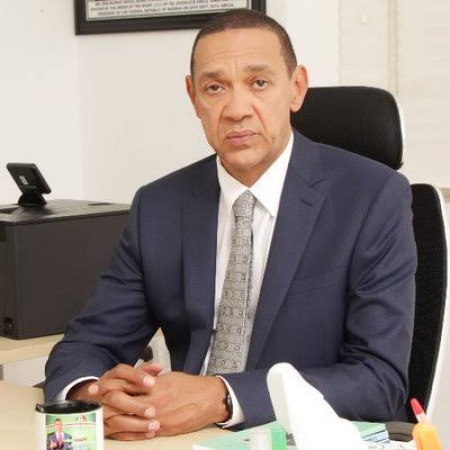
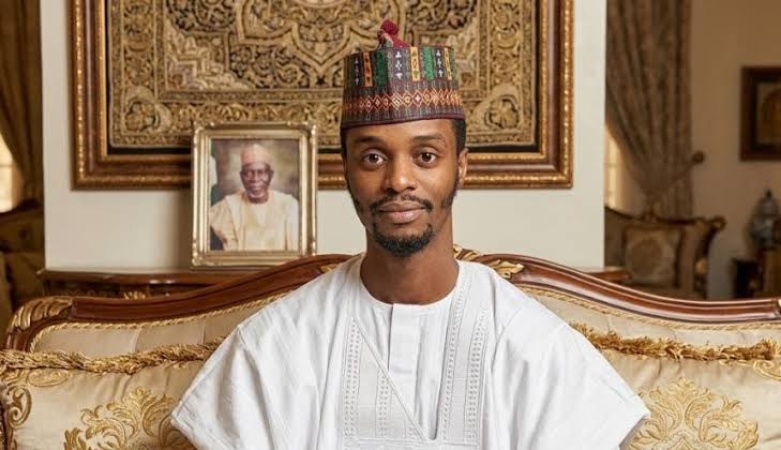



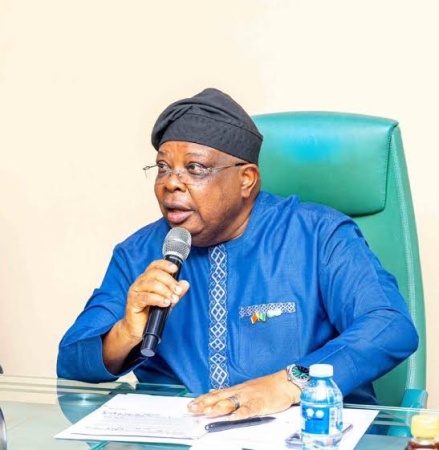

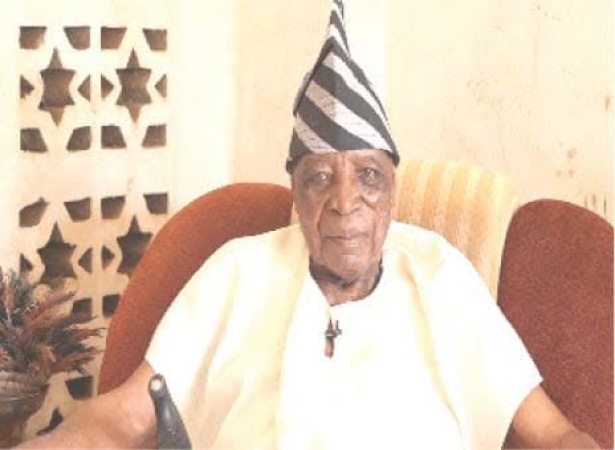
Chief Isaac Shaahu
Chief Isaac Shaahu is one of the few surviving politicians from the First Republic. He was a member of the Northern House of Assembly and minority, or opposition, leader in 1964. When states were created, he became a commissioner in various ministries of the old Benue-Plateau State between 1967 and 1973. He also saw action in the Third Republic, led by the then President Shehu Shagari, as minister of commerce, and then communication. He was one of the 34 people that founded the Peoples Democratic Party (PDP), and was a participant in the formation of the ruling All Progressives Congress (APC). At his house in Gboko, Benue State, he shared his experiences with Weekend Trust.
Can I start by asking about your school life?
Well, my father was a road maker.
So he was educated?
A little. I was born in 1935. He wrote my date of birth.
A birth certificate?
No. I called it a birth certificate later on. But he wrote it with his hand.
So you are not sure of exactly when you were born?
It was in 1935, but I am not sure( of the date).
Where did you go to school in your early years?
There were three or four regions in Nigeria – North, West, East; and you had Cameroon and Chad Republic.
So where did you go to school, here in Gboko?
I went to the Tiv Native Authority Primary School and Katsina-Ala(Provincial Secondary School) and completed it.
Katsina-Ala was a very well known school; do you remember the period you were there?
Is it right to say that you started to learn about politics in Katsina-Ala because J.S. Tarka, your teacher, was there? Was he teaching you mathematics or politics?
He was teaching me mathematics.
Plus politics, it seems?
Yes. I used to read a lot of small books. That’s where I learned more about politics.
When you finished from Katsina-Ala, I believe you were in the Native Authority as a technical officer. Why did you leave the Native Authority?
J.S. Taka was teaching me mathematics, geography and all those things. It was from there that I learned about politics.
So you were with him, and together you started the United Middle Belt Congress as a political party?
Yes.
And you were in the Northern House of Assembly as a minority member. How were you dealing with people like the Sardauna becausee you were the opposition leader?
Well, I was a young man in (my) 20s.
Oh, you were that young?
I was happy to stand up in the middle of so many elderly people and tell them what I wanted.
Was it difficult for you? Did they give you tough time? Or did you give them tough time?
We gave ourselves tough time because some were particularly happy. When I stood, some of them would say, “Sit down you that small boy.”
After the military came in you moved to Benue-Plateau and became a commissioner. How did it go serving as a commissioner under J.D. Gomwalk in the military?
Well, all of us were fighting but I didn’t know him. J.D. Gomwalk was my governor. He was fighting on his own side. We were very happy.
You went to the House of Reps in the Second Republic when politics returned; and the idea was that you would become the Speaker, wasn’t it?
Yes, I wanted to. JS ( Tarka) wanted us to become something better than that. We were allotted two seats; so he took one and I took one.
You became the minister of commerce, and later on, minister of communication under the Shagari government. How was your relationship with Shagari?
Shagari was a good man, so we found it easy. I couldn’t bark again, but as the leader of opposition in the Northern House, I could bark.
So you were captured inside the government. Did you enjoy being a minister in Lagos at that time?
Well, I enjoyed being a minister because before your visit any place, they would announce you. And you would know that you were doing something. If you didn’t do what they were talking about, there were people in the government and outside who would be talking anyhow. So you would be careful.
How was your relationship with J.S. Tarka, your teacher and leader who died in 1980?
Well, he had already brought seven of us up, so there was no fear. We started with Sardauna. Some people couldn’t even stand up to see him because he was too big for them.
What happened when he died? Who became the leader of the movement – the group?
I became the leader.
Can you tell me a little bit about Tarka? What kind of man was he?
He was a very strong-minded person; very kind.
When he died you became the leader of the movement and tried many times to be the governor of Benue State; is that correct?
Yes.
Aper Aku became governor even when Tarka was alive, while you became minister. What happened?
He was teaching me how to be strong-minded. He was teaching me how to fight on.
Because you were a minister at the time you didn’t care about the governorship position in Benue?
Well, you couldn’t be a minister and governor at the same time, so you would take only what you wanted – one position.
Do you regret that you didn’t become the governor of Benue State after trying many times?
I did not feel embarrassed at all. Anywhere I went, I was free-handed. Shagari was a very good man.
You keep talking about Shagari as a good man. I want you to compare what happened when you were in the NPN government with what happened later on. Where do you think we started having a problem in Nigeria?
When the northern Cameroons and South were split completely.
What was the quality of the leaders? Did things suddenly change and leaders were no longer as responsible as before?
Well, we had little love for money, including people like Awolowo, Azikiwe, Enahoro, Bola Ige.
You think they didn’t like money?
They didn’t go after money; they went for governance.
Looking at the country now, do you feel we can make Nigeria work better?
It is going to take some time because love for money has gone too deep into the leadership of the country. Anybody who goes in there goes straight to make money.
Are you consulted often by the current leaders?
Who?
Let’s say the governor of Benue State or the minister representing Benue in Abuja. Do they call you? Do they come here to seek your advice on how to run the country?
No. But sometimes we meet. That’s all.
You are not consulted a lot?
No.
Do you feel the service you rendered for Nigeria has been rewarded? Do you feel fulfilled that you did your own bit?
Well, I am here with them.
Maybe they don’t want to hear…
They don’t want to hear. During our time, honourable members were not considered for pension and gratuity. And we didn’t fight, we let it be.
Many of you were followers of J.S. Tarka. How many are left?
Not many that I know. Others have deserted the movement.
If people have deserted the movement, how do younger ones to carry on the Tarka tradition?
Well, when it is time to campaign I go in because that is one thing I will say is in the blood.
So you still get involved in politics?
Yes.
Do you go to rallies?
They announce the day I will go.
I understand you have a good relationship with younger politicians in Benue, such as George Akume; is that true?
Yes.
Do you see them often? Do they come to you to pay homage?
George Akume comes to me very often. I also see him as I go along because from here to Makurdi, he is just on the road.
Do you still travel? Do you still leave Gboko for Makurdi and other places?
Most recently; about one month now, I stopped moving around.
Do you do any physical exercise?
No.
Is it difficult to move around now?
I have a stick.
How do you spend your day?
After this meeting I will sit down and eat. That’s all.
Do you restrict your diet?
I eat very well, topped with beer.
Do you eat pounded yam?
Yes.
Do you have friends of your age group you still relate with here in Gboko or elsewhere nearby?
I have five.
There are not many people of your generation?
No.
You are almost 90 years old and people would be surprised that you have lived this long; is there anything that explains your long life?
I am 93. I think it is God’s blessing; that’s all. I like eating meat.
So you eat everything you want?
Yes. It is salt that they have stopped me. They have warned me to stop eating it.
What about sugar?
I eat sugar.
You don’t have any problem with sugar?
No.
Can you tell us about your family life? How big is your family?
It is a very big family.
Some elders don’t count their family members, but I want you to try.
I have 21 children and 9 grandchildren.
How many wives?
Six wives.
So you are really a grand old man in the Tiv tradition. Do you have any hobby?
They manage the farm.
The younger generation must be steadfast because no country fights two times and survives. It is better being a Nigerian.
Do you think we can manage Nigeria’s unity in spite of our differences?
Yes.