ADAD
ADAD
Updating your news feed...
NEWS EXPRESS is Nigeria’s leading online newspaper. Published by Africa’s international award-winning journalist, Mr. Isaac Umunna, NEWS EXPRESS is Nigeria’s first truly professional online daily newspaper. It is published from Lagos, Nigeria’s economic and media hub, and has a provision for occasional special print editions. Thanks to our vast network of sources and dedicated team of professional journalists and contributors spread across Nigeria and overseas, NEWS EXPRESS has become synonymous with newsbreaks and exclusive stories from around the world.

















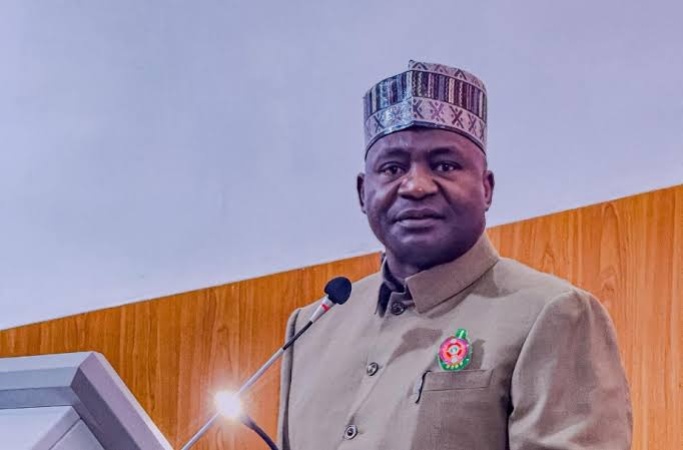


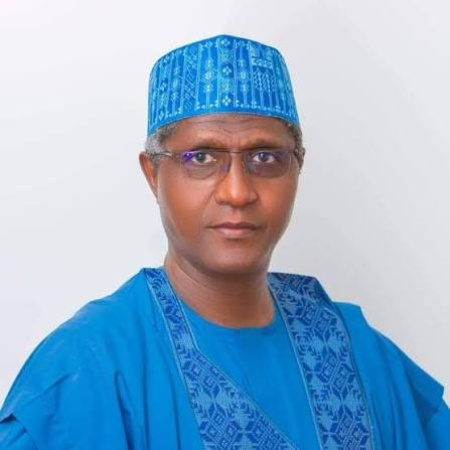






Minister of Education, Tunji Alausa
By FUNMILAYO ADEYEMI
The Federal Government has earmarked N365 million annually for the Tertiary Institution National Laureate Prize to recognise outstanding academic research, innovation and intellectual excellence across the country’s tertiary education system.
The Minister of Education, Dr Tunji Alausa, disclosed this while briefing newsmen on the initiative on Monday in Abuja.
Alausa said the prize was part of the federal government’s efforts to reposition education as a catalyst for national development.
The minister said he had earlier inaugurated the National Laureate Prize Committee and charged it with providing the strategic direction, governance and integrity required for the successful implementation of the programme.
He said the initiative would provide a structured national platform for identifying and rewarding exceptional academic research with significant potential for innovation, commercialisation, industrial application and national development.
“For many years, our national education and reward system has not sufficiently celebrated the remarkable work taking place in our universities and other tertiary institutions.
“Across the country, young Nigerians and academics are conducting research, developing solutions, creating new technologies and generating ideas capable of addressing some of our most pressing developmental challenges,” he said.
The minister said the government believed that young researchers and distinguished academics deserved to be recognised, supported and celebrated for their contributions.
He said the prize would cover outstanding undergraduate dissertations with strong commercial potential, exceptional master’s theses and doctoral theses with clear industrial and developmental applications.
According to him, special prizes will also be awarded in six thematic areas, namely engineering and technology, medicine and health sciences, arts and social sciences, agriculture, law, and teaching innovation.
Alausa also said that some of the special prizes would honour distinguished Nigerians whose lives symbolised exceptional service, courage and contribution to the nation.
He cited the Dr Stella Adadevoh Prize for Medicine and Medical Innovation as one of such awards, saying it would honour the late physician’s courage and professional sacrifice during the 2014 Ebola outbreak.
He said the legacy demonstrated the transformative power of knowledge, professionalism and service to humanity.
The minister stressed that the credibility of the National Laureate Prize would depend fundamentally on the credibility of its selection process.
He therefore assured that the process would be transparent and competitive, and insulated from political, institutional or personal influence.
”Excellence must be the determining factor,” he said.
Alausa said that participation and submission of academic reports and entries would conform to the national policy of the Nigerian Education Repository and Databank (NERD), to strengthen the integrity, accessibility and long-term preservation of academic works.
He described the prize as more than an award programme, saying it was designed to change the aspirations of Nigerian students and researchers.
”We want Nigerian students to understand that there is honour in scholarship, opportunity in innovation and national recognition for intellectual excellence.
”We want our researchers to see a clear pathway from academic research to industrial application, enterprise, innovation and national development.
”Leaders in the country matters, scholars in the country matters, the researchers in the country matters, and the rigour of our laboratories and intellectual institutions deserves national celebration,” he said.
The minister added that the ultimate objective was to build an education system that would not merely produce certificates but generated solutions, innovations, enterprises and measurable national value.
He said the programme would be open to students of universities, polytechnics, monotechnics and colleges of education, irrespective of whether the institutions were federal, state or privately owned.
Alausa also explained that the programme had been designed with sustainability in mind, noting that funding would come from the Nigerian Education Repository Data Bank and the Federal Ministry of Education.
Speaking on the cancellation of funding under the Bilateral Education Agreement (BEA), he explained that the policy was no longer providing value commensurate with the resources being committed.
According to him, Nigeria has developed significant capacity in its universities, polytechnics and colleges of education over the years, making it unnecessary in some cases to spend large sums of public funds sending students abroad to study programmes available locally.
Alausa said the government would, however, not prevent foreign countries from offering scholarships to Nigerian students.
He said the decision was aimed at ensuring that public funds were deployed more efficiently and towards programmes that would provide greater benefits to Nigerians.
The Chairman of the National Laureate Prize Committee, Prof. Sani Sambo, said the prizes would be organised under two broad categories within each of the six thematic areas.
He explained that the first category would be the “best of the best”, which would receive the star prize, while other outstanding entries within each thematic area would receive thematic prizes.
Sambo also said that the government could expand the categories in future if the need arose, but added that the decision to begin with six areas would ensure that the programme remained focused and manageable.
He said the areas provided a reasonable balance between science, applied sciences, humanities, law and teaching innovation.
On his part, the Chief Executive Officer of NERD, Tunji Ariyomo, said the programme was open to tertiary institutions across the country.
He said universities, polytechnics, monotechnics and colleges of education, regardless of ownership, were eligible to participate.
Ariyomo said the programme also recognised the role of lecturers and supervisors in ensuring the integrity of academic submissions.
He explained that supervisors would be required to provide digital affirmation that projects submitted under the programme were genuinely undertaken by the students concerned. (NAN)