ADAD
ADAD
Updating your news feed...
NEWS EXPRESS is Nigeria’s leading online newspaper. Published by Africa’s international award-winning journalist, Mr. Isaac Umunna, NEWS EXPRESS is Nigeria’s first truly professional online daily newspaper. It is published from Lagos, Nigeria’s economic and media hub, and has a provision for occasional special print editions. Thanks to our vast network of sources and dedicated team of professional journalists and contributors spread across Nigeria and overseas, NEWS EXPRESS has become synonymous with newsbreaks and exclusive stories from around the world.


.webp)




Loading banners
Loading banners...

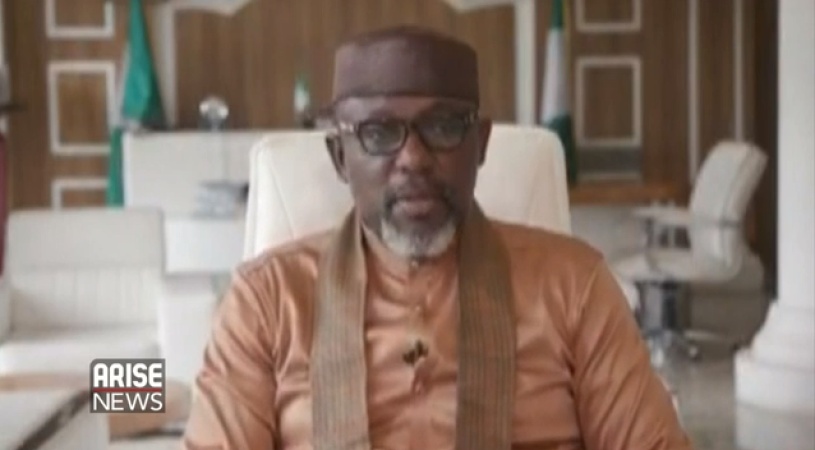
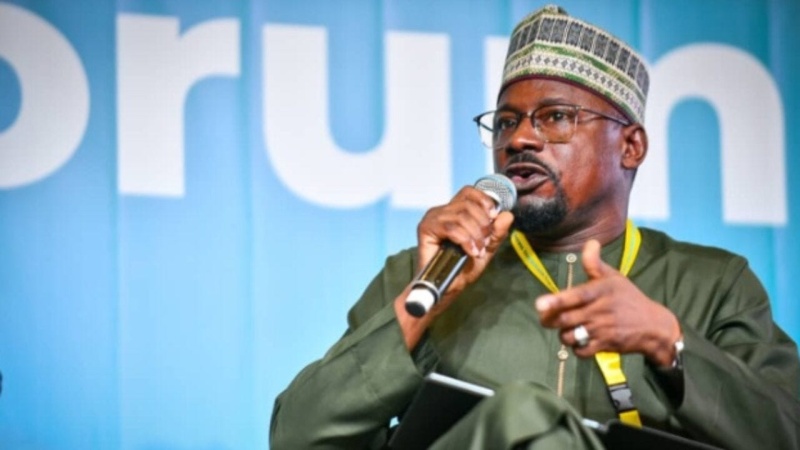
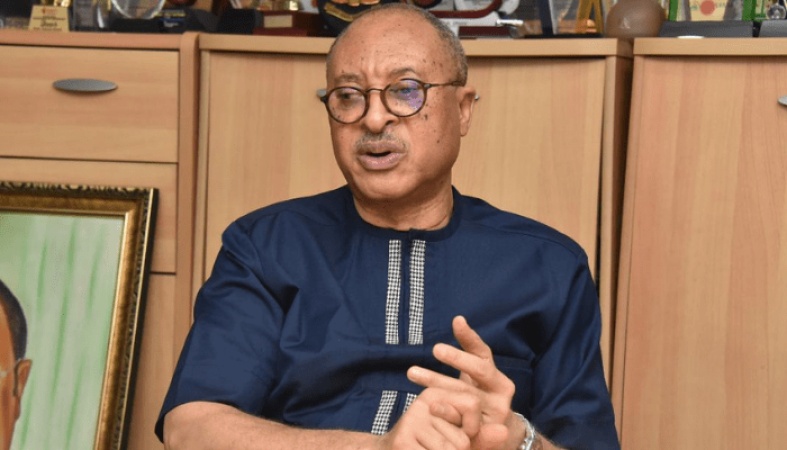
Professor Pat Utomi
Political economist and leadership advocate, Professor Pat Utomi, has called for electoral debates to become a mandatory feature of Nigeria’s electoral process, arguing that they provide voters with critical insight into the competence, preparedness and character of political candidates.
Utomi made the call in an interview with ARISE NEWS on Thursday, while discussing the relevance of the National Peace Accord and political debates ahead of elections.
He said the tradition of encouraging political candidates to sign peace accords should be sustained because it offers voters an opportunity to assess the attitude of those seeking public office.
“First and foremost, I think that it is important that the effort being made to encourage the signing of a peace accord, that tradition continue because it, in many ways, tells the electorate about the attitude of the candidates. And that is very important, the attitude of the candidates.”
He added: “When the candidates take the people for granted, it comes through, beginning from that whole peace accord platform.”
On political debates, Utomi said they were “so, so very important”, recalling the 1993 presidential election, when he said the debate between MKO Abiola and Bashir Tofa significantly influenced voters.
“I can tell you without any equivocation, in 1993, what made the swing completely towards Abiola away from Tofa was the debate.”
He said the debate allowed Nigerians to assess the candidates beyond their campaign messages by observing their demeanour, confidence and ability to connect with the electorate.
“Once they got on that national platform and the people could feel them, hear them, and draw from just their body language, what kind of connection they would have with the people, they could easily make up their minds that this was not a people’s person, this was a people’s person, that’s who we’re going to vote for.”
Utomi said Nigeria should not only retain electoral debates but increase their frequency, arguing that candidates who are adequately prepared would have little reason to avoid them.
“So debates are very important. I would even insist that we have one every month from now till election day because it gives deep insights into the candidates.”
According to him, debates can also expose candidates who are poorly prepared or lack sufficient knowledge of the issues affecting the country.
“The candidates who are not well prepared, candidates who are not well will tend to run away from debates.”
He recalled participating in efforts to study the American debate system in Washington in the 1990s, saying the experience reinforced his belief in the importance of political debates.
“I was part of the group that went to, well, I guess, get coached on the American debate system, including the late Raymond McCarthy, John Mulman, I think a bunch of us were in Washington back in the day, I think the 90s, on that.”
“And we met with the CNN anchor of the time and all of those people and they gave very deep insights into the value of debates and I hold on to that. They are so, so very important, these debates.”
Utomi also argued that debates could help Nigerians develop a clearer national agenda rather than allowing politicians to focus solely on issues that advance their short-term interests.
“How do we define, in fact, for the people, not just the candidates, an agenda for the country?”
“Candidates will throw up agenda that, you know, advance their own short-term interests but the debate process will enable, emerge an agenda that is what the country looks to.”
He said Nigeria’s political class must place the future of young Nigerians at the centre of the national conversation, warning that the country could face serious consequences if the growing youth population was not properly harnessed.
“For example, today, the most important thing before Nigeria is the young people of Nigeria whose future is not just at stake in the typical way we talk about it, but is very, very at stake because it’s significantly threatened.”
Reflecting on Africa’s political history, Utomi cited Ghana’s independence and the economic thinking of Kwame Nkrumah and economist Arthur Lewis as examples of how political independence could be followed by deliberate economic development.
“Look, in the run-up to a Ghanaian independence, the Osage himself, Kwame Nkrumah, has said to Africans, look here, first to the political kingdom and all else will be added.”
He said Ghana’s post-independence leadership also placed significant emphasis on economic development.
“They became independent in 1957. In 1958, when Arthur Lewis, who became the first black man to win the Nobel Prize in Economics, was working on a, if you will, a formula for industrialisation of the Gold Coast, which is the name of the book that came out of his work, Nkrumah again called together leaders of emerging Africa to focus on the economy.”
Utomi blamed poor political leadership for much of Africa’s economic underdevelopment, arguing that politicians had failed to properly manage the continent’s resources and opportunities.
“If there’s one thing that is clear about the Nigerian experience is that politics has damaged the economy of Africa.”
“It is that politicians have mismanaged Africa.”
He recalled delivering a convocation lecture at the University of Calabar, which he said he titled The Pursuit of Poverty, to draw attention to what he described as the failure of African political leadership to improve the welfare of citizens.
“Your alma mater, Ruby, University of Calabar, invited me to give the convocation lecture, I think about 2012, 14, thereabouts. And I titled my convocation lecture The Pursuit of Poverty to show that African politicians almost deliberately want their people to be poor.”
He urged Nigerians to pressure political leaders to focus on young people and turn the country’s growing youth population into an economic advantage.
“We have to put the pressure on politicians now to focus on the young people of this country and how a demographic dividend can be extracted from the youth bulge.”
“If we allow them to just go off on the kinds of things they talk about, Nigeria is in trouble.”
Responding to the argument that political debates have not necessarily determined electoral outcomes, Utomi said the fact that some candidates had won elections without participating in debates should not be used as an excuse to abandon the practice.
He cited his own experience debating former President Muhammadu Buhari in 2007.
“I debated Buhari in 2007. I was presidential candidate. We, at the ECOWAS secretariat, that’s where that took place. And I think the tape is still available, the debates.”
Utomi said Buhari struggled during the debate and recalled having to clarify some of his responses.
“I recognised General Buhari was talking off point 90% of the time. But the spirit of that moment often led me to say, okay, General, I think you meant to say this and that.”
He also recalled a reaction from a BBC journalist after the debate.
“I remember the BBC woman came to me afterwards and said, that’s quite a curious debate. We are more or less coaching this man. What kind of debate is that?”
Utomi said electoral outcomes in Nigeria were influenced by several factors, particularly because elections had not always served as reliable instruments for determining the will of the people.
“There are other forces sometimes that come along with debates to decide outcomes. It’s even more difficult in Nigeria where elections have not been honest instruments of determining the will of the people.”
He nevertheless maintained that Nigerians must continue to demand the right standards in the electoral process.
“So we still can’t give up on the right way of doing things because the wrong ways have produced outcomes. And those outcomes we know have not been salutary to where the Nigerian people want to be.”
Utomi also reflected on his expectations for Nigeria’s economic development, saying poor leadership had prevented the country from achieving the level of prosperity he had anticipated decades ago.
“When I was returning to this country in 1982, after PhD and everything, I was dead certain that by my 60th birthday, Nigeria will be a $30,000 per capita economy. I turned 70 and it was around 1,000.”
He attributed the shortfall to poor leadership and the failure to take key elements of the electoral process seriously.
“It’s the reason. The reason is because we’ve not been led properly. And that comes from how we have taken the most important things in the electoral process not too seriously.”
He urged Nigerians to demand greater accountability from political candidates and reject excuses for those who refuse to publicly defend their positions.
“So we must begin to correct those errors and make sure that we put politicians their feet to the fire.”
“Let’s not give excuses for people who are looking to show contempt to the Nigerian people by avoiding putting themselves before them to debate the issues that matter to them.”
Utomi further argued that candidates who deliberately avoid debates may be doing so because the platforms expose their weaknesses.
“Those that think debates are not important should ask those that run away from debates, why do they run away from debates?”
“If they were not important, people would not run away from debates.”
He said debates could reveal weaknesses that candidates would rather keep away from public scrutiny.
“They know that the debates will show them in very terrible light. That’s why they run away from debates. That’s why they run away from interviews. And that’s why they don’t come on platforms like this.”
Utomi also cited the 1960 US presidential debate between John F. Kennedy and Richard Nixon, as well as the 1993 Nigerian debate between Abiola and Tofa, as examples of the potential influence of televised debates.
“We know what a debate does. We know how a debate swayed Kennedy and Nixon and they formed the first televised debate in America in the 60s.”
“We even know the role of a debate in Nigeria, 1993, Abiola and Bashir Tofa. We know what that debate did in consolidating Abiola’s candidature that year. It was a debate.”
The political economist supported the idea of formally incorporating electoral debates into Nigeria’s electoral framework, saying the Independent National Electoral Commission has a responsibility to facilitate debates and educate voters.
“The INEC has a burden, a responsibility to make sure that debates take place in our country.”
He also said INEC had a broader responsibility to educate voters on the electoral process and the consequences of vote-buying.
“It has a burden of voter education to make people understand why they are going to the polls.”
“It has the burden of explaining to people why taking money to vote for somebody is a crime.”
Utomi criticised INEC for what he described as repeated failures to discharge its responsibilities in the interest of Nigerians.
“It has a burden, but INEC has consistently failed to execute in the interest of the Nigerian people.”
He called for a fundamental overhaul of the electoral commission.
“This needs to change. If we want to save this country, we need to retool INEC and the fundamental philosophy that governs how that institution operates.”
On the argument that political debates may have limited influence among less-educated voters, Utomi rejected the assumption that people without formal academic qualifications lack political understanding.
He said electoral institutions must understand the nature of the African electorate and create systems that allow all citizens to participate meaningfully in political processes.
“And I think that if we take that talk on board, we will see that institutions of the electoral process have a fundamental obligation to looking at what is the nature of the African electorate.”
He argued that formal education should not be used as the sole measure of political awareness.
“People think that people who do not have letters, PhD, BSC, and all that are not politically savvy.”
Utomi said many ordinary Nigerians were highly informed about political developments through radio and other media platforms.
“Why is it that your Magad, which is telephone tuned to the House of Service and the BBC, understands more of what’s going on in the polity than many of you who are supposed to be the experts?”
He therefore urged political institutions to create processes that bring ordinary citizens into political engagement rather than judging their capacity based on academic qualifications.
“Let’s not look at their certificates. Let’s create processes that bring them in to engage.”
He added:
“And you will find that they have more knowledge about how they can be governed than most of the people who pretend to try to govern them.” (Arise News)