ADAD
ADAD
Updating your news feed...
NEWS EXPRESS is Nigeria’s leading online newspaper. Published by Africa’s international award-winning journalist, Mr. Isaac Umunna, NEWS EXPRESS is Nigeria’s first truly professional online daily newspaper. It is published from Lagos, Nigeria’s economic and media hub, and has a provision for occasional special print editions. Thanks to our vast network of sources and dedicated team of professional journalists and contributors spread across Nigeria and overseas, NEWS EXPRESS has become synonymous with newsbreaks and exclusive stories from around the world.
















Loading banners
Loading banners...

Poor Nigerians
By BONIFACE AKARAH
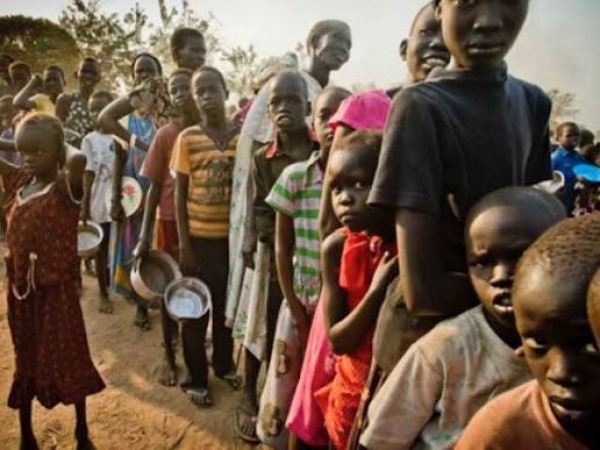
The United Nations has warned that millions of Nigerians facing food insecurity, malnutrition and disease outbreaks risk missing lifesaving assistance as the country’s humanitarian response faces a $159 million funding gap for the remainder of 2026.
The warning was issued on Wednesday by the UN Resident and Humanitarian Coordinator in Nigeria, Mohamed Malick Fall, as the UN marked World Humanitarian Day.
Fall said humanitarian needs were rising faster than available resources, despite significant efforts by government authorities and humanitarian organisations.
“Needs continue to rise faster than available resources,” Fall said, stressing that current funding was only a fraction of what was available a few years ago.
According to the UN, the Nigeria Humanitarian Fund and Central Emergency Response Fund have so far distributed **$135.5 million in 2026** to respond to emergencies. However, the country’s Humanitarian Needs and Response Plan still requires an additional $159 million for the rest of the year.
Fall said the funding shortfall was particularly concerning as millions of people confront worsening food insecurity, malnutrition and disease outbreaks during the lean and rainy seasons.
He also called for greater protection of humanitarian workers operating in difficult and sometimes dangerous conditions.
“Humanitarian workers are not targets,” Fall said, urging all parties to protect hospitals, treatment centres, relief supplies, assistance convoys and civilian infrastructure.
The UN coordinator made the remarks after visiting nutrition and cholera treatment centres in Maiduguri alongside members of the UN and Humanitarian Country Teams. The delegation met health workers, humanitarian personnel, caregivers and patients and observed the ongoing humanitarian response in northeast Nigeria.
The response reached almost 900,000 people in the first half of 2026, despite dwindling funding, according to the UN.
Highlighting the scale of the response to the cholera outbreak in Borno State, Fall said government authorities, health workers and humanitarian partners had treated more than 55,000 cholera patients, provided hygiene promotion services to more than 1 million people, and chlorinated more than 500 water points.
He said the joint intervention had helped reduce the cholera case fatality rate to below emergency levels.
Fall further warned that inadequate protection and funding could directly affect vulnerable communities.
“When humanitarian workers cannot safely reach communities with assistance, it is vulnerable women, men and children who suffer the consequences,” he said.
The UN official called for increased international and domestic funding, particularly as Nigeria moves towards a more nationally led humanitarian system in 2027.
He said the transition presented an opportunity to strengthen national institutions and local organisations already providing frontline humanitarian assistance, but cautioned that it must be properly funded and centred on affected communities.
“Domestic funds mobilization will be critical given the global donor environment,” Fall said.
He urged governments, donors, civil society and the private sector to work together to support affected communities and the humanitarian workers serving them.
Fall said the humanitarian crisis should not be viewed only through statistics, noting that behind the figures were families struggling to survive, children battling malnutrition, mothers seeking treatment for cholera and communities attempting to recover from prolonged crises.