ADAD
ADAD
Updating your news feed...
NEWS EXPRESS is Nigeria’s leading online newspaper. Published by Africa’s international award-winning journalist, Mr. Isaac Umunna, NEWS EXPRESS is Nigeria’s first truly professional online daily newspaper. It is published from Lagos, Nigeria’s economic and media hub, and has a provision for occasional special print editions. Thanks to our vast network of sources and dedicated team of professional journalists and contributors spread across Nigeria and overseas, NEWS EXPRESS has become synonymous with newsbreaks and exclusive stories from around the world.









Loading banners
Loading banners...

President Tinubu
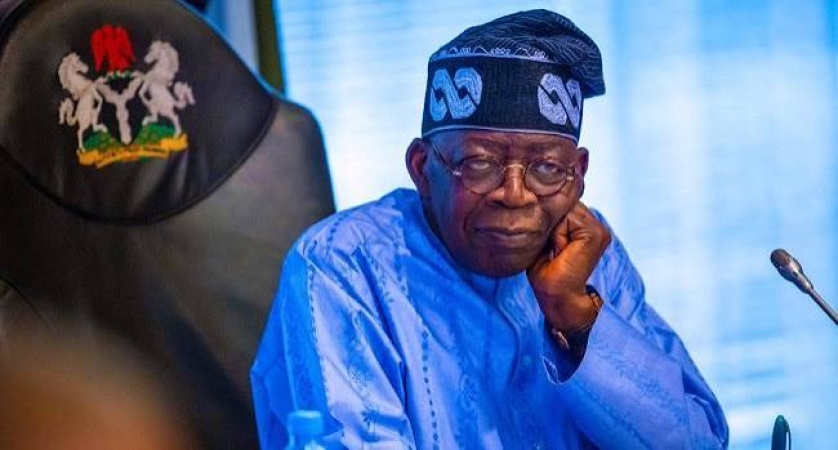
In a synchronised effort to overhaul Nigeria’s overburdened security framework, President Bola Ahmed Tinubu recently initiated a suite of structural reforms that combine military expansion and an army pay rise with a legislative push for decentralised state police.
Coming simultaneously, these three initiatives directly target the core structural vulnerabilities that security analysts, regional leaders, and military strategists have highlighted for decades: morale, response time, and local knowledge.
On one hand, approving a 30 to 80 per cent salary increase for approximately 250,000 armed forces personnel, with the largest adjustments explicitly directed toward frontline junior officers, is designed to rebuild troops morale. On the other hand, expanding the Nigerian Army from eight to 12 divisions while adding 28,000 active troops aims to shrink operational response times across multi-theatre conflict zones. Meanwhile, initiating constitutional amendments and building cross-party state consensus to establish state police forces seeks to institutionalise local knowledge within community intelligence frameworks. Conceptualised together, this three-pronged approach signals an understanding that Nigeria’s security breakdown is systemic rather than merely tactical.
However, transforming high-level policy announcements into tangible security on the ground requires navigating complex fiscal realities, historical political suspicions, and systemic implementation bottlenecks.
Morale and welfare
The first pillar of the administration’s strategy focuses directly on human capital and troops welfare. For over a decade, Nigeria’s military personnel have been deployed across nearly all 36 states, fighting a continuous multi-front campaign against Boko Haram and ISWAP insurgents in the North-East, armed banditry and kidnapping cartels in the North-West, violent secessionist groups in the South-East, and widespread oil theft in the Niger Delta. This prolonged operational tempo has resulted in severe combat fatigue, high attrition rates, and degraded discipline.
A substantial salary increase addresses a long-standing grievance within the ranks. The decision to skew the highest percentage increases toward junior officers and rank-and-file soldiers is strategically targeted. Frontline tactical units bear the brunt of asymmetrical warfare, often operating in remote hinterlands under extreme physical and psychological strain. From the point of view of analysts, the logic is straightforward: an underpaid, financially stressed soldier stationed at a highway checkpoint is far more susceptible to petty corruption, extortion, and desertion than one who receives competitive compensation. Higher pay enhances recruitment appeal, improves unit discipline, and reinforces organisational loyalty.Applauding this intervention, politician and elder statesman, Chief Chekwas Okorie, noted that the policy directly confronts long-simmering institutional deficits.
“Our military personnel, across the Army, Navy, and Air Force, have sacrificed immensely while quietly bearing their burdens. In fact, it is mostly retired personnel who have found the courage to speak out about the critical deficits in equipment, training, and morale that have long impaired operational effectiveness. The President’s policy directly addresses these issues.”
Yet, serious fiscal and operational questions complicate this welfare package, particularly regarding macroeconomic inflation, fiscal sustainability, and inter-agency parity. Security expert Jackson Olalekan-Ojo cautions that nominal wage increases risks being rapidly neutralised by broader economic headwinds. In his assessment, raising military remuneration offers little structural benefit when severe currency devaluation erodes real purchasing power: “In my view, salary increments matter less than what that money can actually buy in the market. There is no point in increasing soldiers’ salaries if their children cannot attend good schools or access proper medical care. Likewise, raising their pay means little if they are still deployed with archaic equipment. Ultimately, this pay increase is merely a temporary relief for personnel on the battlefield. Within two months, the effect will wear off completely. What we truly need are long-term welfare packages—decent housing, reliable water and electricity, quality healthcare within the barracks, and access to good schools.”Furthermore, with debt servicing obligations consuming a major share of federal revenues and macroeconomic pressures squeezing the national budget, maintaining an expanded defence payroll beyond the current electoral cycle poses a significant challenge.
Retired General Ishola Williams raises additional concerns regarding broader fiscal equity and pension liabilities: “Nobody is talking about the financial implications of expanding military divisions, which must compete for funding with health, education, and other vital sectors. Nobody is talking about pensions for military retirees, either. If you increase the salaries of serving soldiers and officers, what happens to military pensioners?”
Besides, boosting military compensation in isolation risks creating deep resentment among partner security agencies. The Nigeria Police Force (NPF), the Department of State Services (DSS), and the Nigeria Security and Civil Defence Corps (NSCDC) operate alongside troops in joint task forces. Excluding these civil security arms from equivalent wage reviews could undermine inter-agency collaboration and joint intelligence operations.
Chief Okorie emphasises that extending wage parity to non-military security arms is an urgent imperative.
“This pay rise must extend beyond the military to include the Nigeria Police Force, the Department of State Services (DSS), and the Nigeria Security and Civil Defence Corps (NSCDC). Waiting for public agitation before acting would be a grave error. The DSS, in particular, may not require the numerical strength of the military or police, but it demands heavy investment in technology and advanced training as the primary intelligence gathering agency.
“Ultimately, a salary increase is a compensation adjustment, not an operational multiplier. High morale cannot substitute for armoured personnel carriers, air-reconnaissance assets, secure communications gear, or basic combat logistics. If frontline troops receive higher pay but remain outgunned by well-funded criminal networks, operational outcomes will remain unchanged.
Structure and manpower
The second pillar targets the structural architecture of the armed forces. Expanding the Nigerian Army from eight to 12 divisions and injecting 28,000 new recruits represents one of the largest structural expansions of the nation’s land forces in recent history. Under the existing configuration, military commands have been stretched far beyond their intended capacity, forcing tactical decisions through centralised chains of command in Abuja. Supporters argue that creating additional divisional headquarters and localised operational theatres will shorten command-and-control loops.
Jackson Olalekan-Ojo acknowledges the necessity of closer military presence.
“Expanding the military command aims to spread personnel across the country so that troops can be closer to the citizens. Therefore, it is well-deserving of applause. However, policy formulation is not our main challenge in Nigeria—policy implementation is. I hope the people who are recruited will not include members of Boko Haram or other criminal elements. If recruitment, promotion, and all other processes are conducted properly, this reform will pose a real threat to terrorists, bandits, and kidnappers.”
Chief Okorie similarly welcomes the expansion, arguing that increased numerical strength is crucial to eliminate ungoverned spaces where criminal cartels thrive. However, he sharply criticises how military personnel are currently deployed for routine civil policing.
“Our soldiers are primarily trained to defend the nation’s territorial integrity; their heavy involvement in internal security is largely a consequence of widespread insurgency. However, I strongly oppose deploying soldiers to man highway checkpoints—which have effectively turned into illegal tollgates. In the South East, where the density of checkpoints is higher than anywhere else in the country, residents view these deployments as an army of occupation. It creates a siege mentality and alienates the public.”
Contrasting sharply with these views, Gen. Ishola Williams (rtd) offers a fundamental critique of the expansion, arguing that deploying army divisions for internal security represents a complete failure of strategic and tactical thinking that misdiagnoses Nigeria’s true threat profile: “What is happening now is not a national security structure; it completely lacks strategic and tactical thinking. The job of the military is not to chase kidnappers, criminals, and bandits. What the government is trying to do is take Nigeria back to the old days when the British created the Constabulary. Not increasing military commands from eight to 12—for what? Who is fighting Nigeria apart from Boko Haram? Who is the enemy of Nigeria, and where are they coming from?”
Gen. Williams asserts that instead of expanding army divisions, the government should restructure civil law enforcement by unbundling the Police Mobile Force (MOPOL).
His words: “If they want to restructure properly, they should remove MOPOL from the Nigeria Police Force and establish it as an independent paramilitary force to handle these criminal activities. By doing so, the army could concentrate on Boko Haram, working with Chad, Niger, and Cameroon in collaboration with the Multinational Joint Task Force. They simply need to upgrade MOPOL’s training system to relieve the army of the duty of handling crimes like banditry and kidnapping.”
These conflicting expert perspectives underscore three primary structural risks inherent in the expansion. First, deploying regular army divisions to manage civil disturbances, farmer-herder disputes, and rural banditry risks the over-militarisation of internal security. Conventional army units are trained for power projection and territorial defence, not civilian policing or criminal investigation. Second, establishing new divisions requires substantial capital expenditure for headquarters infrastructure, logistics depots, staff transport, and administrative personnel, risking that allocated funds will be absorbed by top-heavy bureaucratic overhead rather than reaching field-level operational budgets. Third, increased federal military footprints within states can create federal-state jurisdictional friction with state governors who, despite being designated constitutional Chief Security Officers, exercise no operational control over federal military commanders.
Decentralisation and state policing
The third, and arguably most contentious pillar, is the executive push to establish state police forces. For decades, Nigeria’s highly centralised police structure, where a single Inspector-General of Police in Abuja directs operations across a nation of over 200 million people, has proved incapable of maintaining law and order in rural and border communities. The primary argument for state policing rests on the necessity of local intelligence, geographic familiarity, and community-embedded security operations. Gen. Williams (rtd) strongly endorses the principle of decentralised, bottom-up security structures: “Policing is bottom-up, not top-down; security of the state, however, is top-down. You need a crime intelligence and criminal investigation agency at the federal level to support state agencies in handling criminals, including bandits and kidnappers. Therefore, you do not need a centralised federal police force. A paramilitary mobile unit could then back up state police forces. The push for state police is entirely justified.
“However, moving state police from a political proposal to an operational reality presents formidable legal, political, and financial hurdles.
Constitutional and political obstacles
Altering Nigeria’s security architecture requires amending Section 214 of the 1999 Constitution (as amended), demanding a two-thirds supermajority vote in both houses of the National Assembly followed by formal ratification from at least 24 of the 36 State Houses of Assembly. Beyond legislative mechanics lies the historical memory of pre-1966 regional and Native Authority police forces, which regional political elites frequently weaponised to suppress opposition voices and intimidate voters.
Jackson Olalekan-Ojo highlights these deep political anxieties regarding partisan abuse.
“As many as 30 or 31 states in the federation are currently controlled by the ruling party. How will they avoid abusing state police, especially now that the President is pushing for it and the National Assembly is driving it forward? Will they not use state police to intimidate the opposition or tamper with election logistics? Nonetheless, if personnel are thoroughly vetted and state police officers are properly paid, I believe it could be the right move.”
Fiscal capacity and revenue restructuring
The most formidable practical challenge lies in state-level solvency. Given that more than 20 state governments regularly rely on federal bailouts to cover basic public sector payrolls, funding, arming, training, and maintaining modern police forces poses an existential financial risk. Unpaid or underfunded state police officers armed with deadly weapons represent a direct recipe for systemic corruption and extortion.
To overcome this fiscal bottleneck, Chief Chekwas Okorie argues that state policing mandates an immediate overhaul of national revenue allocation and security funding mechanisms: “Establishing state police mandates a review of the national revenue allocation formula. The Federal Government cannot devolve its security responsibilities to the states without simultaneously transferring the corresponding federal revenues needed to execute them. A revised allocation formula must reflect these added state responsibilities.”
Okorie further outlines two pragmatic funding streams to ensure fiscal sustainability.
“Regarding police financing, the Federal Government must revisit the Police Trust Fund mechanism. With transparency and serious commitment, a small tax levied on corporate organisations can generate substantial resources to equip the police. Another viable funding stream is the reform of security votes. Governors currently receive massive, unbudgeted sums under the guise of security votes without any accountability. These funds should be officially audited and appropriated directly toward sustaining state police forces.”
Political timelines and election dynamics
It is impossible to isolate these security reforms from Nigeria’s broader political timeline. Initiating major welfare hikes, military command expansions, and constitutional devolution projects simultaneously carries significant political implications ahead of the 2027 general elections.
A major salary Increase secures institutional goodwill across military ranks, reducing internal disaffection. The creation of new divisional commands demonstrates executive decisiveness to regional electorates severely affected by insecurity. Meanwhile, championing state policing grants the administration substantial political leverage with state governors—across both ruling and opposition parties—who have long advocated for regional security control.
However, framing these structural changes around political timelines creates the danger of prioritising public announcements over sustainable implementation. High-profile policy unveilings can generate temporary political goodwill, but long-term security stability relies entirely on funding consistency, institutional accountability, and rigorous execution. As Gen. Williams (rtd) bluntly assesses, there is widespread concern that elements of these policies function as “merely electioneering to appease people who have been complaining about various security issues.”
Implementation concerns and the road ahead
President Tinubu’s three-pronged strategy represents a coherent, structurally aligned diagnosis of Nigeria’s insecurity challenge. By simultaneously addressing troop morale through compensation, operational capacity through military expansion, and intelligence gathering through police decentralization, the administration has targeted the primary structural weaknesses of the national security state.
Nevertheless, structural concepts do not automatically produce public safety. As Jackson Olalekan-Ojo observes, the ultimate test lies entirely in execution: “Policy formulation is not our main challenge in Nigeria—policy implementation is.”
Echoing this sentiment, Chief Okorie emphasises that “sustainability is not the obstacle; political will and proper fiscal restructuring are.”
The ultimate success of these initiatives will not be measured by constitutional amendment bills, military command inaugurations, or pay raise announcements. The true benchmark rests on tangible outcomes: whether farmers in Benue, Niger, and Kaduna states can return to their fields without fear of attack; whether economic transit along northern highways can proceed without ambush or illegal extortion; and whether citizens across all regions experience a measurable, sustained reduction in violence.
Until these conditions are met on the ground, high-level structural reforms remain incomplete. In the final assessment, public safety is delivered through sustained operational execution—and no amount of policy architecture can substitute for security delivered in practice. (The Sun)