ADAD
ADAD
Updating your news feed...
NEWS EXPRESS is Nigeria’s leading online newspaper. Published by Africa’s international award-winning journalist, Mr. Isaac Umunna, NEWS EXPRESS is Nigeria’s first truly professional online daily newspaper. It is published from Lagos, Nigeria’s economic and media hub, and has a provision for occasional special print editions. Thanks to our vast network of sources and dedicated team of professional journalists and contributors spread across Nigeria and overseas, NEWS EXPRESS has become synonymous with newsbreaks and exclusive stories from around the world.


.webp)



.webp)









Loading banners
Loading banners...

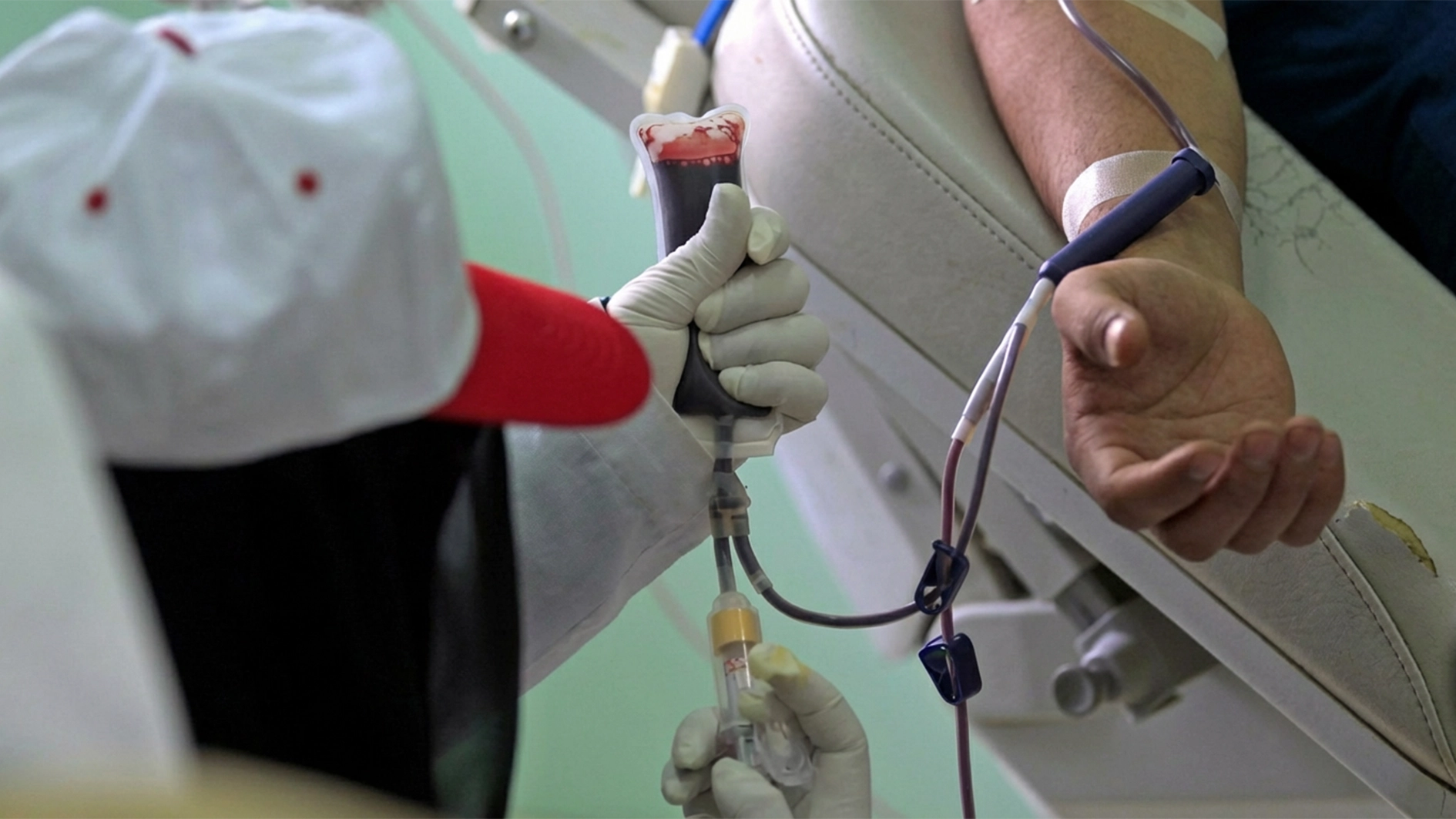
Nigeria is grappling with a widening blood supply crisis as economic hardship, low voluntary donor participation and deep-rooted misconceptions continue to undermine efforts to meet the country’s growing transfusion needs.
Health experts warn that soaring inflation, rising energy and logistics costs, and persistent shortages have driven up the cost of processing blood while leaving hospitals struggling to secure life-saving supplies for patients.
Despite requiring up to two million units of blood yearly, Nigeria sources only about 500,000 units from voluntary donors. According to the National Blood Service Agency (NBSA), voluntary non-remunerated donations account for just 10 per cent of total blood collections, with replacement and paid donations making up a substantial share of the national supply.
In Lagos State, blood collection fell to about 130,000 units in 2025 following disruptions caused by the Joint Health Sector Unions (JOHESU) strike, further widening the supply gap. Only about eight per cent of donations in the state come from voluntary donors.
Stakeholders have also raised concerns over the rising cost of maintaining safe blood services. They noted that the cost of processing a unit of blood in public health facilities has risen from about N3,000 to N35,000 over the past 25 years, while a source told The Guardian that processing costs in public hospitals have doubled from N15,000 two years ago to N30,000, with an additional N10,000 charged for daycare services.
In an interview with The Guardian, the Director of Health at the Nigerian Red Cross Society, Dr Aminu Abdullahi, said that the culture of voluntary blood donation in Nigeria remains weak, although many Nigerians donate blood regularly and voluntarily.He stated that only about 10 per cent of the blood collected comes from voluntary, unpaid donors, while the remainder usually comes from family replacement or paid donors.
He said the blood deficit has serious implications for the country’s healthcare system, leading to preventable deaths, especially among mothers during childbirth and accident victims. He added that it also increases the risk of transfusion-transmitted infections, given that most donations are made under emergency conditions, and the blood may not be properly screened.
Abdullahi noted that many Nigerians hesitate to donate blood voluntarily due to low awareness, inadequate blood donation infrastructure, limited donation centres, and myths and fears surrounding blood donation.
He noted that the Nigerian Red Cross Society plays a significant role in encouraging voluntary blood donation in the country through its regular blood donation drives, especially during activities such as World Red Cross Day. He urged all stakeholders to make sustained efforts to bridge the existing gap through increased advocacy campaigns and ensure that voluntary blood donation becomes a national culture.
Also speaking, a Consultant Haematologist at the National Hospital, Dr Ekaete Iniabasi David, told The Guardian that myths, misconceptions and poor awareness are major barriers to voluntary blood donation in Nigeria.
David noted that many Nigerians avoid donating blood because they fear it may be diverted for diabolical purposes or that some health issues they have may be discovered during screening.
“There are a lot of myths and misconceptions around blood donation due to a lack of education and fear that other health issues they are having may be discovered during screening. We screen people for hepatitis, HIV and things like that. So, for some people, Africans don’t have the blood donation culture. But I think that with education and sensitisation, it could improve. The Gen Z and the Gen Alpha are probably a group that would be willing to donate blood if they are motivated properly, so we need to look for creative ways to get across to them.”
She observed that hunger is also a major challenge affecting blood donation.
“You can’t tell somebody who is hungry, ‘Go and donate blood,’ because even if you go to these blood donation centres, one of the questions they will ask you is, ‘Have you eaten?’ If you have not eaten, just before they collect blood from you, they will tell you to go and eat something. But what if you really don’t have the money to get the food?”
David noted that a pint of blood at the facility costs between N15,000 and N20,000. She explained that, contrary to public perception, the money charged to patients who need blood is actually for blood screening and processing, not for blood procurement.
David observed that the blood bank at the National Hospital has very low reserves and relies mostly on family replacement donors.
For her part, the Executive Secretary of the Lagos State Blood Transfusion Committee (LSBTC), Dr Bodunrin Osikomaiya, told The Guardian that Lagos State continues to fall below the World Health Organisation’s recommended blood supply requirement despite being Nigeria’s most populous state.
According to her, Lagos, with an estimated population of about 20 million, should collect between 200,000 and 400,000 units of blood annually. However, she said the state records an average of about 150,000 units yearly and collected only about 130,000 units in 2025 following disruptions caused by the JOHESU strike.
Osikomaiya explained that blood collection is closely linked to hospital activities and demand for transfusions, noting that the industrial action disrupted clinical services and consequently affected blood collection and supply.
She added that the available blood supply remains insufficient to meet daily clinical demands, with hospitals frequently facing challenges in meeting emergency needs and sourcing blood for patients with rare blood groups.
She further disclosed that only about eight per cent of blood collected in Lagos comes from voluntary donors, while the majority is sourced through replacement donations and paid donations obtained through private blood banks.
According to her, poor public awareness and economic hardship continue to influence donation patterns, with some individuals donating blood primarily for financial reasons.
Speaking with The Guardian, the Director-General of the National Blood Service Agency (NBSA), Prof. Saleh Yuguda, noted that blood is indispensable in managing obstetric emergencies, road traffic accidents, cancer treatment, major surgeries, sickle cell disease and other life-threatening conditions, stressing that there is currently no artificial substitute for human blood.
He lamented that cultural and religious misconceptions have continued to undermine efforts to increase voluntary blood donation in the country, adding that some people wrongly believe that blood donation permanently weakens the body, affects fertility, reduces sexual performance or shortens lifespan.
He confirmed that Nigeria requires approximately 1.8 million to two million units of blood annually to adequately meet national healthcare needs, but current collections remain significantly below that threshold. He said current collections remain significantly below national demand, creating a substantial gap between supply and need.
“This means the country still faces a deficit running into hundreds of thousands of units annually.”
Yuguda stated that beyond quantity, the issue is also one of quality and safety, noting that not all blood collected in the country passes through standardised national systems.
He said the NBSA is strengthening regulation, quality assurance, blood banking infrastructure and nationwide blood management systems to improve both availability and safety.
Yuguda observed that the agency has witnessed increased awareness among young people, corporate organisations, faith-based institutions, tertiary institutions, the armed forces, and development partners in recent years, adding that more Nigerians are now willing to donate blood voluntarily than a decade ago.
He emphasised that the long-term objective of the NBSA is to achieve 100 per cent voluntary non-remunerated blood donation, in line with World Health Organisation recommendations, because voluntary donors remain the safest donor population globally.
Yuguda noted that blood donation is one of the simplest and most impactful acts of service a healthy person can render to humanity, adding that a single unit of blood can be separated into red cells, plasma and platelets, potentially saving up to three lives.
He disclosed that the NBSA is considering autologous blood transfusion, in which a patient receives his or her own blood, as one of several complementary strategies to improve blood availability and patient safety. He pointed out that it is not intended to replace voluntary blood donation.
“It is important to clarify that not every patient qualifies for autologous transfusion. It is suitable only for carefully selected patients undergoing elective procedures and who are medically fit to donate beforehand.
“This approach offers several benefits. It reduces dependence on donor blood for selected procedures, minimises the risk of transfusion reactions and incompatibility, and conserves scarce donor blood for emergency cases, trauma victims, mothers with postpartum haemorrhage, children with severe anaemia, and patients with cancer or sickle cell disease.”
The Head of the Department of Haematology and Blood Transfusion at the Lagos University Teaching Hospital (LUTH), Professor Titilope Adeyemo, said regular voluntary donors have remained largely resilient despite the country’s economic challenges because they understand the importance of blood donation and are committed to saving lives.
She, however, explained that inflation has substantially increased the cost of infrastructure, reagents, consumables and logistics required for blood processing.
According to her, the cost of processing a unit of blood in public health facilities has risen from about N3,000 when she joined the health system about 25 years ago to approximately N35,000 today.
Adeyemo added that costs are often higher at private facilities due to additional operational expenses and other factors associated with blood procurement and processing.
She stressed that strengthening voluntary blood donation systems remains critical to reducing costs and improving equitable access to safe blood.
Also speaking, the Chief Executive Officer of Constant Care Blood Bank and Lab, Ikejiofor Nnaemeka, highlighted the growing financial burden facing blood banks, citing unstable electricity supply, rising fuel costs and the need for specialised storage systems.
He explained that some blood components require strict temperature-controlled storage, while transportation costs have risen sharply in recent years because of higher fuel prices.
Nnaemeka warned that the rising operational costs ultimately affect the entire blood supply chain and could limit access to safe transfusions if not adequately addressed, even as operators continue efforts to balance service delivery with humanitarian considerations. (The Guardian)