ADAD
ADAD
Updating your news feed...
NEWS EXPRESS is Nigeria’s leading online newspaper. Published by Africa’s international award-winning journalist, Mr. Isaac Umunna, NEWS EXPRESS is Nigeria’s first truly professional online daily newspaper. It is published from Lagos, Nigeria’s economic and media hub, and has a provision for occasional special print editions. Thanks to our vast network of sources and dedicated team of professional journalists and contributors spread across Nigeria and overseas, NEWS EXPRESS has become synonymous with newsbreaks and exclusive stories from around the world.




Loading banners
Loading banners...

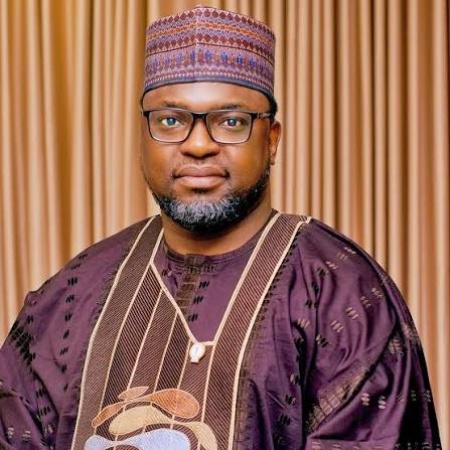
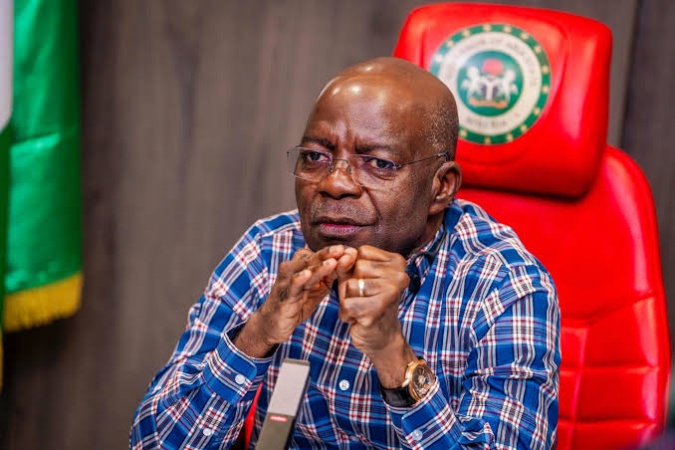
Former APC National Vice Chairman, Salihu Lukman
In an interview on Trust TV’s 30 Minutes with Mannir Dan-Ali, a former National Vice Chairman of the All Progressives Congress and member of a group of 100 like-minded politicians, Salihu Lukman, speaks on moves by G100 to rally the opposition parties to produce one presidential candidate to contest against President Bola Ahmed Tinubu in 2027.
What made 100 of you to come together and form a new bloc?
First, I would like to correct the impression that I have resigned from the ADC, I have not exited. I only suspended my membership, but I’m still there. I still participate in the party and we are engaging leaders to ensure we get it right. Our objective is that we want Nigeria to get better. We want a situation whereby our democracy is able to present Nigerians with alternatives. We want a situation where elections can have a meaning beyond the ritual of confirming this is the leader for another four years. if you remember, one of the reasons why I left the APC is that the party was derailing from its own mission. While there, I was the national vice chairman and the organs were not working and we ended up with a government whereby it’s all about the president and almost everybody became a choir master.
But you were singing on his (Tinubu’s) mandate.
I have never sung it. The concern was that the APC began to attack the opposition parties to the point where you could tell, by around 2024, none of the parties outside the APC was viable. Whether you look at the PDP, Labour Party or NNPP, all of them were faced with different kinds of challenges, which you could tell they may end up going to election without a candidate because of the various challenges.
Is it of their making or externally inspired?
It is a combination of both. Some are of their own making while others are externally induced by the government in power.
What is the evidence because they keep…?
(Cuts in) I don’t want us to waste time over that because the evidence is even in the media. You have high-ranking officials in government advising people to remain and deal with the leadership of the party and keep them divided.
Were you talking about the video of the Chief of Staff to the President who was encouraging a particular member of the House of Representatives to remain there?
Yes. And you could tell the role of the Minister of the FCT in the case of the PDP and what have you. So, all those things are there. I don’t want us to waste time about that because those are things we have moved past.
Let’s concentrate on your (G100) objectives.
So, basically, when we look at the direction the country is going and we had an opportunity to form a coalition, we had the coalition, negotiated the ADC, and then the high point of it was when we went to Ibadan in April and came up with a declaration that the opposition will work together to produce a common candidate. But about 48 hours after Ibadan, Peter Obi and Kwankwaso left the ADC. When you ask yourself the question, what has really happened? And since they left, almost everybody was going their parallel way.
So, the Ibadan declaration just disappeared?
Yes, it almost disappeared completely and we saw that we were going back to the same scenario in 2023, whereby you have Atiku Abubakar and Peter Obi, contesting against the current President, Bola Ahmed Tinubu and getting more votes between the two of them than the president. When we attempted the coalition, we thought everybody had understood that the best way to defeat the APC was to come together and we were very clear that it was not just about defeating APC, it was also to work to ensure that there is a clear programme that will be implemented after winning the election. Which was why, if you remember, immediately after we got the ADC, the leadership set up a 50-member committee to work on the manifesto, of which I happened to be the secretary. We did a very good work on that and instead of sitting to now consolidate that and get everybody committed to it, we have the situation we have.
So, we consulted widely among ourselves and felt if the country goes the way it is going, we will end up with APC again.
What is wrong with ending up with the APC?
That is where I’m coming to. As a person, I campaigned for Asiwaju (Tinubu) and the APC in 2023 and I did so based on the conviction that these are committed democrats, committed progressive people. But what turned out to be the case is that they are more or less monarchies. Some monarchies are even better because the APC has no consultation and no structure of democracy is functioning.
But there is a party.
When did you last hear the party meeting? Ask yourself. I know the organs. Maybe the NEC may have met last about six months ago. Meanwhile, in the constitution of the party, the NEC is supposed to be meeting every three months and other organs are not even functioning. But let’s not go that way. If the APC will wake up and become functional and start doing the right thing, fine. But for them to wake up, they need to be challenged and there has to be competition. Right now, they have gone into some kind of overdrive mode. They are so confident that this election is given because the opposition has failed to get its acts together to pose a challenge against the ruling APC.
How do you think what you are doing now will change that?
That is where I am coming to. When we issued this statement, we didn’t just issue a statement. We made up our mind that we will quietly go and meet the leaders, sit with them and discuss. I can tell you that we have met and we have reported in the press statement we have issued. We have met leaders across the six political parties and it is not just one leader.
Which political parties and which of the leaders have you met?
I said six. In the press statement, we indicated we met largely national chairmen, presidential candidates, and their running mates.
Have you met the ones of ADC, NDP and others?
We have. And when I said six, we reported it. All of them are there. We have reached out to all of them. We have highlighted the danger and almost all of them are in agreement. Whether we will get them to come together and work is the stage we are in now and so far, we have extracted commitment from the parties. We are working together with them to work out a programme. There is a technical team that is working on that and in the next few days, we’ll come out with clarity in terms of what working together will entail and how the kind of structures that will be put in place because it was quite gratifying that some of the leaders themselves highlighted some of the weaknesses that came out of Ibadan.
We are doing it together with the parties and all the 100 people that signed are members of the different parties. So, after we finished that round, by the last weekend, we reached out to them and said this is what we want to do. Nominate one person who will sit down.
Rather than submitting to the challenge, we are confident that with what we have seen, the clarity among leaders is that there is a present danger. On the basis of that present danger, I think we can get everybody back on board.
Now, one of the things we told everybody is that the goal should be that what we want is to have a common presidential candidate. But it cannot be the first thing on the table because once you put that first on the table, you are likely going to create disincentive because everybody will not be thinking about himself.
Is that the reason why you are considering a summit for next week?
No. The reason for the summit is to put together a framework that will outline how they want to relate with each other, build their confidence to begin to deal with the issues on an incremental basis. By the time of the election, we will have enough confidence and enough trust among ourselves.
This is because we have argued, and it is not a hidden fact, the quality of relationship that I have with you will determine how much sacrifice you can make for me and how much trust you can invest in me. And it is a function of how they are able to work together. Right now, we are very clear that because candidates have emerged, we cannot take things for granted. So, we have to manage it in such a way that we recognise that these are candidates and the leaders have accepted that. And since these are candidates, we have to get them to work together. Even if for instance, they work together and reach an understanding that this is the presidential candidate. What will happen to the gubernatorial candidates of the other parties?
How confident are you that they won’t repeat the mistake of the past, which is each one thinking, ‘hang on, I have enough numbers to succeed. I don’t need your arrangement?’
Well, you see, we can only continue to remind them that it is better you remain alert to the danger and know that you can’t do the same thing and expect different results. If they have done this in 2023 and end up the way they are, they should not expect they will do it again in 2027 and get different results.
it is a function, and sincerely speaking, we are not coming with that air of arrogance that we know better than them. All we keep telling them is that, look, we are here to support you and in an advisory capacity.
I imagine they will be thinking, ‘hang on, these guys are not in the trenches the way we are and are not the ones dealing with the political structures with all the problems.’
Unlike what you think, many of them recognise many of us as being part of them. In fact, the major issue, I can tell you, is that there are some of them who perceive some of us as already taking sides. And what we keep telling ourselves, for instance, I have watched about some, a few days ago, of our people featuring in TV programmes in other stations and canvassing support for their preferred candidate. We have to caution them to say, look, if we want to succeed, as long as we are in this advocacy to get it right, whatever is our own inner feeling in terms of our preferences, we have to suppress it and manage this a little bit.
What we tell Nigeria, we must also tell ourselves. What we tell our leaders, we must tell ourselves. If we are telling our leaders Nigeria first, we must be able to also tell ourselves Nigeria first because whether we like it or not, at the end of the day, there will be only one president. And in every election, only one candidate will emerge the winner.
Given what we have, the major preoccupation should be, let us put ourselves in the vantage position of success.
The leaders of the different parties are appreciative of what you are doing. Do you sense that when it comes to the crunch time, many or all of them are willing to take the bullet and sacrifice their ambition in order that the greater good of the opposition parties and possibly of Nigerian democracy is achieved?
Let me tell you what we tell ourselves: if the thing (the coalition) is going to succeed, it is a function of our own capacity to deploy our skills and convince leaders that the different direction we are trying to push them is the way to go. It is also a function of whether truly the skills and knowledge we have is adequate enough to drive this process. I think, with what I have seen among the 100 people who have signed, there are very patriotic Nigerians and really what they are looking for is to see Nigeria come out of the doldrums we are in now. This is to the extent that many people are looking at what can be done to really convince leaders. To be honest, I have seen a team of people who are very humble; they are not really arrogant about themselves. Of course, there are some of them who are highly committed to the people who they support.
We are engaging ourselves and for instance, we had a debriefing meeting over the weekend and we spent quite some time talking to ourselves in terms of where we are sending the wrong signal during the meetings because sometimes the action of leaders is also based on our inability to communicate in a way that will elicit their confidence to trust us. So, we had those frank discussions during our debriefing meeting. To that extent, I can tell you that so long as we are engaging the process with the kind of openness that we are human beings, we can make mistakes and we have limited capacity. And when things go wrong, we can quickly review ourselves and come back.
As you know, many people tend to make up their minds about elections months ahead. We are just five months or so to the elections. Are you conscious that you have very limited time within which to get your acts together and communicate it to Nigerians so that they can see whether the election is even worth their trouble?
I can tell you we are very conscious of the timing. Which is why we are really challenging ourselves to carry out activities in a way that ordinarily we would say, okay, before we call people together, it should take about a month. But we have surveyed the environment across the country, and we have seen that if elections take place today, certainly, although people across every part of the country are unhappy with the APC and President Asiwaju, they don’t see an alternative. We have seen that because they don’t see an alternative, there is a high population of people who are not yet decided. One of the reasons why we have to step forward and begin to push our leaders is that we don’t want our leaders to be so overconfident and think they can do the whole game and still win the confidence of citizens. If you do the survey, you will see that Nigerians are almost united that the opposition should come together.
So, will it be like a coronation for the ruling party if things continue the way they are?
Exactly. Which is why we are emphasising, if the opposition is really committed to Nigeria, first thing is to do the needful and give Nigerians the confidence that there is an alternative.
Once they don’t come together, I don’t think Nigerians will bother themselves. And this is the message we have passed and we are still passing to the leaders of the opposition.
Are they buying your argument?
I can report based on those who we have met. I think they are buying it. Which is why I said after they have expressed agreement in terms of verbal discussion, the next is to begin to test it with activities. I am happy all the parties have already nominated people into the technical team and we are working with them. By next week, we hope to have the summit. Now we are hoping and we are using this week to go back to them so that they have confidence the summit is not going to come and put them on the spot. It’s basically their own to begin to talk to Nigerians that this is the kind of alternative they are working, because that is what will give Nigerians confidence.
So, like we said in our statement, we are not doing anything outside, we are just giving them the critical support that they need to present that alternative to Nigerians and at the end of the day, we are very confident that if we continue working with them in the way we started, they themselves will see the need to really work more closely with each other. They will commit to make the needed sacrifice to give Nigerians what will look like the kind of alternative that will give confidence to voters and vote for the opposition rather than not come out to vote, because voter apathy is the first incentive for electoral malpractice.
Once few people come out to vote, you just put fertiliser in terms of how the election will be manipulated. Part of the reason why 2015 was almost impossible to rig was the high turnout.
So, how will you, in this case, be able to mobilise people to come out?
When they come together, the programme they are going to put has to factor all of these things.
How different is the opposition going to be in terms of running Nigeria, we haven’t seen that?
No, we are not leaving that fallow. We are working. Part of the thing we have put to them, and I can say very broadly without going into specifics, some of the broad things include, for instance, apart from the structures that they will put in place to engage themselves, we need to put up working groups who will come up with negotiable issues. And these negotiable issues have to include the kind of policies that if the opposition wins, they will be pursued and I don’t think anybody is in disagreement. (Daily Trust)