ADAD
ADAD
Updating your news feed...
NEWS EXPRESS is Nigeria’s leading online newspaper. Published by Africa’s international award-winning journalist, Mr. Isaac Umunna, NEWS EXPRESS is Nigeria’s first truly professional online daily newspaper. It is published from Lagos, Nigeria’s economic and media hub, and has a provision for occasional special print editions. Thanks to our vast network of sources and dedicated team of professional journalists and contributors spread across Nigeria and overseas, NEWS EXPRESS has become synonymous with newsbreaks and exclusive stories from around the world.

















Loading banners
Loading banners...

AIRCRAFTS TO ILLUSTRATE
Nigerian airlines have accumulated more than N60bn in loans from local banks to finance the purchase of aviation fuel amid persistently high Jet A1 (fuel) costs, the Airline Operators of Nigeria has said.
A member of the Board of Trustees of the AON, Roland Iyayi, disclosed this to Sunday PUNCH, saying the airlines were being forced to borrow heavily to sustain operations as the cost of aviation fuel continued to put pressure on their revenues.
“There are some airlines that are owing over N60bn from local banks just to be able to procure fuel. That’s how bad it is,” Iyayi stated.
He said the worsening financial burden was a consequence of the government’s failure to implement measures recommended by stakeholders to address the high cost of aviation fuel.
According to him, the AON had threatened to shut down operations in February following the escalation in fuel prices, prompting the Minister of Aviation and Aerospace Development, Festus Keyamo, to intervene.
“The AON had threatened to shut down because of the escalated fuel costs in February. Then Keyamo was in Riyadh. He called to say that the AON should allow him to get back and look at all the issues so he could address them.
“He said everything would be resolved. Yes, meetings were held. The NMDPRA (Nigerian Midstream and Downstream Petroleum Regulatory Authority), the fuel marke’ers, AON, we all met in his office.”
Iyayi, however, said the meeting did not result in concrete measures to reduce the burden on operators, adding that a committee comprising the NMDPRA, oil marketers and the AON was subsequently constituted.
“Of course, the meeting was really not any meeting where anything could be resolved. There was a committee that was set up to see what immediate steps could be taken to address the issue of fuel costs. That committee had the NMDPRA, the oil marketers and AON.
“I represented AON. However, what we came up with were recommendations to the government to indicate that certain things should be done. But to date, nothing has been done.”
He said Nigeria’s aviation fuel prices remained significantly higher than those in other parts of the world.
“There hasn’t been any intervention by the government to address the issue of why it is that fuel price in Nigeria is 270 per cent of the original value. Whereas other parts of the world are recording 60-80 per cent. So Nigeria is a peculiar case. That’s what the airlines are saying.”
The AON official also said the fuel crisis had affected the airlines’ ability to meet their statutory obligations, including remitting the five per cent ticket sales charge to the Nigeria Civil Aviation Authority.
“Now, the ripple effect of the fuel price is that the airlines are not able to remit the five per cent ticket sales charge to the NCAA simply because all the earnings from ticket sales are put towards buying fuel for the operation. The alternative will mean that the airlines will shut down completely, there won’t be any services, and the entire economy will ground to a halt.
“That’s what the alternative will be,” Iyayi said. “Airlines were also unable to increase ticket prices sufficiently to offset the surge in fuel costs, forcing operators to continue flying despite operating losses.
“The airlines are there, having to fly even though the operations are not profitable. They’re more indebted now than they ever were. And yet the same government through the NCAA is Insisting that airlines must pay up the five per cent ticket sales charge.
“Airlines are not able to mark up the ticket fares in such a way as to make up for the escalated fuel price. So invariably, to maintain some level of operation, airlines have tried to sustain the old prices, ticket fares, but are not able to operate profitably. So that’s a challenge airlines are having now.”
He said the AON had also sought government intervention on the historical debts owed by airlines, but claimed that the request had been misunderstood.
“The AON had requested as part of our package to the government to ask for a 100 per cent write-off of the historical debts. But what has happened now is that that has been interpreted to mean 30 per cent of the current debt.”
Iyayi explained that much of the debts attributed to airlines by aviation agencies were owed by carriers that were no longer operational. “The reason we said historical was that a lot of all the airlines on the books of the NCAA and all the other agencies are moribund airlines.
“And anytime you have the NCAA or any of the agencies talking about debts by airlines, they cite these numbers. And those numbers are numbers owed by airlines that are no longer in operation. So, we sought to have that cleaned up in their books so that there will be a fresh start, that any debts now will be a debt owed by an airline that is in operation.”
He said the Industry remained under severe financial pressure despite the government’s earlier intervention.
“That was the rationale behind the request, but it was misinterpreted. And even at that, it is not managing the exposure of the airlines. So invariably where we are at this point is that nothing much has been done since the fuel hike in February.”
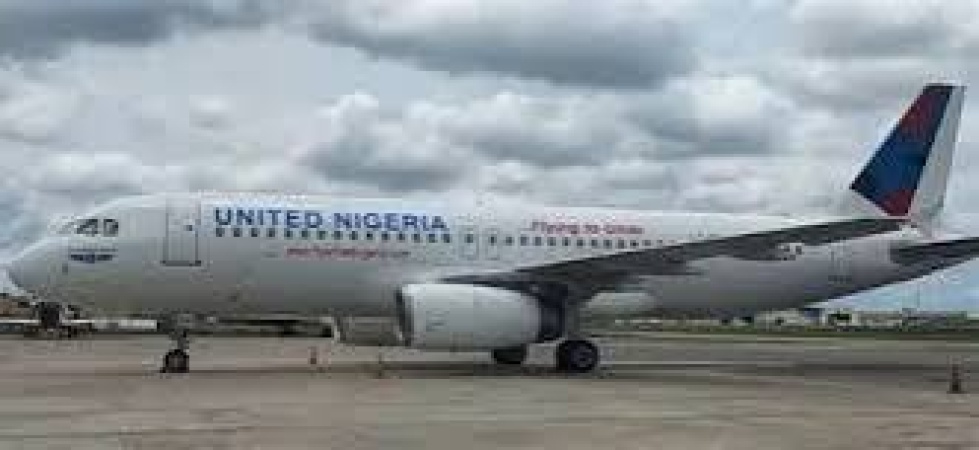
Meanwhile, the Public Relations Officer of United Nigeria Airlines, Chibuike Uloka, told our correspondent that Jet A1 remained a major cost burden for operators, accounting for about half of their revenue.
“JetA1 fuel has not yet gone back to its initial price. We are still struggling. Just a little reduction of about N1 or N2 does not make any difference. We are still hovering around the highest price the industry has seen in many years, and fuel accounts for about 50 per cent of revenue, if not more, today.
“If 50 per cent accounts for your fuel, you’re probably running at a loss. So you’re using the other 50 per cent for service, servicing your equipment, paying salaries and taxes.”
Uloka added that multiple taxes further increased the financial burden on airlines. “We are aware that the AON is still struggling with the government about taxes, having multiple taxes here and there. So it will take about 45-50 per cent of your revenue. And you have the other things left for salaries, servicing of equipment, and all other costs. So it’s still a crisis for the operators.”
He said airlines depended on financing facilities to sustain their operations, stressing that the sector required substantial investment because of its high operating costs.
“But this is a business that is running, and we have partners. It’s a million-dollar industry. This is not an airline that is run by the richest man in the country or in the world. So obviously, there should be a partnership in being able to finance the project.”
He added that the combination of high Jet A1 prices and taxes continued to drive up airlines’ operating costs. “The important thing there is that the industry is operating at very, very high, you know, operational costs. And this is as a result of JetA1 fuel and other taxes.”
The development came amid a sharp increase in the price of Jet A1 following the escalation of the Middle East crisis, which pushed Nigerian airlines to threaten a suspension of flight operations.
The Airline Operators of Nigeria had warned that the surge in aviation fuel costs had made operations unsustainable, prompting the Minister of Aviation and Aerospace Development, Festus Keyamo, to meet with airline operators and other stakeholders in Abuja in April 2026.
The meeting was convened after the AON agreed to suspend its planned shutdown following an appeal by Keyamo for dialogue. The meeting, which included the AON, oil marketers and officials from the petroleum sector, was aimed at finding measures to address the surge in Jet A1 prices and prevent a disruption of domestic air services.
The Federal Government subsequently announced a 30 per cent relief on airlines’ debts owed to aviation agencies and ordered negotiations among fuel marketers, airlines and regulators on a fair Jet A1 price. However, the intervention has not eliminated the financial pressure on operators.
The global fuel-price shock linked to the Iran conflict had severely affected Nigerian operators, with fuel accounting for more than a third of their operating costs. In April 2026, the Airline Operators of Nigeria warned that domestic carriers could halt flights after the price of Jet A1 rose from N900 per litre on February 28 to N3,300. (Sunday PUNCH)