Updating your news feed...
NEWS EXPRESS is Nigeria’s leading online newspaper. Published by Africa’s international award-winning journalist, Mr. Isaac Umunna, NEWS EXPRESS is Nigeria’s first truly professional online daily newspaper. It is published from Lagos, Nigeria’s economic and media hub, and has a provision for occasional special print editions. Thanks to our vast network of sources and dedicated team of professional journalists and contributors spread across Nigeria and overseas, NEWS EXPRESS has become synonymous with newsbreaks and exclusive stories from around the world.








.webp)







Loading banners
Loading banners...


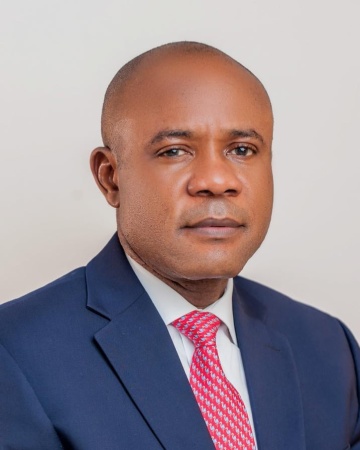
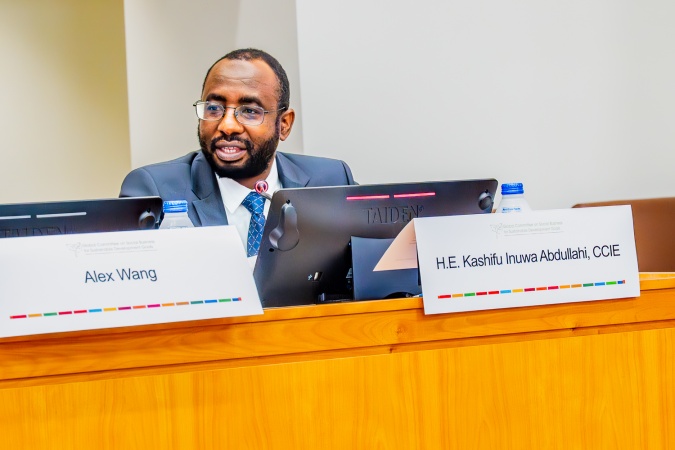
NAMA MDCEO, Farouk Ahmed Umar
The Nigerian Airspace Management Agency (NAMA) has decried the continued retention of its N11,000 navigational charge per flight since 2008, describing the rate as unsustainable amid rising operational costs and increasing demands for modern air navigation services.
Speaking at a public hearing, organised by the National Assembly, on the proposed review of the statutory sharing formula for the five percent Ticket, Charter and Cargo Sales Charge (TSC), the Managing Director/Chief Executive of NAMA, Farouk Ahmed Umar, said the agency’s current revenue structure no longer reflects the enormous responsibilities of Nigeria’s sole Air Navigation Service Provider.
Umar urged lawmakers to approve an increase in NAMA’s share of the TSC from the current 22 percent to 56 percent, warning that inadequate funding poses a major threat to the safety, efficiency and sustainability of air navigation infrastructure.
He explained that while NAMA currently receives only N11 out of every N50 generated from the statutory five percent charge on ticket, charter and cargo sales, the proposed review would increase its allocation to N28 from the same N50 without imposing any additional financial burden on air travellers.
According to him, NAMA operates a highly technology-driven and safety-critical system that requires continuous investment in communication facilities, navigation aids, surveillance infrastructure, engineering support, air traffic control systems, power supply and personnel training to guarantee safe aircraft operations.
The NAMA chief noted that the agency’s operating costs had risen sharply over the years, with its expenditure exceeding N43 billion in 2023, covering personnel, capital projects and operational overheads.
He lamented that despite significant increases in aviation fuel prices, electricity tariffs, foreign exchange rates, imported equipment costs, software licences and specialist training expenses, the navigational charge paid by airlines has remained unchanged at N11,000 per flight for more than 18 years.
“At the same time, a navigation charge as low as N11,000 per flight has remained unchanged since June 2008. Consider what has happened to the cost of fuel, electricity, foreign exchange, imported components, software licences and specialist training since 2008. The service has had to absorb today’s costs with yesterday’s tariff base,” he said.
The dedication of our workforce has helped bridge that gap, but dedication is not a substitute for a sustainable funding system”, Umar said.
Umar also raised concerns over the ageing Total Radar Coverage of Nigeria (TRACON) system, saying the equipment has served the country effectively for many years but now requires deliberate renewal as components become obsolete and spare parts increasingly difficult to obtain.
He stressed that maintaining safe airspace operations requires timely replacement of obsolete equipment, installation of redundancy systems and continuous training of technical personnel before ageing infrastructure becomes a safety risk.
The NAMA boss further sought legislative backing for the agency to receive direct payment for technical obstacle evaluation services, including WGS-84 survey validation, obstacle assessment, procedure-impact analysis and field operations, while leaving the regulatory responsibility for Aviation Height Clearance certification with the Nigerian Civil Aviation Authority (NCAA).
He proposed a 90:10 revenue-sharing formula in favour of NAMA for these technical services, arguing that the agency currently undertakes critical assessments of masts, towers, cranes and high-rise buildings that could affect flight procedures and navigational safety without receiving dedicated compensation.
According to Umar, global air navigation is increasingly dependent on satellite surveillance, performance-based navigation, digital aeronautical information systems and stronger cybersecurity, all of which require sustained investment to keep Nigeria’s airspace aligned with international standards.
He said improved funding for NAMA would enhance communication and surveillance capabilities, reduce flight delays, shorten flight routes and deliver wider economic benefits through safer and more efficient air transport operations.
Umar also advocated greater transparency in revenue management through automated collection systems, quarterly publication of receipts and projects, independent annual audits, transparent procurement processes and measurable performance indicators.
He called on the National Assembly to harmonise conflicting provisions in existing aviation laws, noting that while the Civil Aviation Act allocates 22 per cent of the statutory pool to NAMA, the NAMA Act provides for 23 per cent, creating legal inconsistencies that should be addressed.
He concluded by urging lawmakers to approve the proposed 56 per cent allocation from the existing TSC pool, formally recognise obstacle assessment and WGS-84 aeronautical surveys as chargeable technical services, and establish transparent remittance mechanisms.
According to Umar, the proposed amendments are not simply about increasing revenue but about providing the financial capacity required to sustain safe, efficient and globally competitive air navigation services in Nigeria. (Nigerian Tribune)