
Updating your news feed...
NEWS EXPRESS is Nigeria’s leading online newspaper. Published by Africa’s international award-winning journalist, Mr. Isaac Umunna, NEWS EXPRESS is Nigeria’s first truly professional online daily newspaper. It is published from Lagos, Nigeria’s economic and media hub, and has a provision for occasional special print editions. Thanks to our vast network of sources and dedicated team of professional journalists and contributors spread across Nigeria and overseas, NEWS EXPRESS has become synonymous with newsbreaks and exclusive stories from around the world.






.webp)





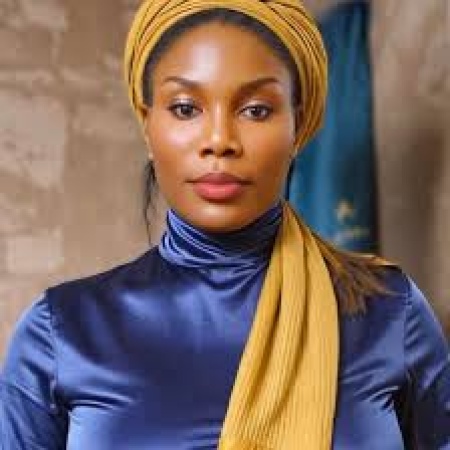
Aisha Garba
Clement Idoko writes that millions of Nigerian children with disabilities continue to face exclusion from education, despite existing legal protections, and education stakeholders say the new national standards and implementation guidelines to promote inclusive education recently unveiled by the Universal Basic Education Commission (UBEC) must be effectively implemented across all states.
For millions of Nigerian children, the journey to school begins with a hurdle they never created. It is not poverty alone. It is not distance. It is the reality of living with a disability in a society where classrooms are often inaccessible, teachers are inadequately prepared and stigma continues to silence dreams before they can take root.
The statistics are sobering. According to the United Nations Educational, Scientific and Cultural Organisation (UNESCO), of the estimated seven million children living with disabilities in Nigeria, about 6.69 million remain out of school. In practical terms, nearly 95.5 percent of children with disabilities are excluded from formal education, making them one of the most marginalised groups in the country’s education system.
Experts say this silent crisis contributes significantly to Nigeria’s unenviable position as home to one of the world’s largest populations of out-of-school children. Behind every statistic is a child denied the opportunity to learn, develop skills, attain independence, and contribute meaningfully to society.
Recognising the urgency of the situation, the Universal Basic Education Commission (UBEC) has unveiled what education stakeholders describe as one of Nigeria’s most comprehensive frameworks for inclusive basic education.
The commission hopes to move the country beyond policy declarations to practical implementation through newly developed national special and inclusive basic education minimum standards, implementation guidelines, functional difficulty early identification tool, and capacity building manual.
The initiative was launched during a two-day National Stakeholder Engagement and Capacity Building Workshop at the UBEC Digital Resource Centre in Abuja.
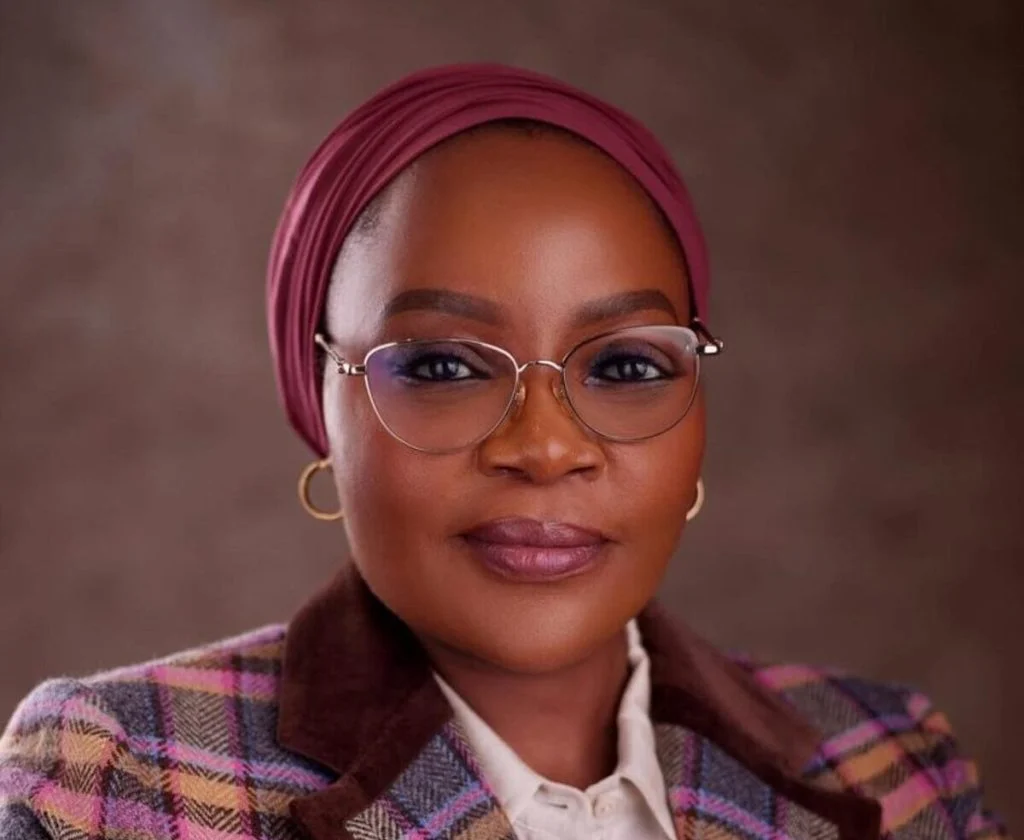
Speaking through the Deputy Executive Secretary (Technical), Mr Razak Olajuwon, UBEC Executive Secretary, Dr Aisha Garba, described the initiative as a strategic intervention aimed at strengthening state capacity and ensuring that no Nigerian child is denied quality education because of disability or developmental challenges. She acknowledged that although school enrolment has improved over the years, children with disabilities continue to face enormous barriers to enrolment, participation, progression, and learning outcomes.
Drawing on reports by UNESCO and the United Nations Children’s Fund (UNICEF), Garba identified inadequate early identification of disabilities, inaccessible learning environments, and limited teacher preparedness as some of the biggest obstacles to inclusive education. “Standards and tools alone cannot transform educational outcomes. Their effectiveness depends on strong institutional capacity, coordinated implementation, and continuous monitoring,” she said. According to her, the National Special and Inclusive Basic Education Minimum Standards establish measurable benchmarks covering governance, infrastructure, accessibility, curriculum adaptation, teacher competencies, assistive technology, learner assessment, safeguarding, and quality assurance.
The accompanying implementation guidelines clearly define the responsibilities of UBEC, State Universal Basic Education Boards (SUBEBs), Local Government Education Authorities, school administrators, teachers, and communities, while providing practical monitoring mechanisms.
Garba described the Functional Difficulty Early Identification Tool as perhaps the most innovative aspect of the initiative because it enables schools to identify developmental, sensory, cognitive, communication, and behavioural challenges early enough for timely intervention before learning difficulties become deeply entrenched.
She emphasised that early identification is not merely a medical exercise but an educational necessity, noting that national data indicate that about 40 percent of Nigerian children under five are stunted, while approximately 52 percent are not developmentally ready for school.
Research, she said, consistently shows that children who receive early intervention demonstrate improved school readiness, stronger literacy skills, better social participation, and significantly improved long-term educational outcomes. Early intervention also reduces the long-term cost of remedial education.
To achieve these goals, UBEC wants every SUBEB to institutionalise functional difficulty screening in schools and Early Childhood Care, Development and Education (ECCDE) centres, establish referral pathways linking education, health, and social welfare services, and strengthen disability-disaggregated data collection for evidence-based planning.
However, stakeholders argue that policy documents alone will not transform lives. While inaccessible school buildings remain a major challenge, experts note that the barriers confronting children with disabilities extend far beyond physical infrastructure.
Many schools still lack ramps, Braille learning materials, assistive technologies, hearing devices, and adapted instructional resources. Equally troubling is the shortage of trained special education teachers capable of supporting diverse learning needs.
Beyond infrastructure and manpower lies perhaps the greatest challenge: societal attitudes. Across many communities, disability continues to attract stigma and discrimination. Some children are hidden from public view, while others are denied education because families fear social judgment or mistakenly believe they cannot learn.
For the chairman of the Abia State Commission for the Welfare of Disabled Persons, Dr David Anyaele, the new framework is long overdue. Anyaele, who also serves as Special Assistant to the Governor of Abia State on Persons with Disabilities, said children with disabilities have for too long been denied the educational opportunities they deserve.
“Getting a comprehensive framework for improving access to education and promoting the inclusion of persons with disabilities through an inclusive education model is long overdue,” he said.
“If we truly want sustainable and holistic development for every child, including children with disabilities, government must deliberately operationalise inclusive education within the school system. That is the only way we can genuinely say that no one is being left behind,” he said.
He explained that an effective inclusive education framework should enable schools to identify learners with different learning difficulties and provide the tools, support systems, and interventions needed to help them succeed academically. Such an approach, he said, would not only improve learning outcomes but also reduce the burden on families and equip children with disabilities to contribute meaningfully to national development.
While commending UBEC for the initiative, Anyaele stressed that implementation must not stop at the federal level.
“It should not remain an Abuja initiative,” he said. “The policies must be translated to the states because that is where the children live. Both public and private schools should implement inclusive education so that government objectives for children with disabilities and those with special needs are achieved nationwide.”
Education advocate and co-founder of STEM METS, Jadesola Adedeji, illustrated the human cost of exclusion through a deeply personal family story. She recalled discovering only as an adult that she had an uncle who once studied at Lincoln University in the United States alongside prominent African leaders, including Nnamdi Azikiwe and Kwame Nkrumah, before developing a psychological disability later in life. Rather than receiving support, he reportedly spent decades hidden away in an institution and gradually became a forgotten member of the family. According to her, the story reflects a broader national reality. “These staggering numbers are mostly invisible,” she observed, noting that many persons with disabilities remain hidden within families and communities, denied opportunities to realise their full potential.
Nigeria already has legal and policy frameworks that protect the rights of persons with disabilities. The Discrimination Against Persons with Disabilities (Prohibition) Act, 2018, guarantees the right to education without discrimination and provides for free education up to the secondary level. The country also has a National Policy on Inclusive Education and a National Policy on Special Needs Education.
Yet, implementation has remained weak. Special schools such as the Pacelli School for the Blind and Partially Sighted and the Wesley School for the Hearing Impaired exist, but they are too few, concentrated mainly in urban centres, and unable to meet the needs of millions of children across the country.
Adedeji noted, for instance, that in Lagos alone, where more than one million children are of primary school age, only a handful of public primary schools reportedly provide special education services. Consequently, many families cannot afford private special education, while others simply keep their children at home.
However, Acting Director of UBEC’s Department of Special Programmes and Early Childhood, Dr Chijioke Onwuzurike, explained that the workshop was designed to bridge the long-standing gap between policy development and service delivery.
She stressed that inclusive education cannot succeed without collaboration across sectors. Within every SUBEB, she said, departments responsible for planning, infrastructure, teacher development, procurement, monitoring, and evaluation must work together. Equally important is coordination among ministries responsible for education, health, women affairs, social welfare, and local government.
Onwuzurike expressed concern that Nigeria currently operates more than 45 Early Childhood Development service platforms across different sectors with limited coordination, leading to duplication, fragmented services, and weak referral systems.
As a result, many children with developmental disabilities are not identified until between the ages of five and 10, well after the critical period for early brain development.
She also identified inadequate financing, geographical disparities, and insufficient teacher training as major barriers to effective implementation. Development partners have pledged continued support for Nigeria’s inclusive education agenda.
Also speaking, the UNICEF Education Officer, Blessing Afuwai, reaffirmed the agency’s commitment to ensuring that every Nigerian child learns in an environment that recognises and accommodates diverse learning needs.
She described inclusive education and early identification as central to achieving Sustainable Development Goal 4 on quality education. While acknowledging funding constraints, Afuwai urged participants to transfer the knowledge and skills acquired during the workshop to teachers and education officials in their respective states.
“Our expectation is that the knowledge and skills gained here will not end in this workshop but will be transferred to your colleagues and the teachers in your respective states and institutions,” she said.
The challenge now is ensuring that the promise contained in these new standards does not remain on paper but reaches every classroom, every community, and, most importantly, every Nigerian child whose future depends on access to quality, inclusive education. (Nigerian Tribune)