Updating your news feed...
NEWS EXPRESS is Nigeria’s leading online newspaper. Published by Africa’s international award-winning journalist, Mr. Isaac Umunna, NEWS EXPRESS is Nigeria’s first truly professional online daily newspaper. It is published from Lagos, Nigeria’s economic and media hub, and has a provision for occasional special print editions. Thanks to our vast network of sources and dedicated team of professional journalists and contributors spread across Nigeria and overseas, NEWS EXPRESS has become synonymous with newsbreaks and exclusive stories from around the world.











.webp)












Loading banners
Loading banners...

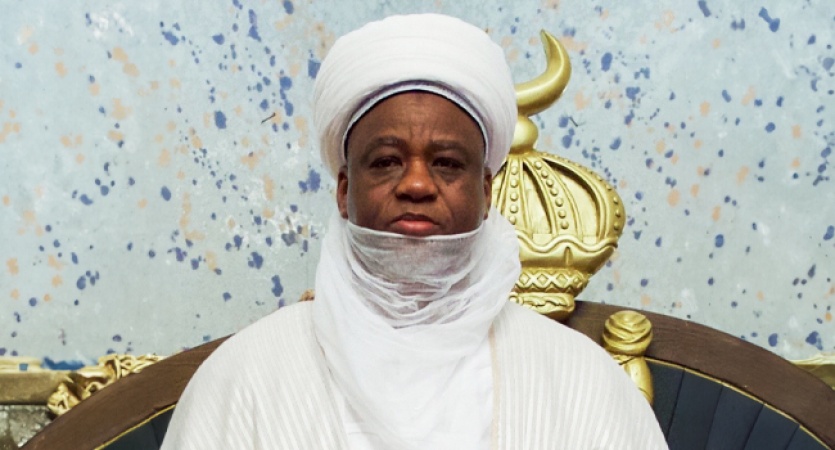
Sultan of Sokoto, Saad Abubakar
By MARYAM AHMADU-SUKA
A call for stronger community policing and closer collaboration among security agencies, traditional institutions and local communities dominated discussions at a peace summit in Kaduna.
Stakeholders at the security summit organised by the Arewa Cohesion for Peace, Unity and Development Initiative (ACI) on Wednesday in Kaduna sought lasting solutions to insecurity in Northern Nigeria.
The Sultan of Sokoto, Alhaji Muhammad Sa’ad Abubakar, represented by the Chiroma of Kano, Aminu Lamido Sanusi, said community policing remained one of the most effective approaches to tackling crime because it relied on the trust and cooperation of local residents.
Sanusi said security agencies could not succeed in combating criminality without the support of communities that possessed valuable local knowledge and intelligence.
He said his experience had shown that working closely with imams, traditional rulers, vigilantes and other community leaders had strengthened efforts to maintain law and order.
“The people know their environment better than anyone else. They know the terrain, the residents and unusual movements, making them an indispensable source of intelligence,” he said.
According to him, collaboration among security agencies, religious leaders, traditional institutions and community members is critical to preventing crime and restoring peace.
He described the summit as a timely platform for exchanging ideas and strengthening partnerships capable of addressing the region’s growing security challenges.
Also presenting a paper titled, “Building Lasting Peace in Northern Nigeria: Addressing Banditry, Insurgency and Communal Conflicts,” Muhammad Tasiu Dansabo, on behalf of Prof. Murtala Ahmed Rufa’i of the Office of the National Security Adviser (ONSA), identified governance failures, poverty, arms proliferation and weak inter-agency coordination as major drivers of insecurity.
He explained that although banditry, insurgency and communal conflicts were distinct security threats, they had become increasingly interconnected through shared criminal networks, illicit economies and overlapping operational territories.
According to him, banditry remains prevalent in the North-West and parts of the North-Central, fuelled by kidnapping, cattle rustling and illegal control of local economies, while insurgency continues to pose a major threat in the North-East with signs of expansion into other regions.
He added that communal conflicts involving farmers and herders, land disputes and ethno-religious tensions remained widespread across states including Kaduna, Plateau, Benue, Nasarawa and Taraba.
Dansabo said criminal groups had diversified their sources of funding through kidnapping, illegal mining, informal taxation and armed robbery, making the security challenge more complex.
He warned that military operations alone could not guarantee sustainable peace unless they were complemented by effective policing, governance, justice delivery and reconstruction.
According to him, security gains are often lost because cleared communities are not adequately secured and provided with essential government services.
The security expert also identified inter-agency rivalry, duplication of responsibilities and poor information sharing as factors that had undermined previous security interventions.
He stressed the need for intelligence-led, accountable and civilian-centred security operations integrated with long-term stabilisation programmes.
Dansabo proposed a six-pillar framework for lasting peace, comprising civilian protection, governance and justice, economic recovery, dialogue and reconciliation, strengthened traditional and religious institutions, and greater participation of women and youths in peacebuilding.
He said traditional rulers possessed legitimacy, historical knowledge and local networks that positioned them to provide early warning, mediate conflicts and promote reconciliation.
He also urged governments to move beyond symbolic inclusion by giving women and young people meaningful decision-making roles in peace committees and early warning mechanisms.
The presenter further advocated a Northern Nigeria Peace Compact built on equal protection for all citizens, zero tolerance for political protection of criminals, genuine community participation, conflict-sensitive development and enhanced regional cooperation.
He recommended that the Federal Government coordinate a comprehensive Northern Nigeria Peace and Stabilisation Strategy integrating counter-terrorism, anti-banditry operations, communal conflict prevention, justice reforms and humanitarian recovery.
He also called on state governments to institutionalise community-based early warning and response systems involving traditional rulers, women, youths, farmers and pastoralists.
Dansabo further urged the criminal justice system to intensify investigations and prosecution of financiers, informants and political sponsors of criminal activities.
He said sustainable peace should be measured not merely by the absence of violence but by the presence of effective institutions, social justice, resilient communities, economic opportunities and credible mechanisms for resolving grievances peacefully. (NAN)