
Updating your news feed...
NEWS EXPRESS is Nigeria’s leading online newspaper. Published by Africa’s international award-winning journalist, Mr. Isaac Umunna, NEWS EXPRESS is Nigeria’s first truly professional online daily newspaper. It is published from Lagos, Nigeria’s economic and media hub, and has a provision for occasional special print editions. Thanks to our vast network of sources and dedicated team of professional journalists and contributors spread across Nigeria and overseas, NEWS EXPRESS has become synonymous with newsbreaks and exclusive stories from around the world.














.webp)





Loading banners
Loading banners...

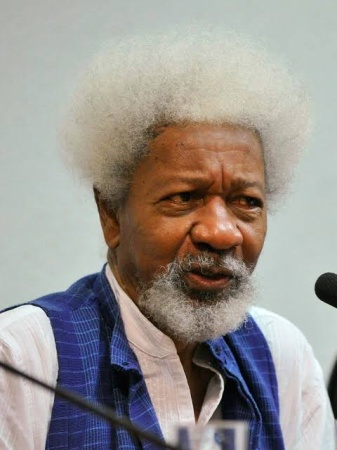
Wole Soyinka
Nobel Laureate, Prof. Wole Soyinka, has called on President Bola Tinubu to revisit case files of unsolved assassination and extra-judicial killings across the country.
Soyinka further said the state should not gloss over the killing of Deborah Samuel by her own classmates in 2023 in Sokoto State after he was accused of blasphemy and 28-year-old youth, Mene Ogidi shot dead in broad daylight by a policeman in Delta State.
The renowned scholar insisted that the perpetrators of such criminal acts must be made to face the law.
He warned against selective justice; criticised the judiciary for failing to stand for the truth and most Nigerians for remaining silent in the face of clear injustice to fellow citizens, maintaining that perpetrators of crime anywhere in the country must be identified and punished according to the law.
Soyinka spoke at the 28 Wole Soyonka Lecture Series organised by the National Association of Seadogs (Pirates Confraternity), which features the NANS Martyrs Day held in Port Harcourt on Friday.
The lecture, ‘Reclaiming the Nigerian State through Accountability, Justice and Civic Courage’ and was chaired by former Managing Director of the Niger Delta Development Commission (NDDC), Chief Timi Alaibe.
Soyinka said it was concerning for one of the slain Deborah’s classmates to openly display the match stick used in lighting the fire that later consumed her and wondered why the deceased was yet to get justice years after that mindless act of wickedness.
He described the 28th lecture series as a reminder of the injustices in Nigeria, the failure of the judiciary and citizens and a tribute to all martyrs including the six policemen killed in Apo, Abuja in 2025.
He said while the trigger-happy policeman in Delta State was swiftly arrested, the case of the Sokoto murder of Deborah did not receive the same immediate punishment.
Soyinka said: “That is why my remark is to remind you of that, that actually through me, paying honour to those who have been, who’ve lost their lives as a result of these deficiencies in the state and also the criminal participation, even indirect, of ours, the complicity in the decimation and the devaluation of our humanity.
“I don’t want us to lose that sense that this session is dedicated to the martyrs, to those who have needlessly and avoidably have lost their lives, whom we all admit, the life of a human being constitutes the basic unit of any community, any structure, any system of governance.
“And so, it’s dedicated to the Apo six, it’s dedicated to, of course, the Ugele, I forgot the number, 18 who were just butchered by agencies of state for no reason at all, simply for minding their own business and discussing what they can do to contribute to the rest of the humanity.
“It’s dedicated to that young man whom I saw in a video, after I’ve been away for some time, literally my welcoming home was a video of that man who was killed by a policeman in the South. He was a suspect and right in broad daylight he was gunned down. It’s one of the most… I couldn’t believe what I was seeing on video.
“It’s dedicated to individuals, the youths, like Deborah, who was killed, who was butchered by her own classmate, hunted through the city, necklaced and set on fire. But that is not the crime. That really is not the crime.
“The crime is the silence of the rest of us, that such a thing is possible, and that the killers of that girl can actually go on television, hold up a match, and say this is the match with which I set her on fire. And there the system of justice fails us completely. Try and imagine that policeman who shot that young person, then going on television and saying this is the gun with which I killed him. It’s impossible.
“But because that happened in another part of the nation, those killers got away with it. Now when I say this, which I have done of course, then I hear cries like, oh yes he wants to start a religious war, people are starving, he doesn’t talk about that, people are stealing, he doesn’t talk about that. I think such people are insane.
“And that is why sessions like this are important, to remind us that the human unit is the basic, the less common denominator, and thus ironically the most important of what you call the human community. And I want you all to keep watch with me, to follow what happens to that policeman, to make sure, like judiciary doesn’t fail us again, that the system of justice doesn’t fail us, to set a pattern of impunity which allows such individuals, whoever they are, to be terminated just like that.
“Watch with me so that we can force the government to bring up all the files. When there was a government retreat, you remember? The incoming president said, I want all the files of all the unsolved assassinations, killings, extrajudicial killings. What has happened to those files? I want you to join me in asking President Tinubu to say, we want you to dig up those files. We want to know what happened, why it happened, who is of value as a human being, and who is there for casual disposition.
“That is the essence that I understand from this lecture. That is why I took the trouble, as a seadog. This was a duty, and this is a message to the nation, to you as citizens, as human beings, to put an end to this casual butchery, no matter what the causes are. Thank you very much”.
In his keynote address, former Minister of Aviation, Chief Osita Chidoka, said that justice for most Nigerians began long before any courtroom, adding that it started when police officers decide when a complaint was believed or ignored based on merit and not on external factors.
He cited the wrongs In the Nigerian justice and correctional system disclosing that 64 per cent of inmates in correctional centres including more than 50,000 Nigerians were awaiting trials in detention and yet to be convicted of any crime.
He said: “Each of these 50,000 is a life in suspension, a job lost, a family destabilised, someone’s health failing. When the state causes that delay, and the citizens pay for it in lost liberty. The delay is not inefficiency, It is a form of violence carried out by the state itself.”
He insisted that true justice meant the rules do not change with a citizen’s identity and prosecution of individuals must follow evidence while those in detention must remain visible to their lawyers.
He said: "A citizen who defeats the government in court must not face a second battle to compel obedience. Justice is also tested by how society treats those it dislikes. The law is not established when it protects only our friends, Justice must defend the accused, the unpopular, the political opponent, and the minority, because citizenship does not depend on agreement. Where justice is negotiable, citizenship becomes hierarchical.”
Earlier in his opening remarks, Chairman of the occasion and former MD NDDC, Chief Timi Alaibe, said sustainable development could not exist in the absence of accountability.
He urged participants from government, the private sector, academia and civil society to resist treating the 28th Wole Soyinka Lectures as another ceremonial event and called for honest reflection and renewed commitment to rebuilding the nation.
Alaibe said: “Nations are not reclaimed by rhetoric alone, they are reclaimed when conscience triumphs over confidence. When institutions are stronger than individuals. When citizens summon the courage to do what is right, even when it is difficult.”
In his welcome address, NAS Capoon, Dr. Joseph Oteri, said this year’s lecture reflected Nigeria’s urgent need to rebuild public trust and strengthen democratic institutions.
He recalled the ordeal of NAS members detained under the late Gen. Sani Abacha’s military regime because of their association with Soyinka, who was then in exile and a leading pro-democracy activist.
Oteri said the annual Martyrs’ Day was organised to preserve the memory of those who suffered state persecution while advocating democracy and human rights.