Updating your news feed...
NEWS EXPRESS is Nigeria’s leading online newspaper. Published by Africa’s international award-winning journalist, Mr. Isaac Umunna, NEWS EXPRESS is Nigeria’s first truly professional online daily newspaper. It is published from Lagos, Nigeria’s economic and media hub, and has a provision for occasional special print editions. Thanks to our vast network of sources and dedicated team of professional journalists and contributors spread across Nigeria and overseas, NEWS EXPRESS has become synonymous with newsbreaks and exclusive stories from around the world.

.webp)






Loading banners
Loading banners...

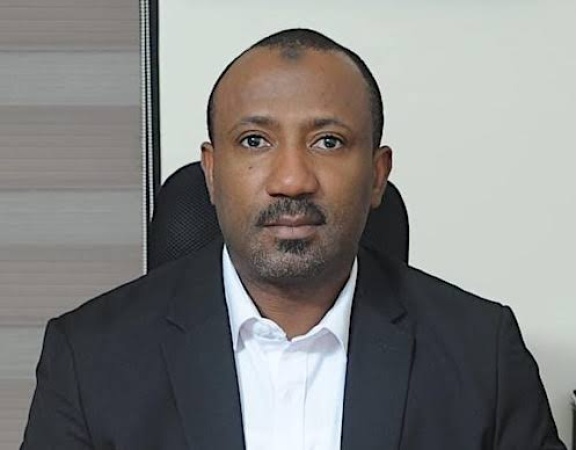
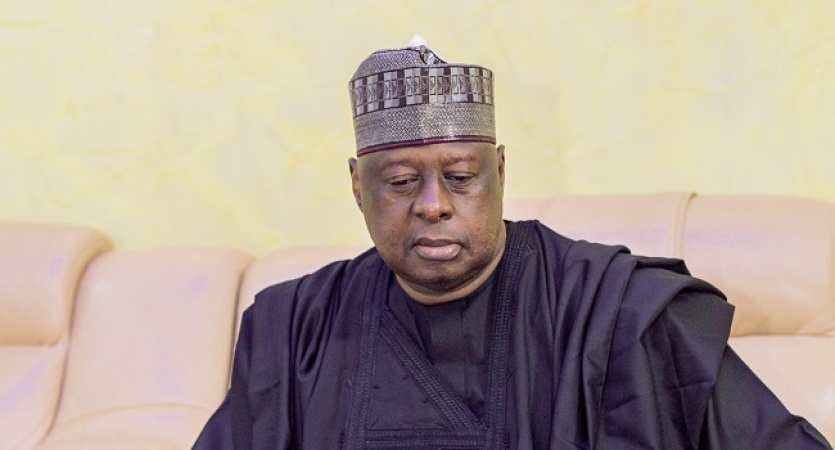
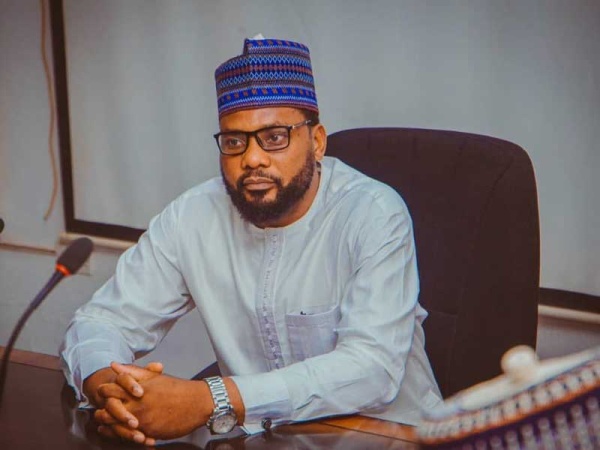
Dr Umar Yakubu
By Prof CHRIST GOLDFACE
Dr Umar Yakubu of Zaria recently told the press that the National Board for Arabic and Islamic Studies, NBAIS, should be scrapped because its mandate overlaps with WAEC and NECO. We have read the statement, we have listened to the reasoning offered, and we the westerners who have spent decades working within Nigeria’s examination and curriculum space are compelled to respond. The comment leaves us utterly dismayed. It reflects an arrant attitude toward institutional pluralism in education, and it amounts to an unguided utterance offered at a time when the country can least afford needless distraction.
Education in Nigeria has never been a single lane. From the earliest days of colonial administration to the present, we have run parallel systems that serve different communities, different philosophies, and different needs, while still aiming at one national goal, which is to produce citizens who can think, work, and compete. WAEC and NECO were created to assess candidates within the Western-model curriculum. They do that work, and they do it at scale. NBAIS was created for a different but equally legitimate purpose. It examines candidates who study within the Tsangaya and Islamiyya systems, and who sit subjects that integrate Arabic, Islamic studies, and the core subjects required for national certification. To reduce that entire architecture to “overlap” is to misunderstand both the history and the present reality of Nigerian schooling.
The charge of overlap deserves scrutiny because it is the hinge on which Dr Yakubu rests his call for scrapping. Overlap would mean that NBAIS duplicates exactly what WAEC and NECO do, with the same syllabi, the same candidates, and the same regulatory role. That is not the case. WAEC and NECO do not regulate the Tsangaya syllabus. They do not set standards for Arabic language proficiency at the levels required by Islamic institutions. They do not accredit the thousands of schools that have, for generations, produced scholars, teachers, judges, and public servants through a curriculum rooted in both revelation and reason. NBAIS does. In fact, NBAIS is the only national body that has taken the deliberate step of harmonizing that curriculum with the national framework so that a student who graduates from an Islamiyya school can proceed to a university, a polytechnic, or the civil service without being told that his certificate is foreign to the system. That is not duplication. That is integration.
What makes NBAIS even more valuable, and what Dr Yakubu’s comment completely ignores, is that beyond Tsangaya, Arabic and Islamic subjects, NBAIS also offers regular science subjects and regular art subjects. A candidate in an NBAIS center can sit Biology, Chemistry, Physics, Mathematics, English, Government, Economics, Literature in English, and other mainstream subjects under one examination body. This means the board is not narrowing options, it is expanding them. It is giving students within the Islamic school system access to the full range of disciplines required for medicine, engineering, law, education, and public service. No other body has taken on this responsibility for this segment. WAEC and NECO serve the general public. NBAIS serves a specific community and still ensures that community is not locked out of science, technology, and the arts. That is a plus, not a problem. It is precisely why NBAIS should be applauded rather than criticized.
What NBAIS has done in the last decade is precisely what critics claim no one is doing. It has led the way in regulating a syllabus that was once dispersed across hundreds of independent centers with no common benchmark. It has produced unified schemes of work, trained examiners, moderated questions, and built a data base of candidates that allows for planning. None of the existing bodies, WAEC included, NECO included, embarked on this work because it was never within their mandate. To ask them to absorb it now is to ask a body designed for one tradition to suddenly become expert in another, without the structures, the personnel, or the community trust required. That is not efficiency. That is erasure.
We are worried because statements like this travel fast and land hard. Parents in Sokoto, Kano, Maiduguri, Ilorin, and yes, Zaria, hear “scrap NBAIS” and they hear “your children’s path to higher education is being closed.” Teachers hear it and wonder whether years of alignment work will be discarded. Vice Chancellors who have already admitted NBAIS graduates and seen them perform creditably begin to question policy consistency. This is why we describe the comment as unasked and unsought. No stakeholder forum requested it. No policy review recommended it. No data was presented to show that NBAIS graduates are failing, or that the board is financially unviable, or that its examinations are substandard. What we got instead was an opinion offered in a media briefing, and opinions without evidence become policy rumors, and policy rumors become fear in classrooms.
Let us be clear about what is at stake. Nigeria’s strength has always been its ability to hold diversity within one federation. We do not ask the French system in our international schools to merge into WAEC. We do not ask Cambridge to close because NECO exists. We recognize that different pathways can lead to the same destination, provided there is regulation, quality assurance, and mobility. NBAIS provides exactly that for a large segment of our population. To scrap it on the grounds of overlap is to pretend that one size fits all, and Nigeria has never been a one-size country.
The argument could be made that coordination is needed, and on that point we agree. WAEC, NECO, and NBAIS should talk more. They should align calendars where possible, share data on item analysis, and ensure that tertiary institutions understand the grading. But coordination is not the same as cancellation. You do not cure a headache by removing the head. You treat it by improving circulation. If Dr Yakubu is concerned about efficiency, let him call for a joint technical committee. If he is concerned about cost, let him ask for an audit. If he is concerned about standards, let him propose benchmarks. What he should not do is issue a sweeping dismissal that undermines a board that has become the backbone of regulated Islamic and Arabic education in this country.
There is also a question of timing and tone. At a moment when we are trying to reduce the number of out-of-school children, when we are trying to bring informal learning centers into the formal fold, when we are trying to assure every Nigerian child that his certificate will be respected, it is unwise to target the very institution that has done the heavy lifting for that segment. It sends the wrong signal. It tells communities that their educational tradition is provisional, that it exists at the pleasure of commentary rather than by law and by need. That is not the message a public figure from Zaria, a city with a proud legacy of scholarship, should be sending.
We therefore urge Dr Yakubu to reconsider the language and the conclusion. Wisdom in public life is not only about what you say, it is about when you say it, how you say it, and whether you have done the work to understand what you are talking about. Say what is right. Say that Nigeria needs strong WAEC and strong NECO and strong NBAIS, each doing what it was established to do, each accountable, each improving. Say that overlap, where it exists in administration, can be trimmed through collaboration, not through abolition. Say that the goal is to expand opportunity, not to shrink it.
We are not asking for special treatment for NBAIS. We are asking for fair treatment. We are asking that before any call for scrapping is made, there is data, there is consultation, and there is respect for the students and teachers who have built their lives around this system. Anything less is an arrant dismissal of a national asset, and anything less will be resisted by those of us who believe that education policy should be guided by evidence, not by impulse.
Nigeria cannot afford to throw away institutions that are working simply because someone finds their existence inconvenient to a neat theory. NBAIS is working. It is regulating. It is examining. It is opening doors. It is offering science, it is offering arts, it is offering Arabic and Islamic studies, all under one roof. Let us strengthen it, let us fund it properly, but let us not scrap it. To do so would be to take a step backward at the exact moment we need to be moving forward.
•Prof Christ Goldfaceis of the English and Literature Department, UNN, Enugu.