Updating your news feed...
NEWS EXPRESS is Nigeria’s leading online newspaper. Published by Africa’s international award-winning journalist, Mr. Isaac Umunna, NEWS EXPRESS is Nigeria’s first truly professional online daily newspaper. It is published from Lagos, Nigeria’s economic and media hub, and has a provision for occasional special print editions. Thanks to our vast network of sources and dedicated team of professional journalists and contributors spread across Nigeria and overseas, NEWS EXPRESS has become synonymous with newsbreaks and exclusive stories from around the world.









Loading banners
Loading banners...

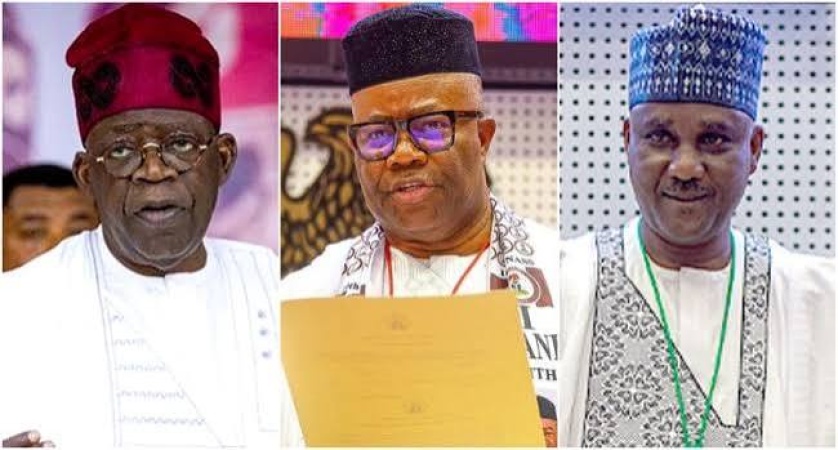
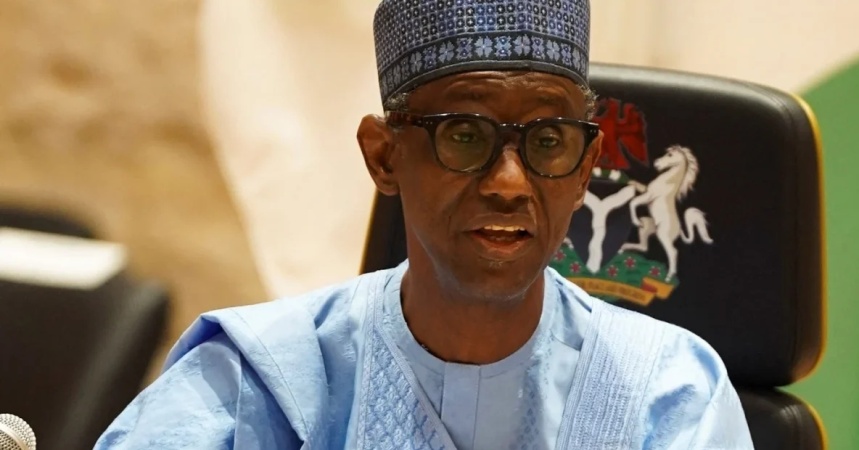
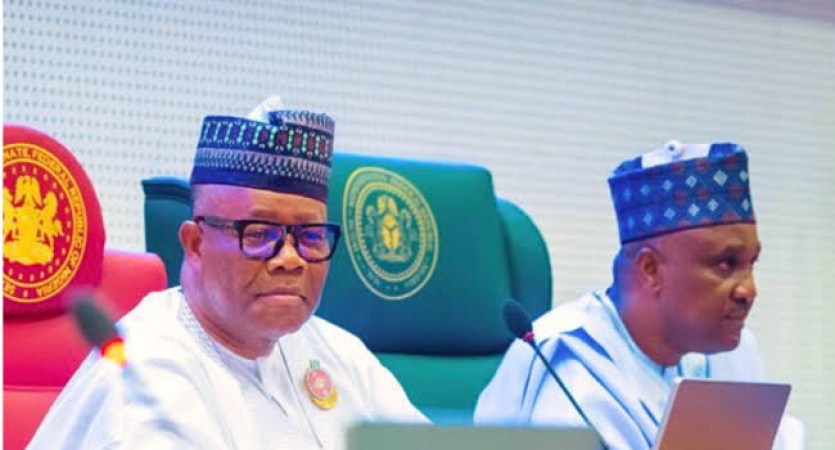
President Tinubu, Senate President Akpabio, Speaker Tajudeen Abbas
The scorecard of the 10th National Assembly, recently presented by Speaker Tajudeen Abbas, lays bare the stark reality of how laws are made and how they die between the legislative chambers and Aso Rock.
Of the 373 bills passed by the legislature, only 72 have been signed into law by the President, leaving the remaining 301 stuck in legislative limbo. The polarised reactions to this gap highlight a political landscape where objective truth is often secondary to narrative. While some interpret the ratio as a sign of unprecedented harmony and selective quality control, others view it as clear evidence of deep structural friction. Either way, the numbers are forcing a critical national conversation about legislative ambition versus executive scrutiny.
Driven by intense pressure from their constituencies to show tangible results, lawmakers often rush to pass bills that are ultimately dead on arrival due to a fundamental lack of rigorous oversight and executive alignment. This bottleneck points to a deeper systemic issue within Nigeria’s democratic architecture: the triumph of political theatre over policy pragmatism. For many legislators, the mere sponsorship and passage of a bill serves as valuable political currency to secure re-election, regardless of whether the proposed law is financially viable or constitutionally sound.
A former senator, who asked not to be named, captured this frustration in a telephone interview with Sunday Sun:“Churning out such a large number of bills that have little or nothing to do with the overall interest of the nation is not the way to show that you are working. Of what use are large numbers of bills that the President has denied assent to the people? That is not how to show that you are representing the people.” By churning out a high volume of populist bills, lawmakers can claim they are actively fighting for their constituents, effectively shifting the burden of rejection onto the presidency.
Consequently, the executive branch is forced to act as the ultimate gatekeeper, discarding hundreds of poorly drafted or redundant bills that fail to align with national priorities or fiscal realities. However, this high rejection rate also raises troubling questions about the level of collaboration between the two arms of government. A functional democracy relies on robust, early-stage consultations to ensure that major legislative drafts have executive buy-in before they ever reach the President’s desk. The fact that over 80 per cent of passed bills remain unsigned suggests a profound disconnect, characterised by a lack of joint committee work and pre-legislative lobbying.
Former Deputy Governor of Ogun State, Senator Gbenga Kaka, however, urged caution against reading friction into the numbers. Speaking in a telephone conversation with Sunday Sun, he said: “In the normal legislative process, if things are working well internally, whatever potential differences exist must have been ironed out before getting to the floor of the National Assembly so that the bill can have easy passage. And now that we have the majority of the ruling party in the National Assembly, I don’t think the gap between the bills passed and the ones not assented to suggests any form of friction.”
Until both arms of government establish a more synchronised workflow, the National Assembly risks remaining an expensive bill mill, producing a mountain of paperwork that yields very little actual governance for the Nigerian people.
Delivering his keynote address at the 2026 Open Week, where the House leadership unveiled its Third Legislative Year Scorecard, Speaker Abbas disclosed that the House had received a staggering 2,747 bills between 2023 and the present. He expressed great pride that 72 of these bills have already received presidential assent, stating: “These are not lines upon a page; they are measurable and lasting change. These figures represent the highest output for any Assembly since 1999.”
He described the feat as “the highest such volume recorded since the return of democratic rule in 1999. Behind each of those bills stands a Nigerian who believed that the law could better their condition.”
While these numbers are genuinely impressive, do they actually translate into functioning laws? The short answer is: not quite. Despite the Speaker’s celebration, the vast majority of these bills remain stuck in limbo, with the presidency citing a long list of reasons for withholding assent.
Senator Kaka also questioned the obsession with quantity: “It’s not the number that matters. It is the quality and what those bills stand to achieve in the overall interest of the people. We have cases where an individual will churn out up to 50 bills, and not a single one will go through the final stages, talk less of getting the assent of the President. In my assessment, that would be a failure.”
When legislative chambers focus on sheer volume rather than depth, it raises a fundamental question: what is the point of introducing thousands of bills if they cannot pass basic executive or constitutional scrutiny? In practical reality, a massive influx of poorly vetted bills yields very little positive benefit for the country, but it does serve several political and systemic functions, both good and bad. For individual lawmakers, bills are the currency of visibility. In most instances, legislators are judged by their constituents on how many bills they sponsor. Introducing a bill, even one that is poorly drafted or has zero chance of passing, allows a lawmaker to go back to his constituency and say, “I am working for you; look at the bills I proposed.” For the institution as a whole, high numbers allow leadership to claim high productivity.
That explains why it is easier for Abbas to print a scorecard boasting about 2,747 bills than it is to explain why only 72 of them actually became viable laws.
Reasons for withholding Presidential Assent
Under Section 58 (4) of the 1999 Constitution, if the President decides to withhold assent, he is required to communicate his decision and his specific objections to the National Assembly within 30 days. If 30 days pass without the President signing or formally vetoing it, that amounts to a silent rejection. This pocket veto is heavily used for constituency-driven establishment bills, such as bills to create new federal universities, specialised hospitals, or agricultural research centres. If the executive does not have the funds to build them, the bills are quietly left to gather dust at the Presidential Villa.
President Bola Tinubu has actively used this constitutional mechanism, sending formal letters to the Senate and House of Representatives outlining precisely why certain bills were returned. His reasons generally fall into three categories: drafting defects, statutory overreach and fiscal constraint.
Chief Henry Ajomale, a close associate of President Tinubu, defended the process in a telephone chat with Sunday Sun: “The normal thing is to have such bills returned to the National Assembly with reasons why the President is not signing them. Some of them have been returned for certain reasons and some reviewed by the executive. So, there must be reasons why those bills were not signed into law.”
Historically, these letters cite very specific, granular objections. The executive’s legal team frequently catches cross-referencing errors, contradictory clauses, or incoherent language. For instance, Tinubu rejected the Raw Materials Research Bill because its long title did not align with its core policy, calling the structure incoherent and disjointed.
A similar reason was given for returning the NIMC Repeal and Re-enactment Bill to the House due to structural inconsistencies and drafting errors. In other instances, the executive frequently rejects bills when lawmakers try to grant agencies powers they should not legally have. An example is the Chartered Institute of Purchasing and Supply Management Bill. Tinubu declined assent because the bill attempted to force private, independent corporate entities to notify the institute within a month of hiring procurement heads. The President rightly noted that the institute is not a statutory regulator of private corporations and cannot legally compel them to do so.
For dozens of other bills, especially those seeking to establish new federal universities, research institutes, or medical centres in lawmakers’ home constituencies, the President often executes a pocket veto by simply letting them sit unsigned. There is a strong argument that many lawmakers treat the passage of a bill as a public relations victory rather than a practical exercise in governance. For a significant portion of the National Assembly, the primary goal of sponsoring a bill is political signalling, not actual implementation. This is because lawmakers are usually under immense pressure to show achievements to their constituencies back home. Such bills are more often technically flawed due to a lack of proper scrutiny.
Available reports show that the vast majority of bills introduced in the 10th National Assembly are Private Member Bills rather than Executive Bills. Many of these private bills are establishment bills, such as those seeking to create new federal universities, polytechnics, or agencies in a lawmaker’s constituency. The executive frequently shelves these because the country simply does not have the fiscal capacity to fund them. This suggests that denying assent is often a matter of economic reality, not political warfare.
According to the Spokesman of the House of Representatives, Akin Rotimi, many individual bills are consolidated into single, comprehensive pieces of legislation before final assent. Therefore, the final count of signed laws will naturally be lower than the tally of individual bills processed.
Conversely, from a structural and constitutional standpoint, this wide gap points to policy misalignment. A bill only reaches the President’s desk after passing through both chambers. When a bill is passed but sits without assent, it indicates a breakdown in communication. Many analysts criticise the legislature for spending valuable committee time and public funds debating, holding public hearings, and passing bills that the executive branch has no intention of implementing.
Under Section 58 of the 1999 Constitution, if the President withholds assent, the National Assembly has the power to override the veto with a two-thirds majority. Kaka referenced this provision to argue that the system still works: “If the National Assembly considers a bill essential, there is provision for them to veto the President.” The fact that the 10th Assembly has not actively sought to override vetoes on these outstanding bills suggests an unwillingness to challenge executive authority.
To critics, this points to a lopsided balance of power rather than true harmony. While private members struggle to get their bills signed, executive bills such as the Tax Reform Bills, the National Minimum Wage Act, and key appropriations have been fast-tracked and signed with minimal resistance. This scenario, they argue, creates a two-tiered legislative system where only executive-sanctioned ideas consistently cross the finish line.
Chief Ajomale dismissed suggestions of a rift, pointing instead to cordiality: “As far as I am concerned, the record of the current National Assembly has not been matched by any of the previous legislatures. I think they have done well. Even the 70-something bills that the President has signed into law is quite significant. No president has signed such a number into law in any legislative period of four years. There is a very cordial relationship between the legislature and the executive this time. So I don’t see any sign of friction because of the bills that have not been signed.”
Compared with the past administration, there is virtually no open warfare between the presidency and the 10th Assembly leadership, unlike the stormy relationships seen during the 8th Assembly. However, the sheer volume of dead bills waiting at the presidential villa represents a massive waste of legislative energy, proving that while the two arms of government are speaking cordially, their policy pipelines remain deeply out of sync, critics argue.
By treating the gavel drop as the finish line, the National Assembly shifts the burden of quality control entirely onto the presidency. If the National Assembly truly believed in the laws it passed, it has a powerful constitutional weapon. Under Section 58(5), if the President vetoes a bill, the National Assembly can override it and make it law without the President’s signature by passing it again with a two-thirds majority in both chambers. Yet, it almost never does so. The last time a major presidential veto was successfully overridden by the National Assembly was in 2000, when the 1st Assembly of the Fourth Republic overrode President Olusegun Obasanjo to establish the Niger Delta Development Commission (NDDC) Act. Since then, the legislature has consistently backed down when the executive says no.
To many public affairs commentators, this reluctance to fight suggests that the National Assembly is often content to let its bills die quietly once it has extracted the political and media value of passing them in the first place. The legislative process does not end when a bill passes; it ends when it is successfully implemented. Because the National Assembly frequently prioritises the quantity of bills passed for political optics over the quality and feasibility of those bills, the President is forced to act as the ultimate gatekeeper, resulting in the massive graveyard of unassented bills at the presidency today.
To political insiders and the leadership of the National Assembly itself, the wide gap between the bills passed and those assented to by the President does not represent a clash. Instead, they reflect a highly cooperative and some would argue, subordinate relationship.
The Senate President, Godswill Akpabio, has repeatedly described the 10th Assembly as the most peaceful in Nigeria’s democratic history, explicitly attributing its success to “collaboration with the executive”.
From this perspective, the low assent rate is not due to executive hostility, but rather a deliberate filtering process. But not everyone agrees. A former senator from one of the states in the South-West offered a stark assessment in her telephone interview: “This 10th National Assembly is not a vibrant one at all. It’s been a very dull moment. It is a complete contrast to the past. Between me and you, that is not how the legislature works. For the President to sign 72 bills into law out of over 300 bills shows complacency. And it all boils down to the weakness of the leadership.”
While the executive is carefully weeding out unviable bills, and the legislature is cooperative enough not to start a fight over it, what opposition critics see is a rubber-stamp
Parliament that is subservient to the presidency, wasting taxpayers’ money on bills that are dead on arrival because it lacks the political courage to challenge the President’s veto.
Kaka, however, struck a more conciliatory note to close: “I want to believe that the two arms of government have mutual understanding. Out of the 373 bills that were not assented to, many of them may not have been in the overall interest of the populace. In any event, we still have about 10 months to go. The bills that need to be assented to could still be assented to. So let us not rush to judge them. Let’s wait till the end of their tenure before we know the actual number that has been assented to and why others were not.”
No big deal; It’s part of checks and balances – Reps
The House of Representatives, meanwhile, has said that the rumpus being generated in the media by the decline of presidential assent to 301 bills passed by the 10th House is much ado over nothing, noting that such decline is in line with constitutional checks and balance.
The Speaker, Abbas Tajudeen, while speaking at the National Assembly Open Week, disclosed that the Green chamber passed 373 bills, out of which 72 were assented to by President Bola Tinubu.
The chairman, House Committee on Media and Publicity, Akin Rotimi, told Sunday Sun that there is nothing unusual about the decision of the President to veto most of the proposed legislations.
Rotimi said: “First, the scorecard reflects work in progress in the life of this assembly, and we cannot conclude that bills currently before the President will ultimately not be approved.
“Second, the fact that some bills passed by the House have not received Presidential assent does not mean they are bad, that the legislative process has failed, or that there are issues between the Legislature and Executive.
“It is part of the constitutional checks and balances and may reflect broader government policy and prevailing national exigencies.
“As you know, many of these are establishment bills for new health and educational institutions, and their non-assent must also be understood in the context of the Federal Government’s moratorium on establishing new higher institutions as it focuses on strengthening existing ones.” (The Sun)