ADAD
ADADUpdating your news feed...

NEWS EXPRESS is Nigeria’s leading online newspaper. Published by Africa’s international award-winning journalist, Mr. Isaac Umunna, NEWS EXPRESS is Nigeria’s first truly professional online daily newspaper. It is published from Lagos, Nigeria’s economic and media hub, and has a provision for occasional special print editions. Thanks to our vast network of sources and dedicated team of professional journalists and contributors spread across Nigeria and overseas, NEWS EXPRESS has become synonymous with newsbreaks and exclusive stories from around the world.






Loading banners
Loading banners...

There has been no demarcation between governance and politicking in the last three and a half years.
The government had hardly taken off when opposition leaders ganged up against it, with an intention to distract the President through propaganda and campaigns of calumny.
At the service of the opposition were a section of the media bent on sustaining the lie that the last presidential election was rigged, while other bitter and reckless commentators fueled ethnic and religious tension.
The first few months were devoted to post-election litigations by two leading opposition figures simultaneously claiming to be winners of the 2023 presidential election.
President Bola Ahmed Tinubu of the All Progressives Congress (APC) polled over 8 million votes; Atiku Abubakar of the Peoples Democratic Party (PDP) got over 7 million votes while Peter Obi of the Labour Party (LP) secured over 6 million votes. Campaigns& Elections
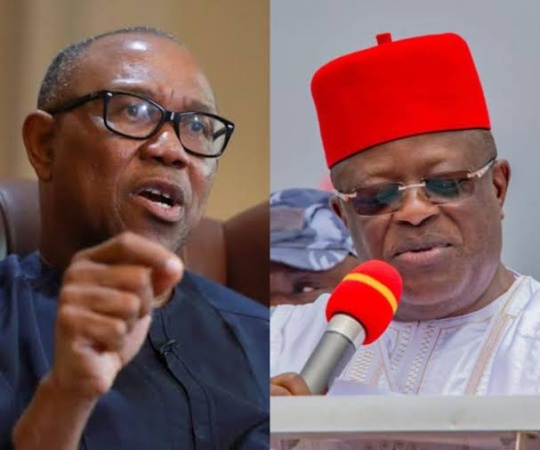
However, Atiku and Obi claimed that they won the poll, which means that at the pre-trial level, one of them lied about winning. From the tribunal, the case went to the Supreme Court, which upheld President Tinubu’s victory. At that level, it was clear that the two of them had lied.
The noise did not end there. The losers were bitter. They returned to the public arena to intensify their falsehoods, insisting that the poll results were not genuine. To keep themselves busy, they invaded the media – mainstream and social – with various fabrications, peddling rumours and whipping up sentiments.
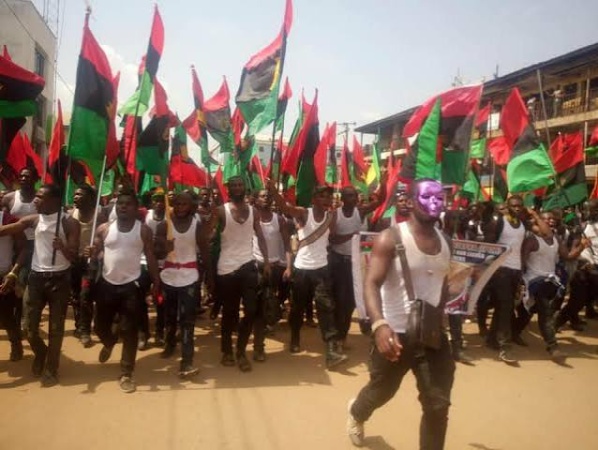
In their resolve to collapse the government, the opposition leaders demonstrated on the streets while their agents mounted virulent attacks on the government to de-market President Tinubu and weaken his platform.
The Tinubu administration was barely six months old when Atiku, Obi and Rabiu Kwakwanso, who contested on the platform of the New Nigeria Peoples Party (NNPP), started mobilisation for 2027.
The spadework was undertaken by former Kaduna State governor, Mallam Nasir El-Rufai, who, after failing to get a ministerial slot, defected from the APC to the Social Democratic Party (SDP). There was a recourse to a theoretical regional bullying as El-Rufai, posturing as the champion of northern interest, retorted that the North would not vote for President Tinubu in 2027 because he had failed to protect their interests. Campaigns& Elections
Prominent northern leaders in the Tinubu administration, including erstwhile national chairman of the ruling party, Abdullahi Ganduje, Deputy Senate President Jibrin Barau, Senator Aliyu Wamakko, APC governors and other National Assembly members, assured the President of northern support for his administration.
The opposition gang, aided by a section of the media, projected itself as defender of the democratic order. The polity was inadvertently heated up with phantom allegations and incitements.
While the scattered and disunited opposition arrowheads concentrated efforts towards their constant criticism of government, they failed to put their house in order. Their parties – the PDP, LP, and NNPP – were ebbing away. Intra-party crises of monumental proportions that arose from distrust, indiscipline and poor leadership weakened their platforms. Those who aspire to lead Nigeria failed to successfully lead their parties through crises to survival.
Atiku, in exercise of his freedom of association and assembly, left the PDP, the platform he had sought for his presidential ticket six times and on which he had actually run for president twice, for a borrowed platform, ADC. Today, the party, which is also enveloped in crisis, is a fraction of the PDP.
Obi left the LP, after failing to unite the two blocs led by Senator Esther Nenadi-Usman and Julius Abure. The party is not making any grand preparations for next year’s presidential election.
Obi’s first point of call was ADC, but since his interest did not align with the plan of the pro-Atiku supporters, he hurriedly bade the party farewell. He has never been a party builder but a beneficiary of ready-made platforms.
Since he could not return to the crisis- ridden LP after he met a brick wall at the ADC, Obi ran to Senator Seriake Dickson’s party, the Nigeria Democratic Congress (NDC), for refuge. But the former Bayelsa State governor drew a line. Conscious of the antecedents of the Obedient Movement, he has kept the party under his firm grip to avoid a hijack.
Building a coalition requires proper focus, extreme self-sacrifice, suppression of personal agenda for collective interest and defense of national interest.
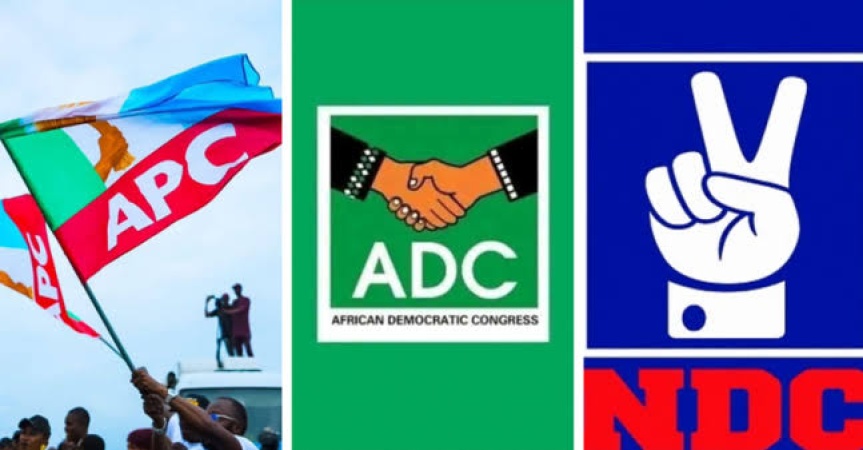
While APC, without the encumbrance of a disputed leadership, is enlarging its coast and forging ahead with confidence, ADC is battling with litigations, while the NDC is confronted with the harmonisation of structures.
The two parties, unlike the ruling party, could not meet the deadline for the uploading of their candidates’ names to the Independent National Electoral Commission (INEC) portal, prompting the commission to extend the deadline till Tuesday.
In many states, since the structures of the two parties are not formidable, being mainly a section of the aggrieved PDP and nothing more, they found it difficult to raise popular and capable candidates, particularly for legislative elections, in many states.
APC has the advantage of being the ruling party, although there are hues and cries, and genuine grievances in some states, districts and constituencies arising from its primaries. It is relatively easier to reconcile some APC aggrieved chieftains than those in the crisis-ridden smaller opposition parties.
Also, the ruling party knew where it was heading, almost two years ago. Its presidential primary was smooth as President Tinubu had been earlier endorsed for re-election by the party. Many senatorial, House of Representatives and Houses of Assembly candidates were picked either through consensus or direct primaries. However, since many aspirants chased relatively fewer tickets, the struggle was intense and drew the party on edge.
While other parties were retarded by their internal crises, APC has forged ahead by setting up reconciliation committees and mobilisation structures that have their foundations at the grassroots.
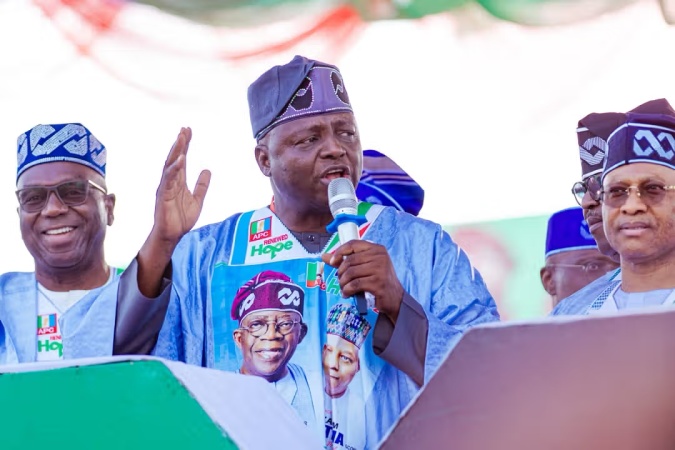
The Renewed Hope Ambassadors, initiated by the Progressive Governors’ Forum (PGF) Chairman and Imo State Governor Hope Uzodimma, have been set up across the states and local governments. The Women’s Wing has come up with The Torchbearers and a chieftain, Seyi Tinubu, is building on the mobilisation prowess of the City Boy Movement on a grand scale. The Door-to-Door Movement of High Chief Government Ekpemupolo (Tompolo) is resolute.
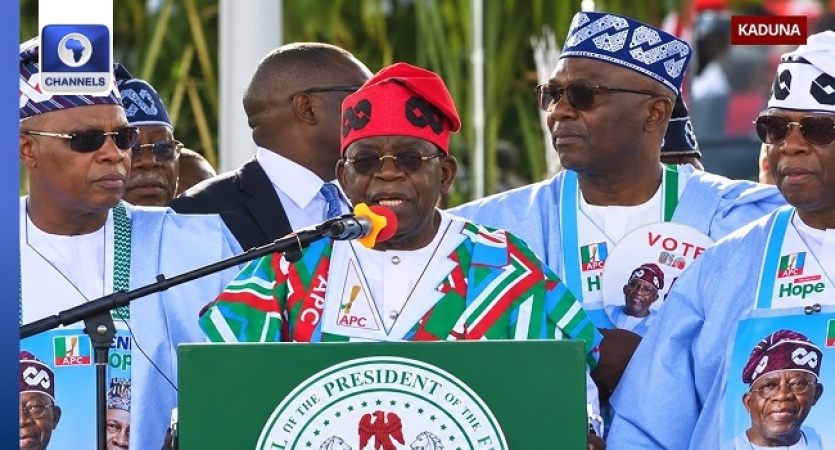
Four years ago, the Muslim/Muslim ticket was twisted to mean creating religious division. But experience has shown that it is harmless and circumstantial; a child of necessity. While opposition candidates will be making promises after finally putting themselves together, President Tinubu will be campaigning based on his impressive scorecard on the economy, education, security, constitutional reforms, devolution and national integration.
No doubt, the Tinubu administration has been very focused in implementing people-oriented developmental projects in fulfilment of its campaign promises to Nigerians.
In 30 months, President Tinubu has accomplished NELFUND, council autonomy, a new tax law, increased revenue, non-oil exports growing by 40 per cent, over $40 billion in foreign investment, Stock Exchange boom, Livestock Ministry, Lagos–Calabar coastal highway, Forest Guards for 1,149 reserves, Nigeria First policy, health reforms, Loans to Industries and SMEs and six regional development commissions.
While the APC ticket composition cannot be discredited again, zoning and rotation still subsists as a core factor. The feeling that the South should complete its eight years before the power rotates to the North remains popular.
Nobody plans to fail. The opposition parties are also not failing to plan. But they are not planning adequately. They are behind.
As the parties kick off their campaigns, the country looks forward to alternative programmes that present opportunities for wise choices.
If they fail at that level, then, they may not be able to avert defeat at the polls. (The Nation)